How a Fire Engine Turns Liquid into a Vapor Barrier
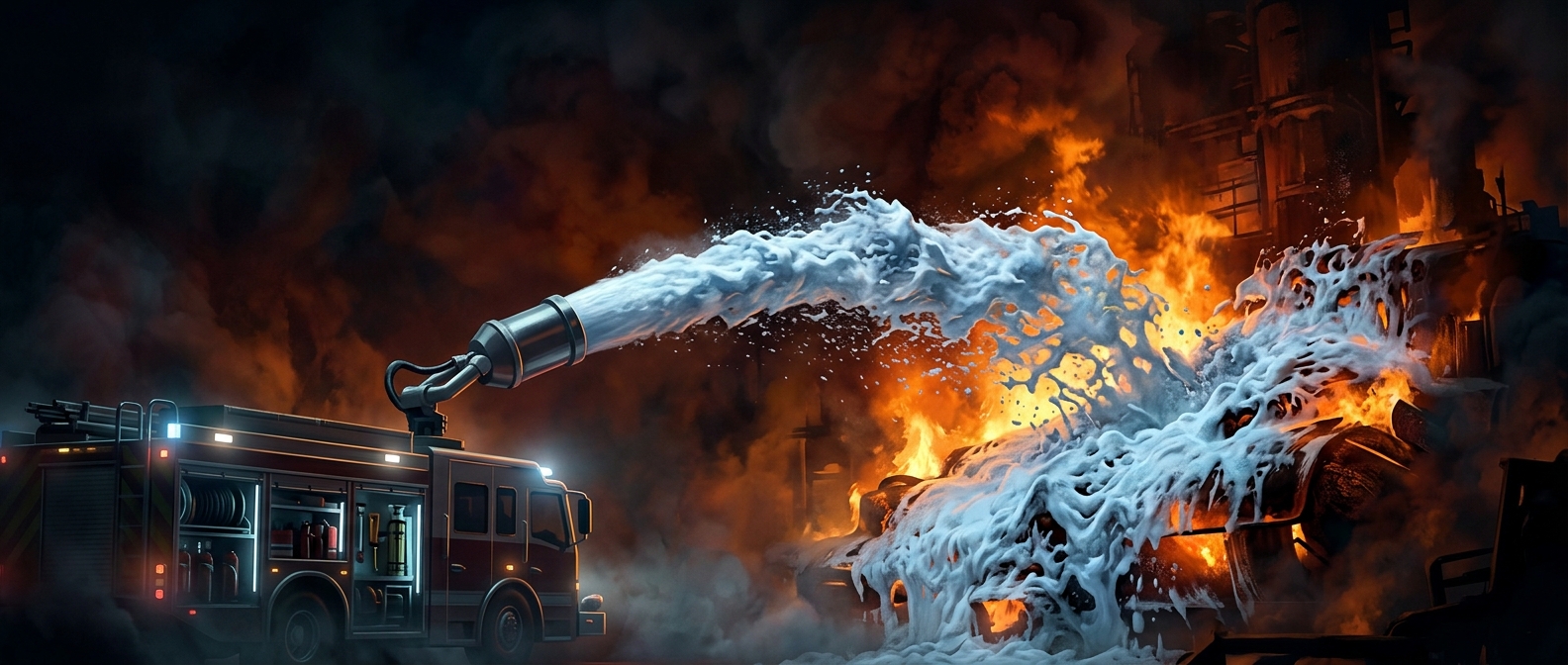
A fire engine does not simply spray premade foam. It meters a small amount of foam concentrate into water, then mixes in air as the solution passes through the hose or nozzle. The resulting bubbles spread across a burning liquid and cling together as a continuous blanket.
That blanket matters because many liquid fuels burn through the vapors rising from their surfaces. Foam covers the fuel, limiting the release of those vapors and making it harder for them to mix with air and reach the flames. The water in the foam also absorbs heat, helping cool the fuel and nearby surfaces.
The Foam Has to Match the Job
Firefighters use different foam formulations for different hazards. Foam intended for ordinary materials is not automatically suitable for flammable liquids; the concentrate and application method must fit the fuel and the fire. Crews also need enough solution to cover the spill without breaking up the blanket with a forceful stream.
This makes the fire engine’s mixing equipment part of the firefighting strategy. It must deliver the right mixture steadily while crews maneuver hoses and protect the foam layer as it spreads. If the cover is disturbed or leaves gaps, fuel vapors can escape and the fire may flare again. A successful application is therefore less like blasting a flame away and more like laying down an unbroken lid that denies it fresh fuel vapor.