The limit is set by air pressure
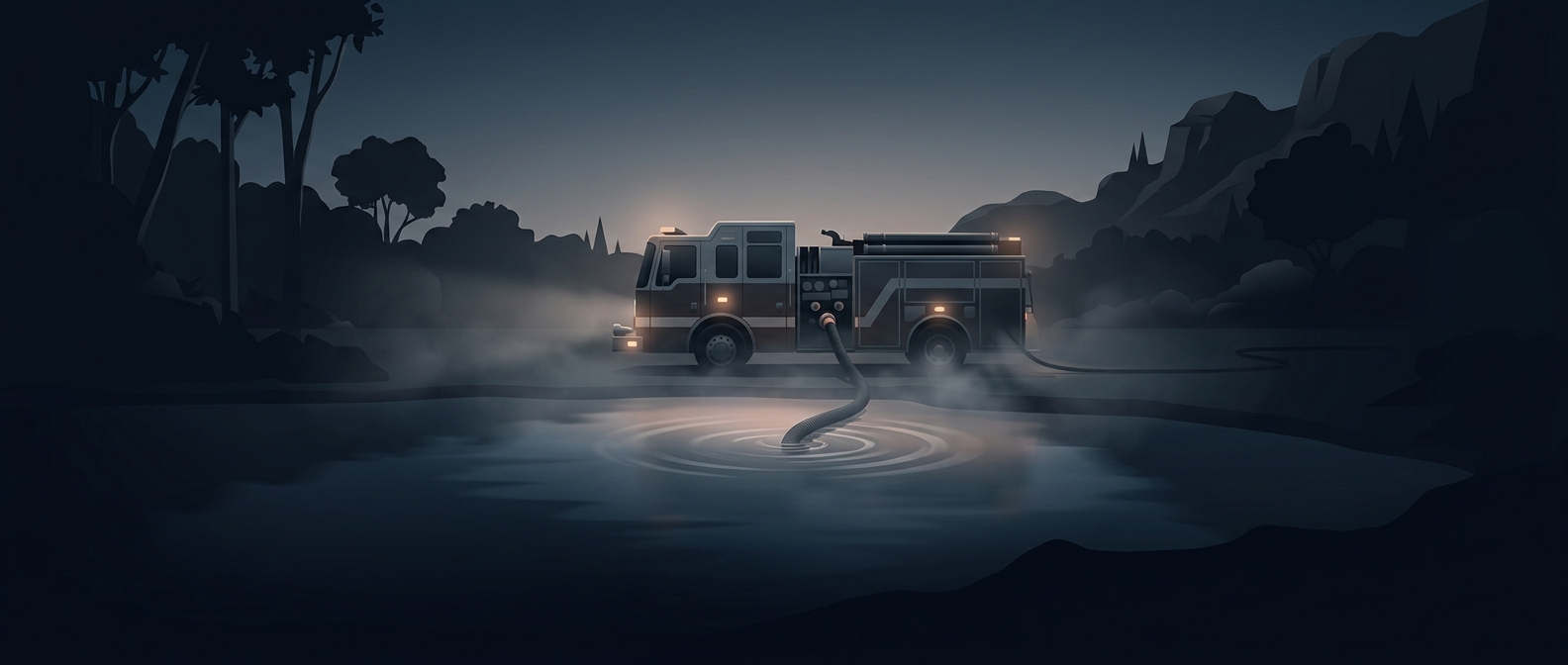
A fire engine cannot simply “pull” water uphill from a lake. Its pump first has to clear air from the suction hose, creating pressure inside it that is lower than the air pressure pressing on the lake’s surface. That outside pressure then pushes water up the hose and into the pump.
This distinction matters: the pump creates the pressure difference, but the atmosphere supplies the push. The pump’s main job after water reaches it is to add pressure so the water can travel through the discharge hoses to the fire.
Why the truck stays close to the shore
The height the water must climb is called the lift. At sea level, atmospheric pressure can support a water column only about 10 meters (roughly 33 feet) high in an ideal setup. In practice, a fire engine must stay well below that limit: bends, hose length, leaks, and friction all make it harder for water to flow.
Crews use a rigid suction hose rather than an ordinary flexible hose because the low pressure inside could otherwise make a soft hose collapse. A strainer at the lake end keeps leaves and debris from entering the pump, while keeping that end submerged helps prevent air from being drawn in.
A pump that must be primed
The pump also needs a continuous column of water to work properly. If air remains in the suction line, the pump may fail to establish the flow needed to draw water from the lake. Clearing that air—priming the pump—is therefore a crucial first step, not a minor setup detail.
The practical consequence is easy to see at a lakeside fire: distance and elevation matter as much as the water source itself. A nearby lake is useful only if the engine can establish a reliable, low-resistance path from its surface to the pump.