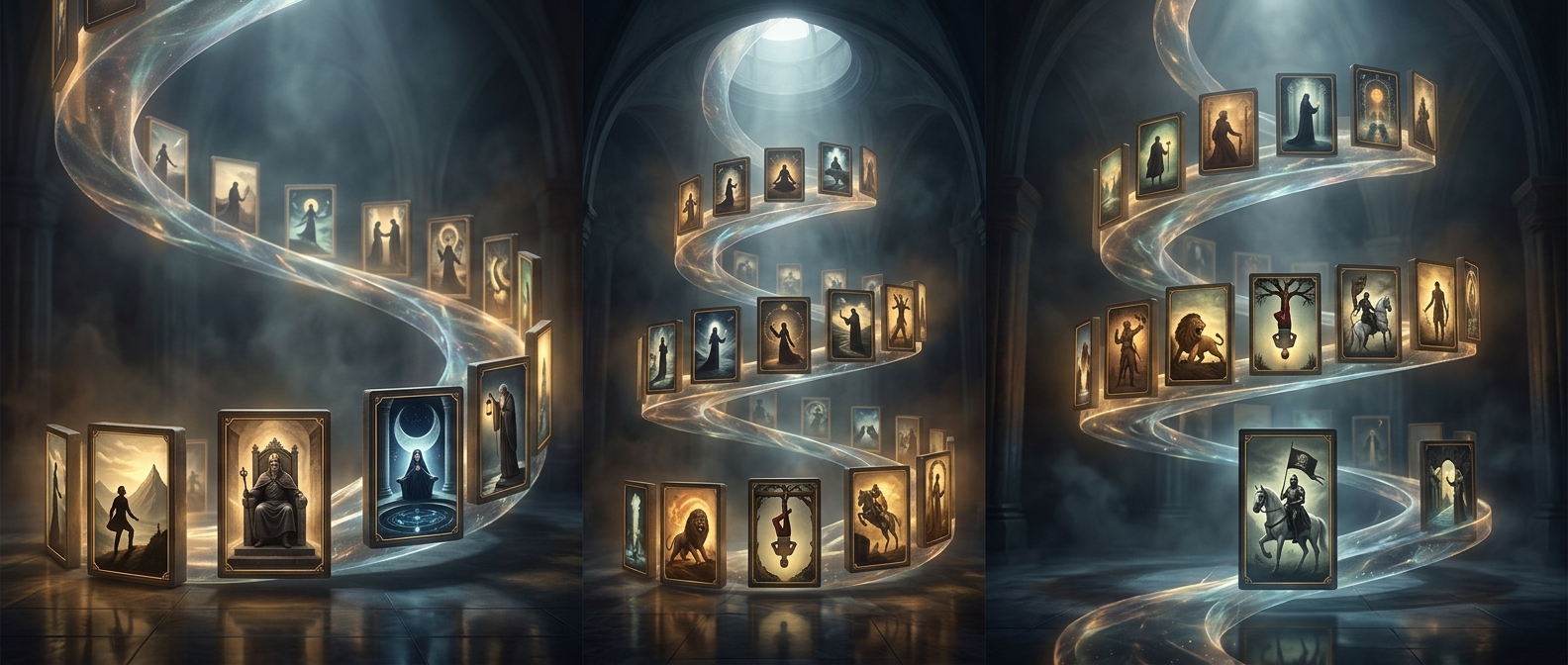
Why a Mystical Layout Needed Drafting Tools
A diagram built from intersecting lines is only useful if its parts land in the right places. When a practitioner needed a repeated grid, drawing each line freehand could leave uneven spaces or intersections that drifted out of alignment. A custom ruler or template made the geometry repeatable: its edges or guides helped keep lines straight and spacing consistent.
That precision mattered because the grid was the structure on which the rest of the layout depended. A misplaced boundary could squeeze one section, widen another, or make a carefully arranged pattern harder to reproduce. The tool did not supply the diagram’s meaning; it helped turn an intended design into a stable physical arrangement.
From Design to Handwork
Without digital layout software, the process involved practical steps familiar from technical drawing: establish measurements, align a guide, trace the lines, and check where they crossed. Templates could be made for a particular design rather than serving as universal instruments, which is why a practitioner might need a specialized ruler instead of an ordinary straightedge.
The result is a useful contrast: a page associated with hidden meanings could require patient measuring and drafting. Its appearance might be mysterious, but making it legible and consistent was a hands-on job of geometry.