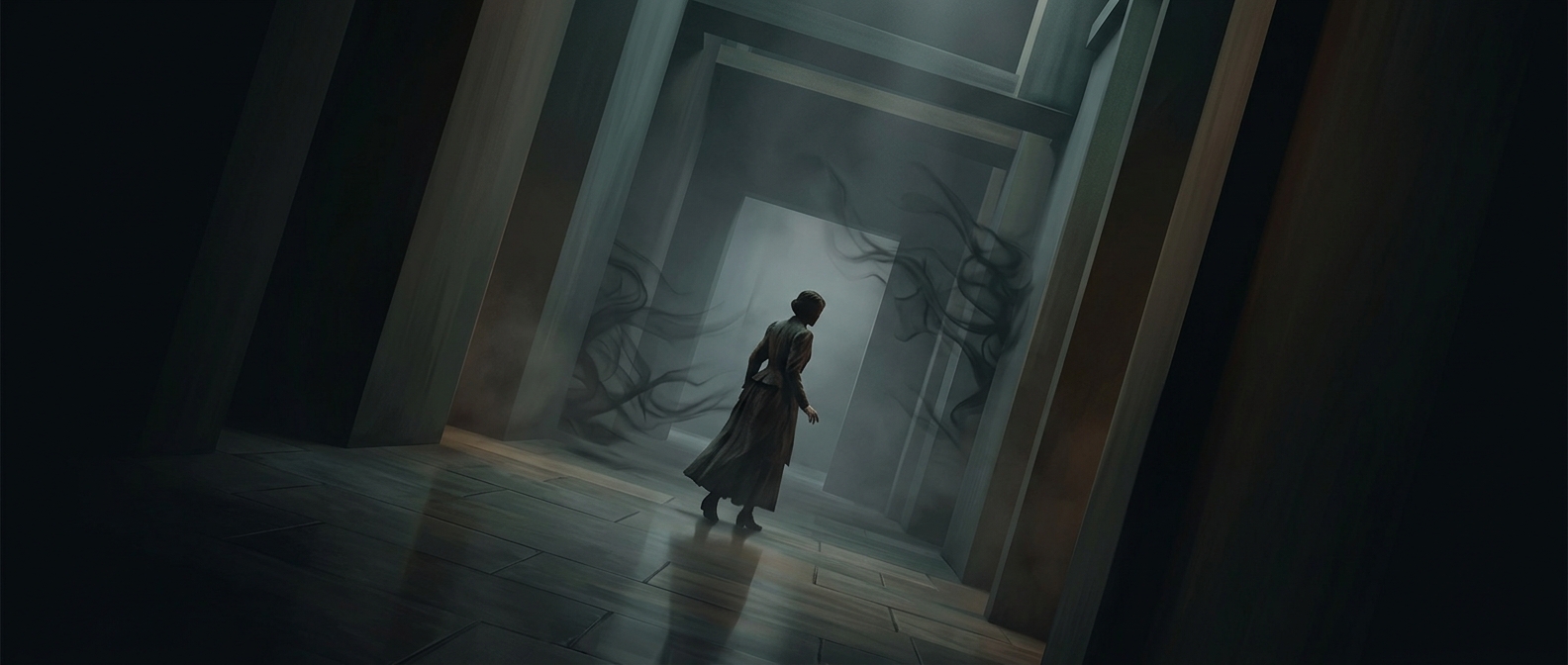
A tilted frame makes balance feel uncertain
Most film images keep vertical lines upright and the horizon level. That matches how viewers expect the world to look, so a camera rotated slightly to one side can make a familiar room feel subtly off before anything in it changes. The effect is called a Dutch angle; despite the name, it is a camera tilt, not a special lens or a change to the set.
The discomfort comes partly from visual orientation. Our eyes use edges such as walls, doorframes, and horizons to judge whether a scene is stable. When those cues lean, the image suggests imbalance even if the characters are standing normally. A filmmaker can use that mismatch to make a moment feel disoriented, threatening, or psychologically unsettled without adding dialogue or action.
The tilt is a signal, not a shortcut
A Dutch angle can also mark a shift in a scene: a character may be panicked, a situation may be spiraling, or the viewer may be entering an unfamiliar point of view. The meaning depends on context. A slanted shot during a calm conversation may feel conspicuous rather than frightening, while a carefully timed tilt amid confusion can reinforce what the scene is already doing.
That is why filmmakers tend to use the angle selectively. If every shot leans, the viewer can adapt and the image may simply look stylized. Used at a turning point, the changed geometry stands out: the world in the frame no longer seems to sit securely on its usual axis.