A mutation that changes how the animal reads
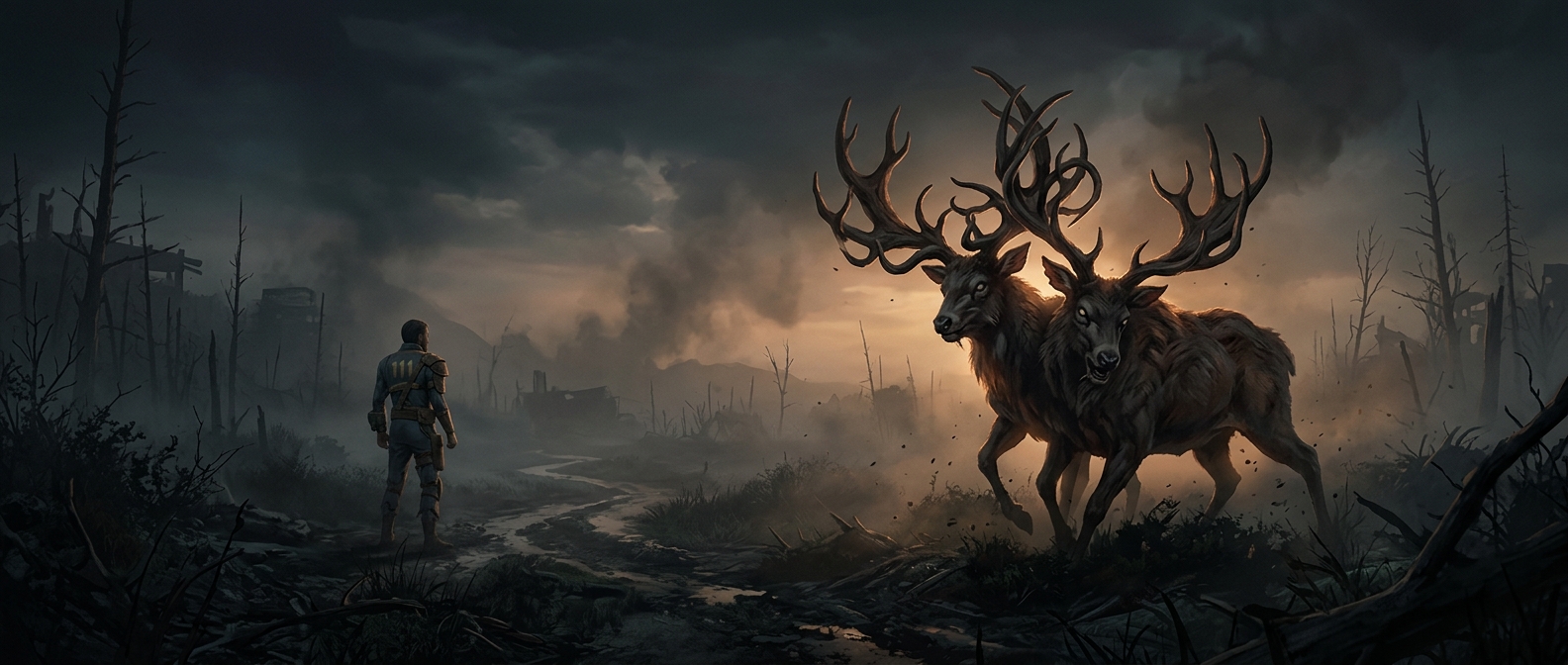
Fallout’s two-headed deer, commonly called radstags, turn radiation into a silhouette the player can recognize at a glance. The extra head is not just a grotesque flourish: it makes ordinary wildlife look altered by the same ruined world that produced the game’s other mutations. Against a wasteland of damaged buildings and unfamiliar hazards, that visual cue tells you that even a deer may not behave like a harmless background animal.
Startle, and the encounter changes
The tension comes from the gap between appearance and behavior. A radstag can seem like prey to avoid or pass by, but if startled it may charge. The player’s response matters: a sudden approach or other disturbance can turn an animal that was simply occupying the landscape into an immediate threat.
That small encounter supports Fallout’s broader design: danger is not confined to obvious enemies. Wildlife makes the wasteland feel inhabited, while its unpredictable reactions encourage players to watch their surroundings rather than assume every creature will flee. The second head gives the animal its memorable look; the possibility of a charge gives that look consequences.