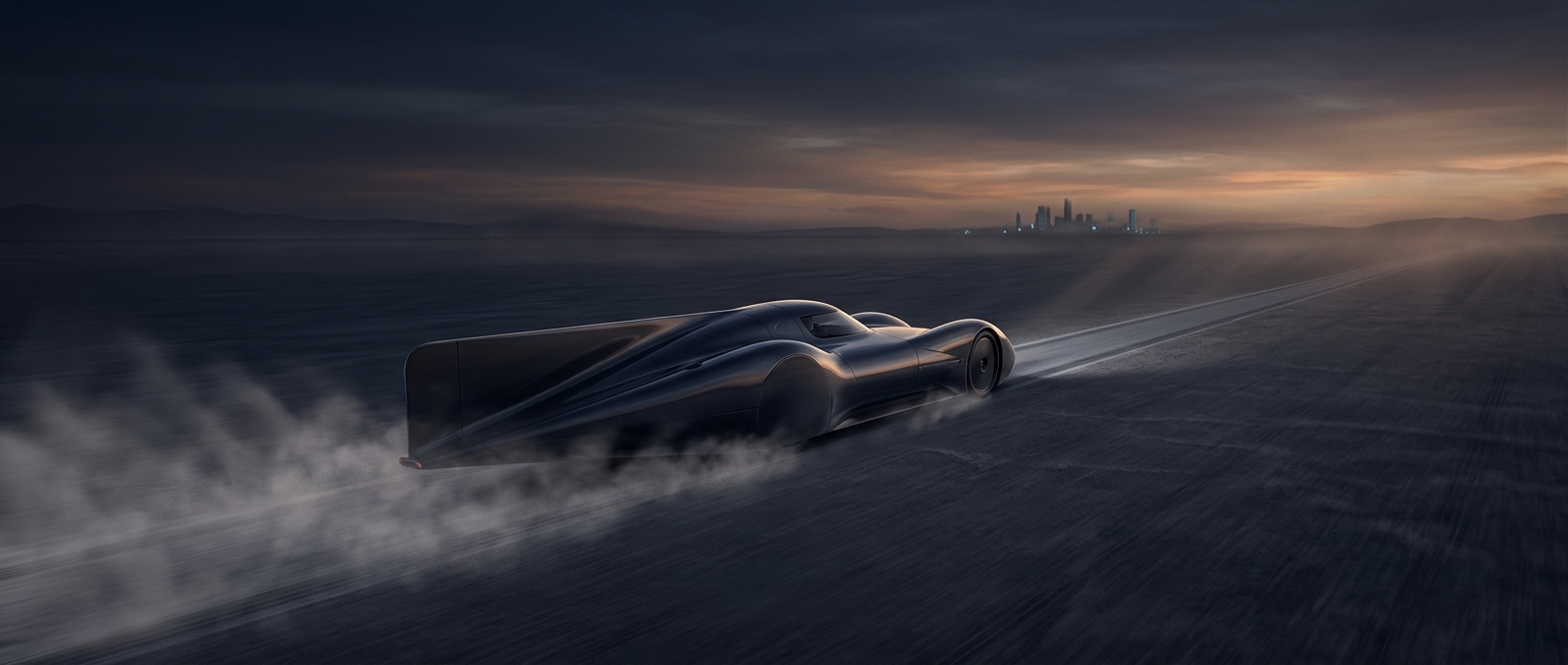
Why a record car needs a runway, not a commute
At very high speed, the biggest obstacle is the air itself. As a car moves faster, it must shove air aside more rapidly, and the resistance rises steeply. A long, low body helps the air flow around the vehicle with less drag; powerful engines then have to overcome that drag for every extra increment of speed. These shapes and systems are optimized for a narrow task, not for weaving through traffic.
The course is part of the machine
A closed, measured course gives a record car the space and conditions it needs to build speed without intersections, pedestrians, or oncoming vehicles. Salt flats are prized for their broad, straight, relatively unobstructed surfaces, though their grip and condition can limit how much power a driver can use. Records may also require runs in opposite directions, reducing the effect of wind or slope on the measured result.
That controlled environment changes the engineering choices. A record vehicle can prioritize stability in a straight line and aerodynamic efficiency over easy parking, a tight turning circle, or visibility in dense traffic. Its very low stance and specialized tires can also make ordinary bumps, wet pavement, and sudden maneuvers harder to manage.
Speed demands a different kind of control
At extreme velocity, tiny disturbances matter: a gust, uneven surface, or steering input can produce a large shift in the car’s path. The driver must make measured corrections, while safety systems and the course are designed around a predictable, high-speed run. In city driving, by contrast, safety depends on responding quickly to changing hazards and sharing narrow spaces with other road users.
That is why a record car’s achievement is inseparable from its setting. It is built to spend its power on a long, clear line—not to stop at a crosswalk or turn into a crowded parking lot.