Why a Mud Wall Needs Attention Every Day
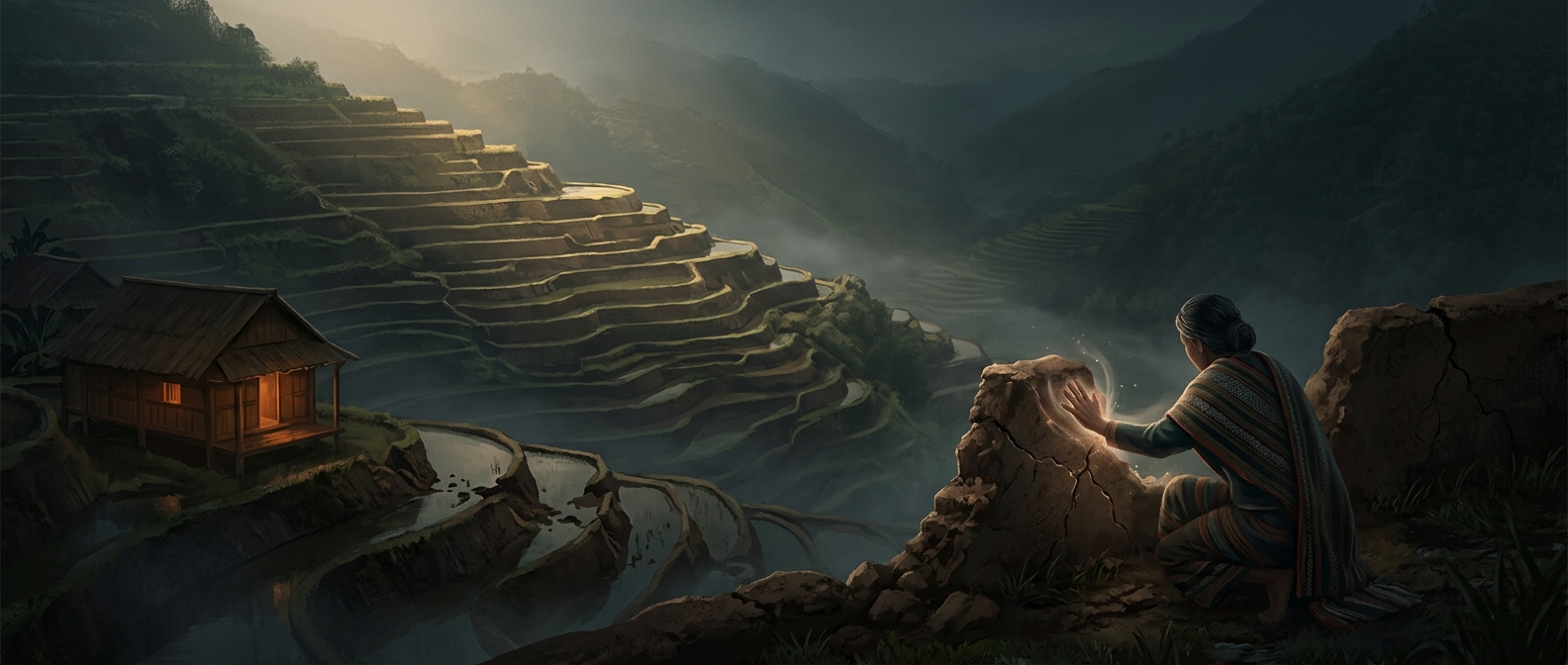
A rice terrace turns a steep slope into a series of level fields. Each narrow plot needs a low retaining wall to hold its soil and keep water from simply running downhill. In Ifugao, those walls are packed mud, not solid rock—so the barrier is part of a working landscape, not a permanent structure that can be left alone.
Water can seep through weak spots, and flowing water can carry loose earth away. A small leak may widen into a breach; once that happens, water and soil can spill out of one level and disrupt the fields below. Regular patching helps catch damage while it is still small. The source of the repair material is close at hand: the walls themselves are made of packed earth.
A Hillside Held Together in Steps
The terraces depend on many walls working in sequence. Each one supports a level strip of ground, and the stepped arrangement makes cultivation possible on terrain that would otherwise shed water and soil down a steep incline. A repair on one terrace therefore helps protect more than that single plot: it helps keep the slope’s chain of fields intact.
The striking detail is how maintenance changes the meaning of “ancient.” The terraces endure not because mud walls never weaken, but because people keep restoring them. Their long life is an ongoing task, repeated one vulnerable section at a time.