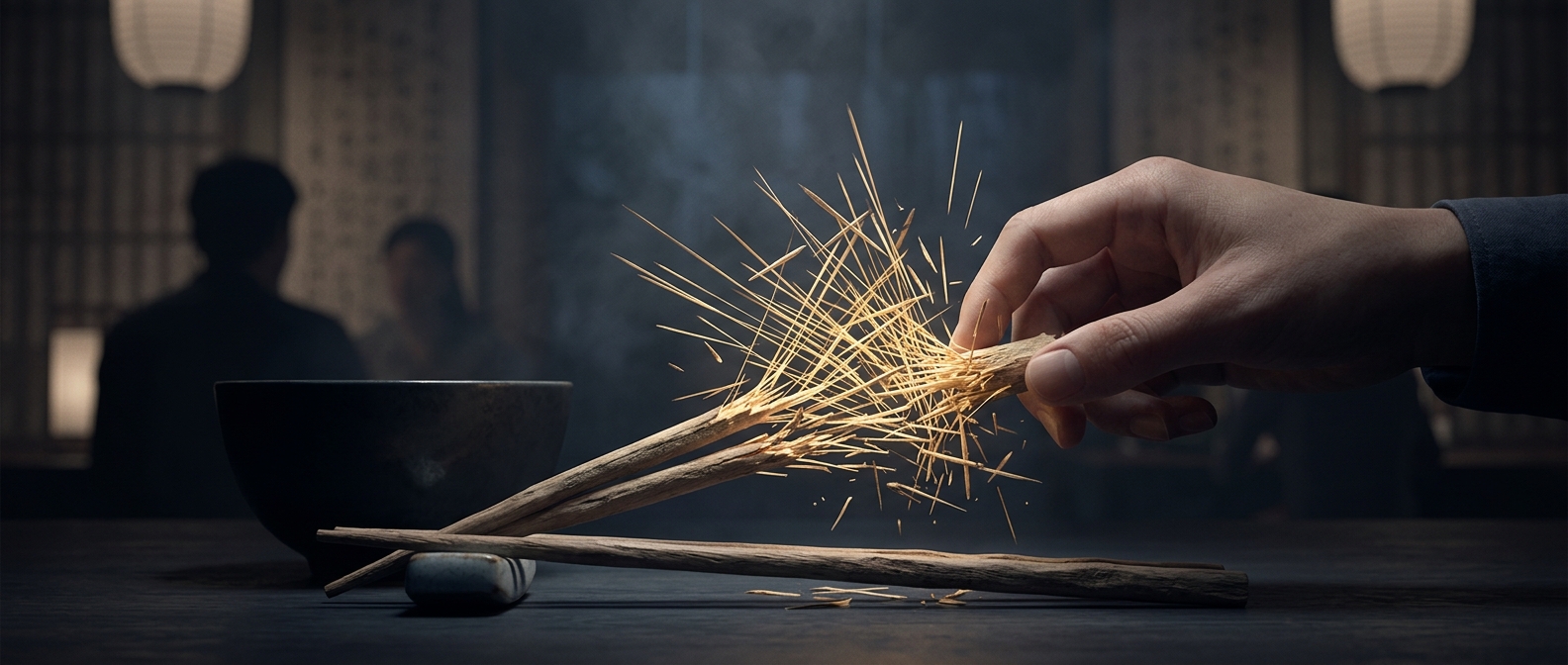
Why a Smooth Stick Can Open Into Splinters
Wood is made of long fibers running mostly in the same direction. When a disposable chopstick is cut or snapped from a larger piece, its surface may cross those fibers rather than neatly seal them. If the wood is inexpensive or lightly finished, tiny fibers can remain loose along the grain. Pressure from the fingers—or separating the two sticks—can lift those fibers into sharp, uneven points.
The roughness is often easy to miss before the chopsticks are pulled apart. A clean-looking exterior does not guarantee that the newly exposed inner edges are smooth: the break follows the wood’s grain, and that grain can wander or split irregularly.
Why Rubbing Is an Imperfect Fix
Rubbing the sticks together creates friction that may wear down a few loose fibers. But it is not a controlled sanding process. If the surfaces are already rough, the motion can also loosen more fibers, and it may leave a splinter attached rather than remove it. The result depends on the wood and the way the sticks separated.
That small flaw reflects a practical tradeoff in disposable utensils: they are made to be inexpensive and used briefly, not carefully finished like reusable cutlery. If a freshly separated pair has a jagged edge, checking it before eating is more reliable than assuming friction has made it smooth.