How a vending machine can serve a hot meal
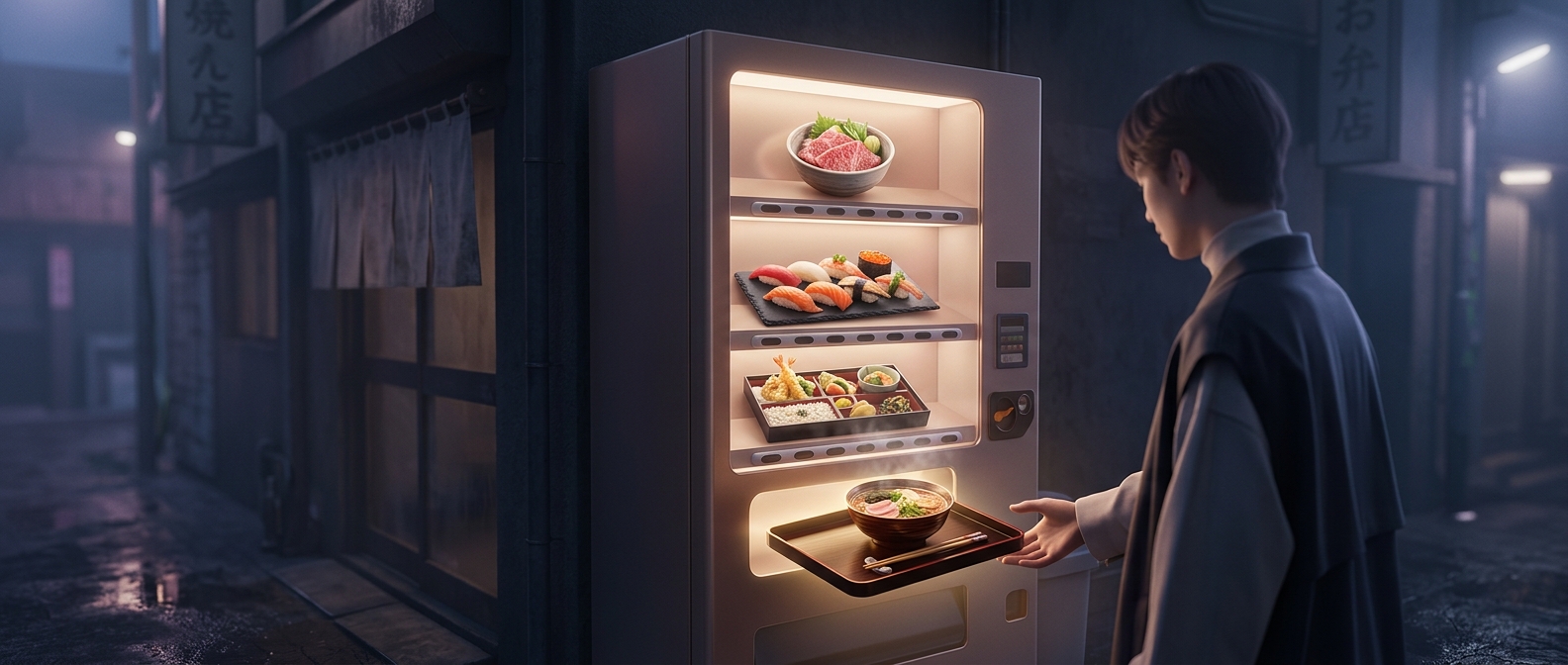
A hot-food machine does more than drop a sealed snack into a tray. Depending on the design, it may keep soup or a packaged meal warm, heat it after payment, or prepare a portion inside the machine. For noodles, that can mean dispensing noodles and hot broth into a serving container; the customer gets a dish ready to eat rather than a cold packet to take home.
The button press hides a small sequence of steps: the machine identifies the selection, releases the ingredients or container, and heats or assembles the order. That makes the experience quick, but also limits what the machine can offer. Each dish has to fit a repeatable process, and the machine needs space for ingredients, heating equipment, and waste or packaging.
Convenience shaped by place
In Japan, vending machines are familiar fixtures in public spaces, so hot-food versions extend an everyday service into moments when a staffed counter may be inconvenient. They can be useful for a quick bite without waiting for a full restaurant-style meal. The menu is necessarily compact, and the machine must be restocked and maintained to keep food available and equipment working.
That contrast is part of the appeal: an ordinary-looking machine can turn a tap into a warm bowl of soup or noodles. The meal is not prepared to order by a person, but its warmth and short wait make it feel closer to a quick stop at a counter than to buying a packaged snack.