A market you eat your way through
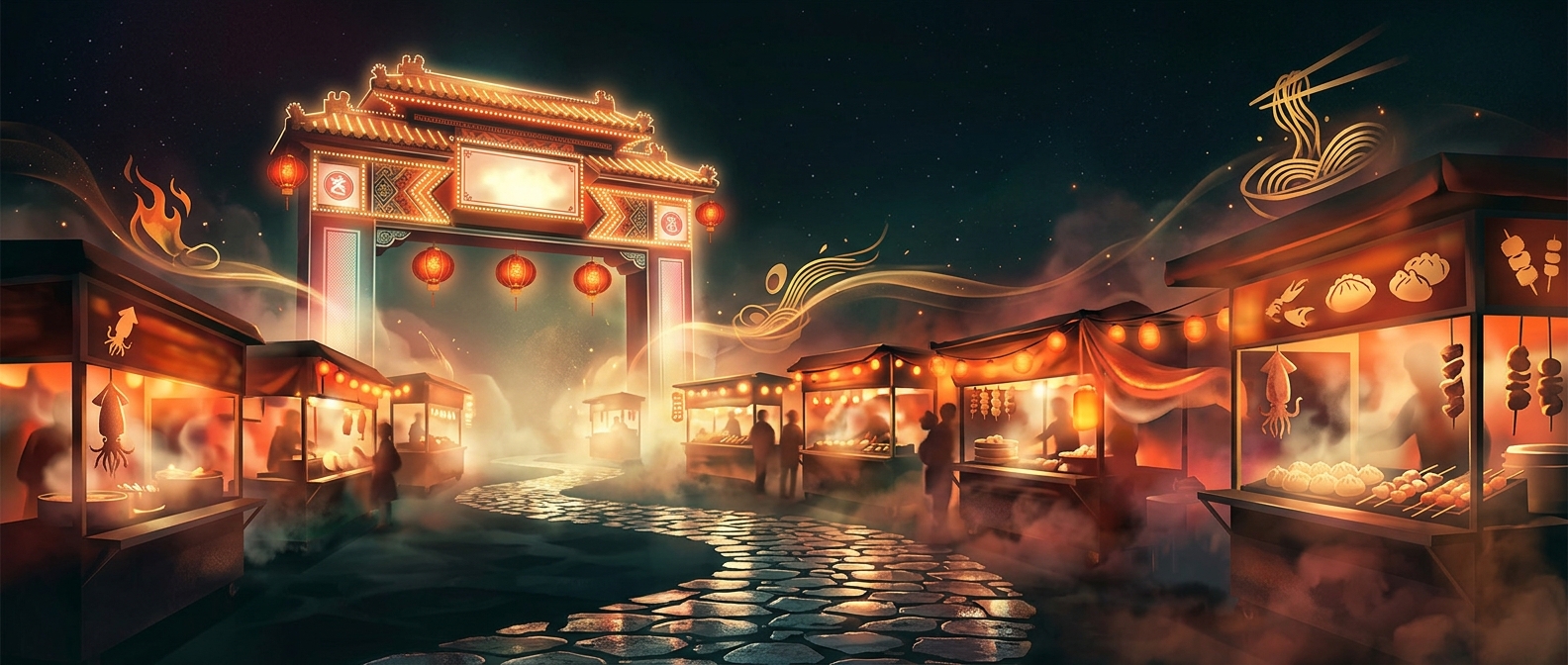
Raohe’s appeal is not just a roster of famous snacks; it is the way the visit unfolds. The market occupies a long, narrow street, so the natural route is simple: enter, follow the stream of people, and stop wherever a smell, a queue, or a sizzling griddle catches your attention. Instead of choosing one restaurant and staying put, visitors build a meal in small stages.
Why the pepper bun earns a stop
The black pepper bun, or hujiao bing, is made for that kind of eating. Its dough is wrapped around a savory filling—typically pork, scallions, and plenty of pepper—then baked against the hot inner wall of a clay oven. The intense heat browns the outside while the filling cooks inside, producing a crisp shell around a juicy center. It is satisfying enough to anchor a visit, but still portable enough to eat as you continue along the street.
That cooking method also makes the stall part of the attraction: fresh batches emerge from the oven, and the line offers a visible clue that people are waiting for buns at their hottest. Michelin recognition adds another reason to seek out particular vendors, but it does not replace the basic pleasure of watching food being made and eating it straight away.
The temple at the threshold
Beginning near Ciyou Temple gives the market a recognizable point of arrival. The transition from temple grounds to a busy food street makes the outing feel like more than a stop for dinner: visitors move from a place of worship into the everyday bustle of the neighborhood. Raohe’s pilgrimage is therefore both culinary and spatial—one well-marked walk, with a signature bite waiting along the way.