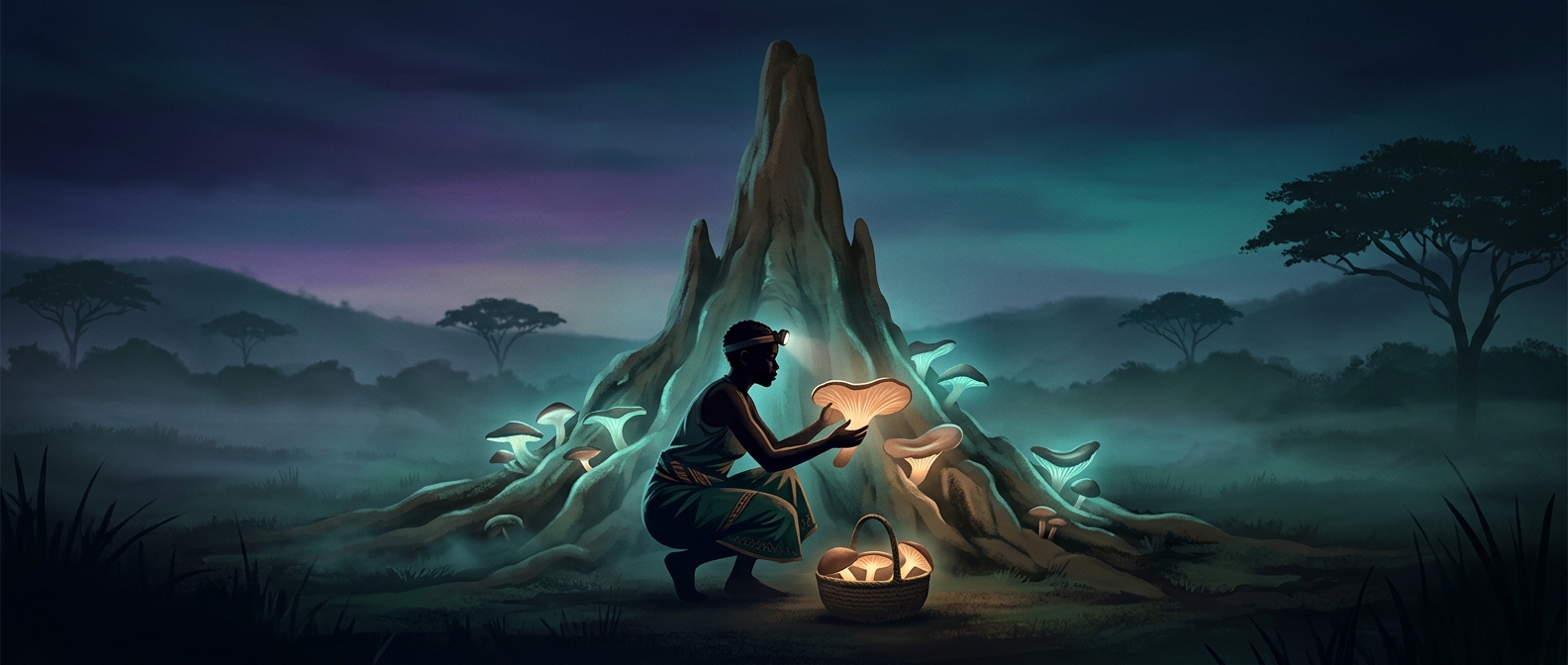
A termite mound is more than a pile of earth
The giant mushrooms associated with Zambia’s termite mounds belong to Termitomyces, a group of fungi closely linked to fungus-growing termites. The mound is the visible part of a much larger underground system: beneath it, termites build chambers and maintain beds of partly digested plant material, where the fungus can grow.
That relationship helps explain why these mushrooms appear in such specific places. The fungus’s underground growth is tied to the termite nest and its stored organic matter; the mushroom is its temporary fruiting body, sending spores into the air. A mound can remain a striking landmark even after termites have left, but the fungus’s growth is connected to the nest system, not simply to the mound’s shape.
Why the rains bring them back
Rain changes the conditions around the underground fungus. Moist soil and humid air favor the brief emergence of mushrooms, which push up through the ground near the mound. Their season is short, so the rains turn a familiar patch of earth into a place worth checking again.
For people who gather them, the mushrooms are valued for their substantial, meaty texture. Their return is also a practical signal: the right combination of rain, soil moisture, and a termite-fungus association has come together. The mound is both habitat and landmark—an enduring sign of where a seasonal harvest may appear.