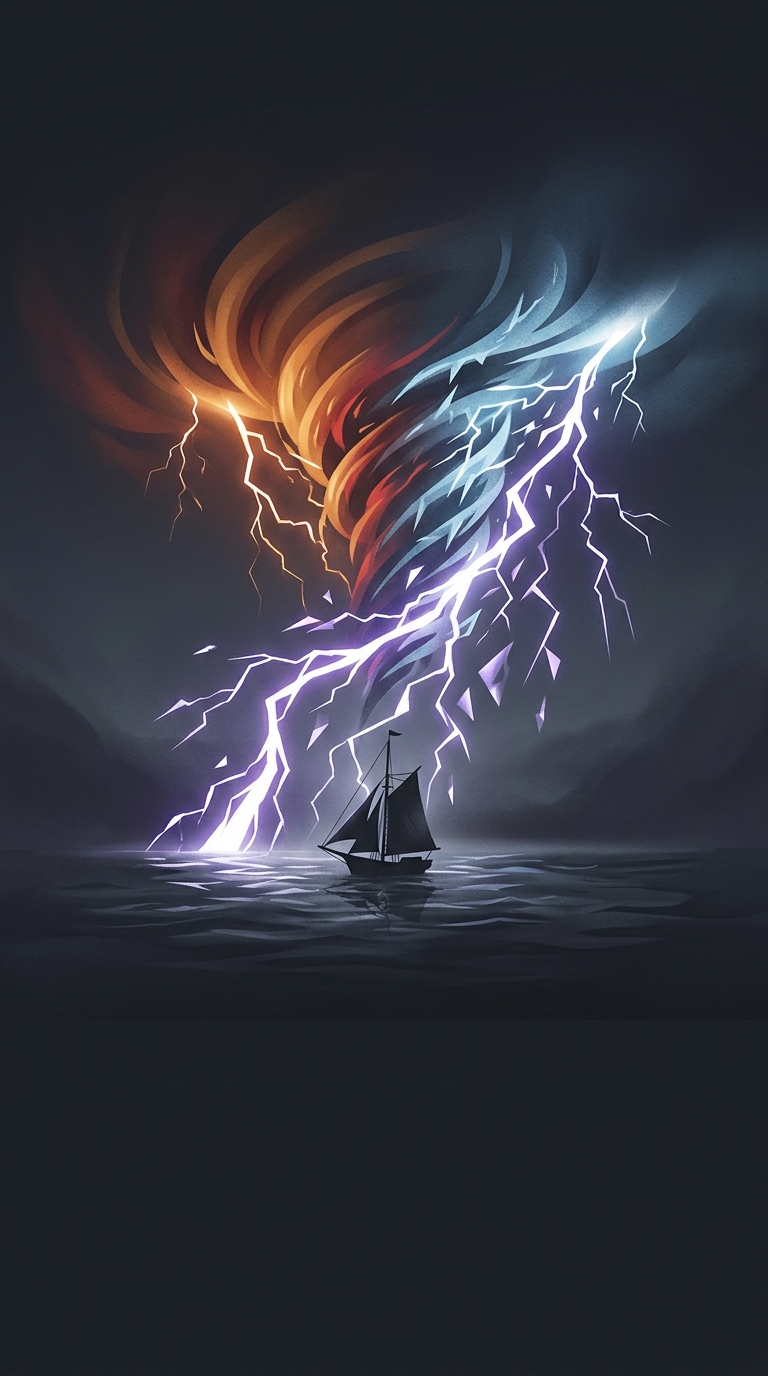
Why storms gather at Lake Maracaibo
The Catatumbo lightning is tied to the meeting of water, wind, and steep terrain around Lake Maracaibo in northwestern Venezuela. Warm, humid air rises from the lake and nearby wetlands. Winds carry that moisture toward the surrounding mountains, where cooler air and rising slopes help build tall storm clouds. At night, changing breezes can bring the air together over the lake’s southern reaches, favoring repeated thunderstorms.
The result is not one continuous storm but a recurring pattern: storms form, fade, and form again. Their lightning can be visible across a broad stretch of water, making the night sky seem to flash in successive bursts.
A beacon made by weather
Before reliable navigation lights and electronic instruments, a distant, dependable landmark could help sailors judge where they were. The flashes over the lake offered just such a reference, especially on dark nights when the shoreline was difficult to make out. They were not a lighthouse in the literal sense: lightning does not mark a safe channel or warn of hazards. It was the persistent glow on the horizon that helped orient boats.
That distinction matters. The same storm system that made the flashes useful could also bring dangerous wind, rain, and rough water. Sailors could use the light to recognize a direction while still needing to navigate the storm itself with care.
A landscape that shapes the spectacle
The phenomenon depends on local geography, not simply on a high rate of lightning. Lake, lowland, prevailing winds, and mountain barriers combine to make storm formation unusually frequent in one part of the region. The flashes are therefore both a natural display and a visible trace of the forces steering moist air across the landscape. For travelers, their drama is inseparable from that setting: the lake and surrounding terrain help create the very light that once guided those crossing it.