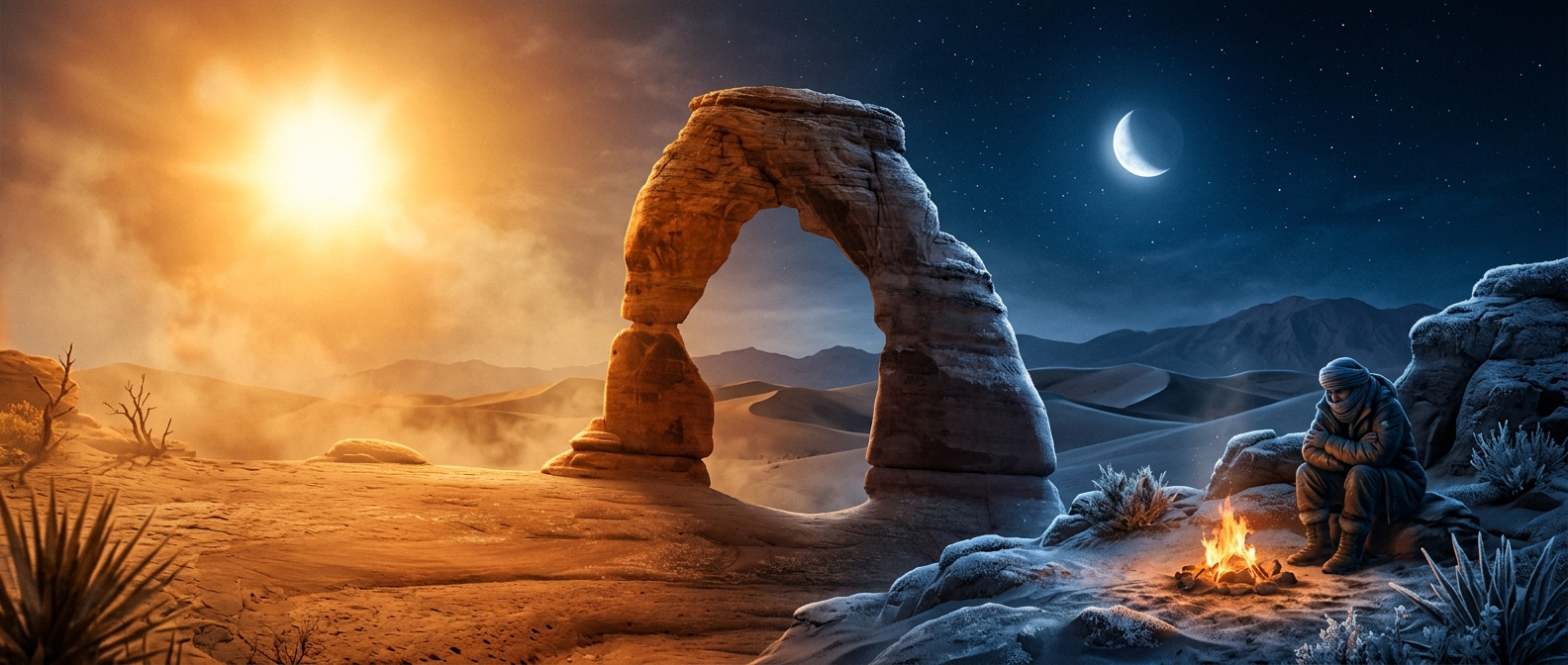
Why the Desert Cools So Quickly After Sunset
After dark, the ground loses energy by emitting infrared radiation, an invisible form of heat. In a humid place, water vapor and clouds absorb some of that energy and send part of it back toward the surface. Deserts often have clearer skies and much less water vapor, so more heat escapes upward instead of being returned.
The cooling starts at the ground. Sunlight may make the surface scorching during the day, but that warmth does not necessarily penetrate far into loose, dry soil. Once the sun sets, the surface can cool quickly, chilling the air closest to it; the effect is often strongest on calm, clear nights.
“Desert” Does Not Mean One Kind of Weather
The size of the temperature swing varies with elevation, season, wind, and cloud cover. A high desert can have cold nights because of its altitude, while clouds or humid air can slow cooling elsewhere. Some deserts are cold for much of the year, and even hot deserts can have nights that remain mild.
For travelers, the practical surprise is that daytime heat is a poor guide to nighttime conditions. A place that calls for shade and water at noon may require warm layers after sunset—especially at a campsite where the ground and open sky are exposed.