Why Kaieteur Falls drops in one dramatic step
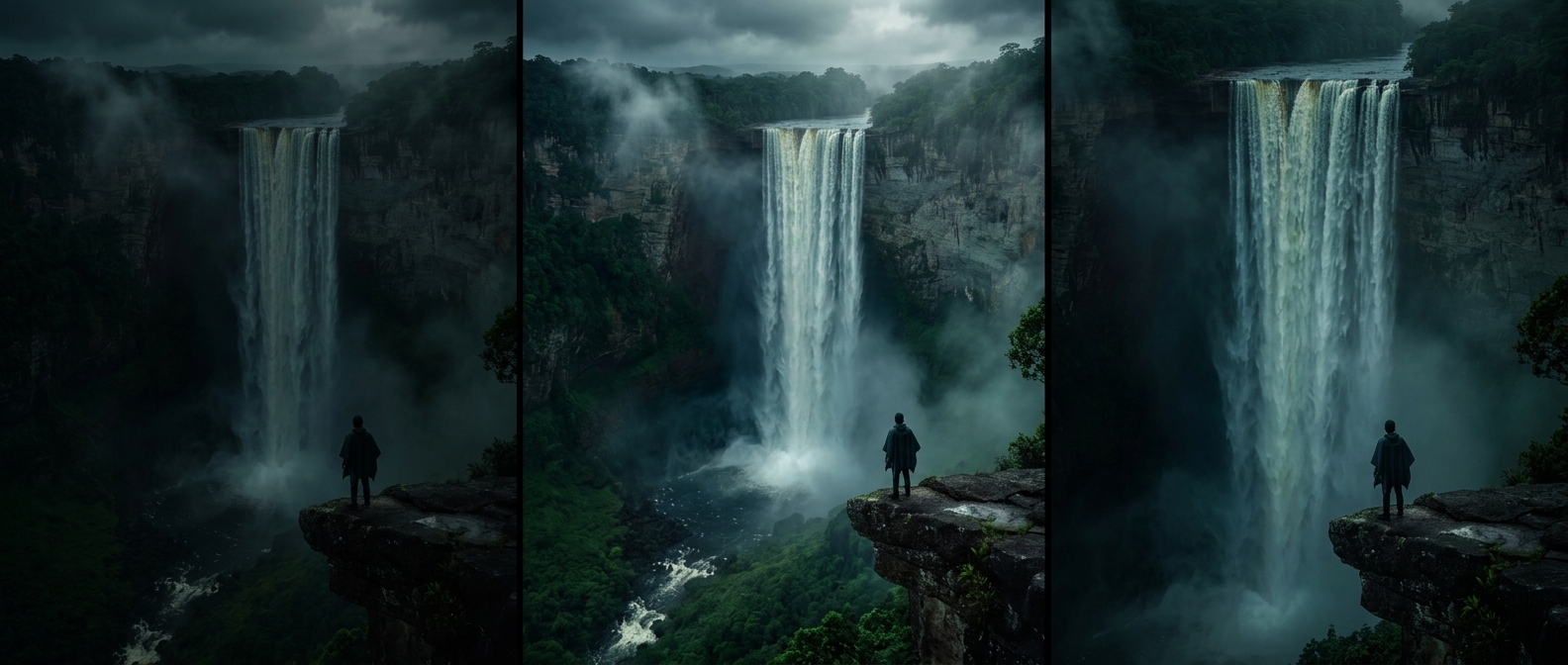
Kaieteur’s uninterrupted plunge begins with the shape of the land. The Potaro River crosses Guyana’s interior highlands before reaching a steep edge in the Guiana Shield, an ancient region of exposed rock. At that edge, the river has no sequence of ledges to descend: it spills over a single cliff face into the gorge below.
The cliff is not perfectly fixed. Water wears away rock at the base, while the river carries off loosened material. Over long periods, that erosion can make a waterfall’s lip retreat upstream. The surrounding rock and plateau help preserve a steep drop rather than turning the river into a series of smaller cascades.
A waterfall shaped by its setting
Kaieteur lies within rainforest, far from Guyana’s coastal population centers. That setting changes the experience of the falls: the view is framed by forest and a deep gorge, not by a built-up tourist district. The river’s single plunge is therefore more than a striking silhouette—it is a visible meeting of the high plateau and the terrain carved below it.
The drop also concentrates the river’s force. Instead of spreading across several shelves, the water falls into one powerful plunge, sending spray into the gorge. From the rim, the eye can follow the Potaro’s surface to the cliff edge and then lose it in the mist below—a simple, dramatic view of how a river can divide a plateau from the landscape it has cut away.