A wilderness walk with a timetable
The Milford Track’s appeal lies partly in its remoteness: the route crosses Fiordland’s rain-soaked valleys and mountain passes, far from roads and ordinary hotels. But that same isolation makes a walking trip difficult to improvise. The track is a point-to-point journey, so hikers cannot simply finish a day and arrange a ride or room nearby.
Guided trips solve that logistical problem by turning the crossing into a sequence of planned days. Guides set the pace, and accommodation and meals are arranged at designated stops. For guests, the wilderness still feels wild; the evening has a known destination and a bed waiting there.
The logistics behind the comfort
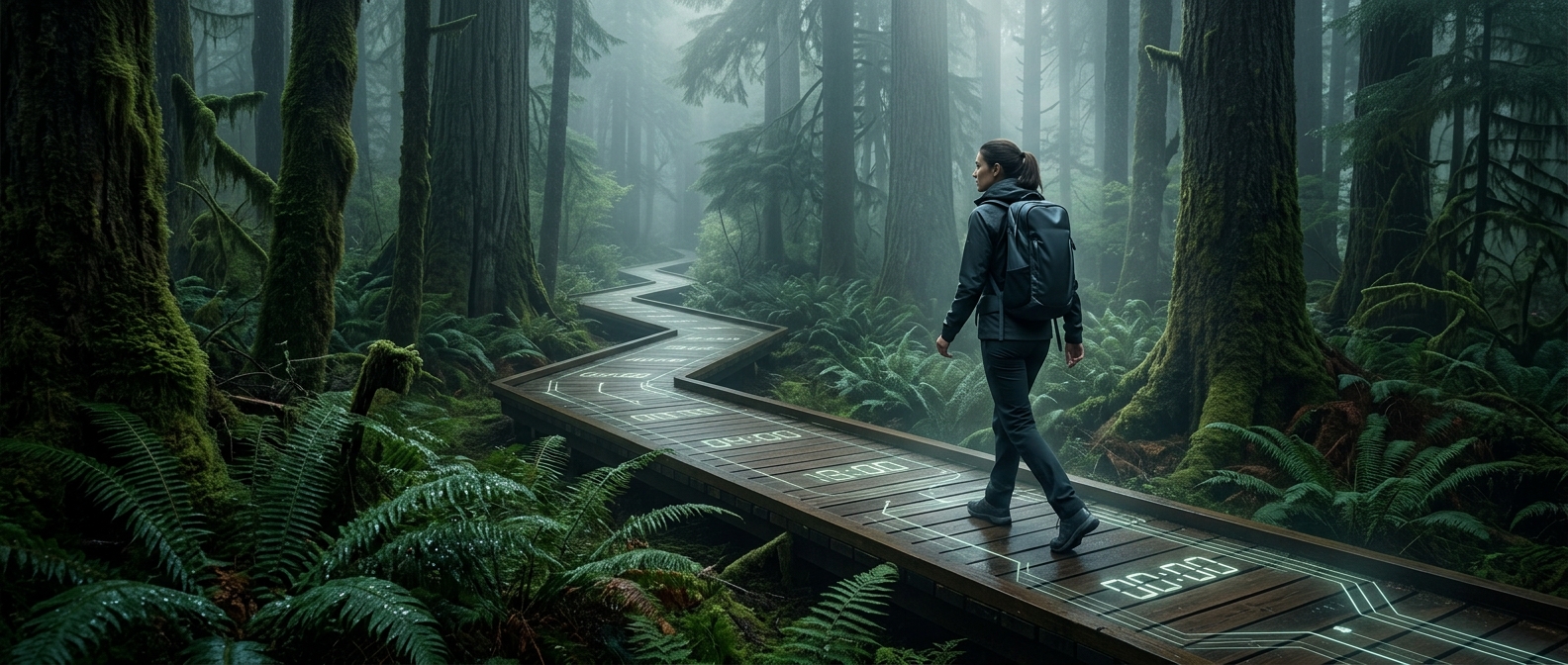
On a remote track, a schedule is more than a convenience. Walkers need to arrive at their overnight stops before dark, while boats and other transport connect the trail’s ends to places reachable by road. A delay can affect more than one person’s plans, especially when the next stage depends on a shared transfer or a limited place to stay.
That makes the itinerary part of the experience’s design. Operators can organize food, lodging, guiding and transport as one journey rather than leaving hikers to solve each problem along the way. The tradeoff is less freedom to choose when to stop or how quickly to walk.
Wilderness, made walkable
This arrangement does not remove the weather, distance or effort of crossing Fiordland. It changes how visitors meet those challenges: instead of carrying every practical uncertainty with them, they follow a route whose daily stages have been planned in advance. By sunset, the day’s achievement is not just reaching a remote valley—it is reaching the one prepared place where the next morning’s walk can begin.