A fence built for the scale of the outback
The Dingo Fence is less a single dramatic barrier than a long, working boundary stretched across remote country. Its route crosses dry plains, scrub and open grazing land, where a fence must do its job far from towns and repair crews. That distance is part of the challenge: a fallen section or a gap can give dingoes a way through, so protection depends on maintenance as much as construction.
Why sheep country needed a boundary
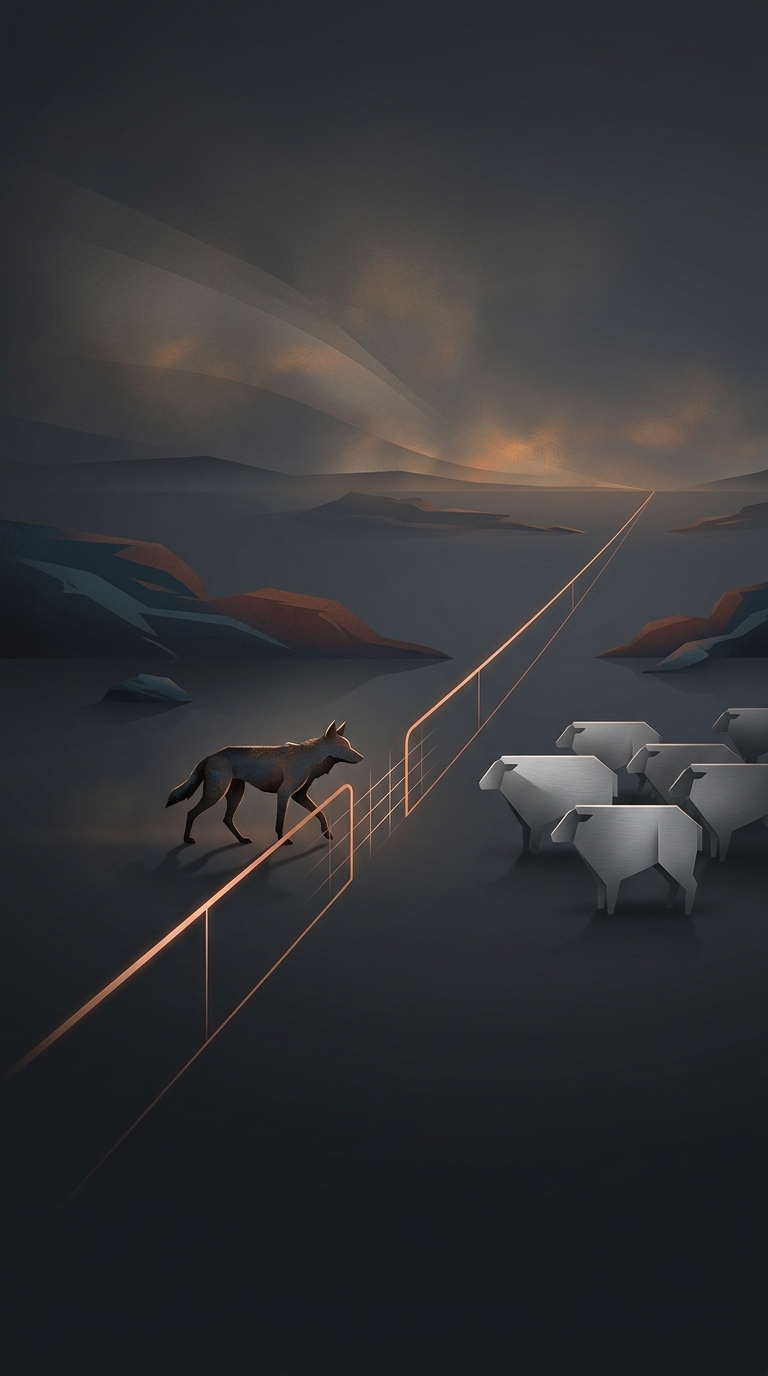
Dingoes can prey on sheep, making them a serious concern for graziers in regions where flocks spread across large properties. The fence gave farmers a way to keep predators out of valuable grazing areas without trying to guard every flock across vast distances. Its line therefore marks an economic boundary as much as a physical one: on one side, sheep farming; beyond it, country where dingoes can roam more freely.
A barrier with consequences on both sides
A fence changes more than the movement of predators. It can also restrict the passage of other animals, while the presence or absence of dingoes can affect the local balance among wildlife and livestock. The barrier is not a sealed wall across an empty landscape: roads, gates, weather and wear all create practical demands for people responsible for keeping it effective.
That makes the fence a striking piece of outback infrastructure. Its scale is visible in the landscape, but its real work happens in small, repeated acts of upkeep—checking a remote stretch, closing a gap and keeping a boundary intact across thousands of miles.