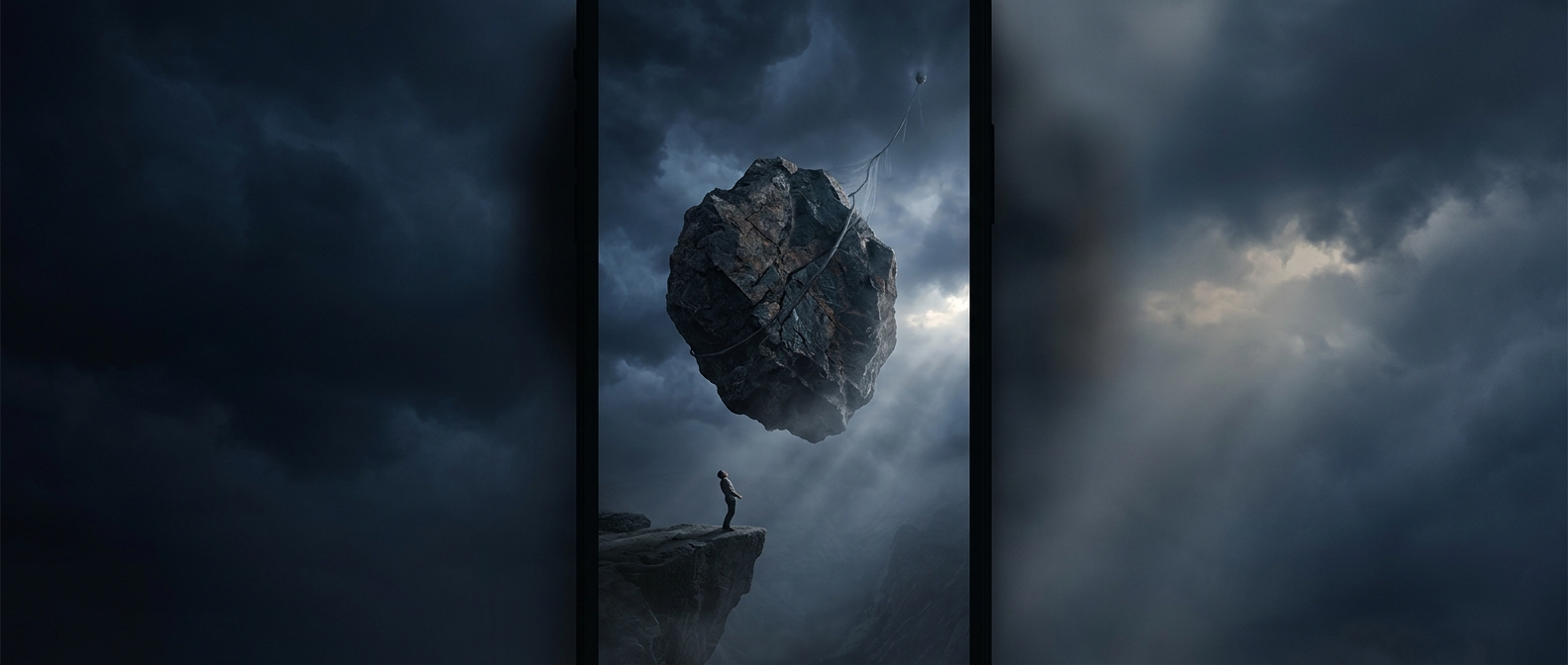
How a Boulder Became a Mountain Landmark
Kjeragbolten sits in a narrow gap in the Kjerag massif above Norway’s Lysefjord. During the last ice age, a glacier filled this part of the landscape. As the ice moved and later retreated, it left the boulder trapped between steep rock walls. The stone is not perched on a broad ledge: it is wedged into a crack, with open air visible beneath it.
That fit is the key to the spectacle. The surrounding rock supports the boulder from either side, holding it in place even though the drop below makes the gap look unnervingly exposed. Its stability comes from the way it is lodged in the rock, not from a hidden platform.
Reaching the Gap Is Part of the Experience
Visitors reach Kjeragbolten by hiking across the mountain terrain. The final approach brings them to the narrow opening, where stepping onto the boulder means crossing a short stretch of exposed space. The fjord far below sharpens the sense of height: from the rock, the landscape seems to fall away at once.
The contrast is what makes the spot so memorable. A boulder left behind by moving ice has become a natural stage, but the same tight gap that holds it also leaves little room to forget how high above the fjord it sits.