A waterfall made by density and seafloor shape
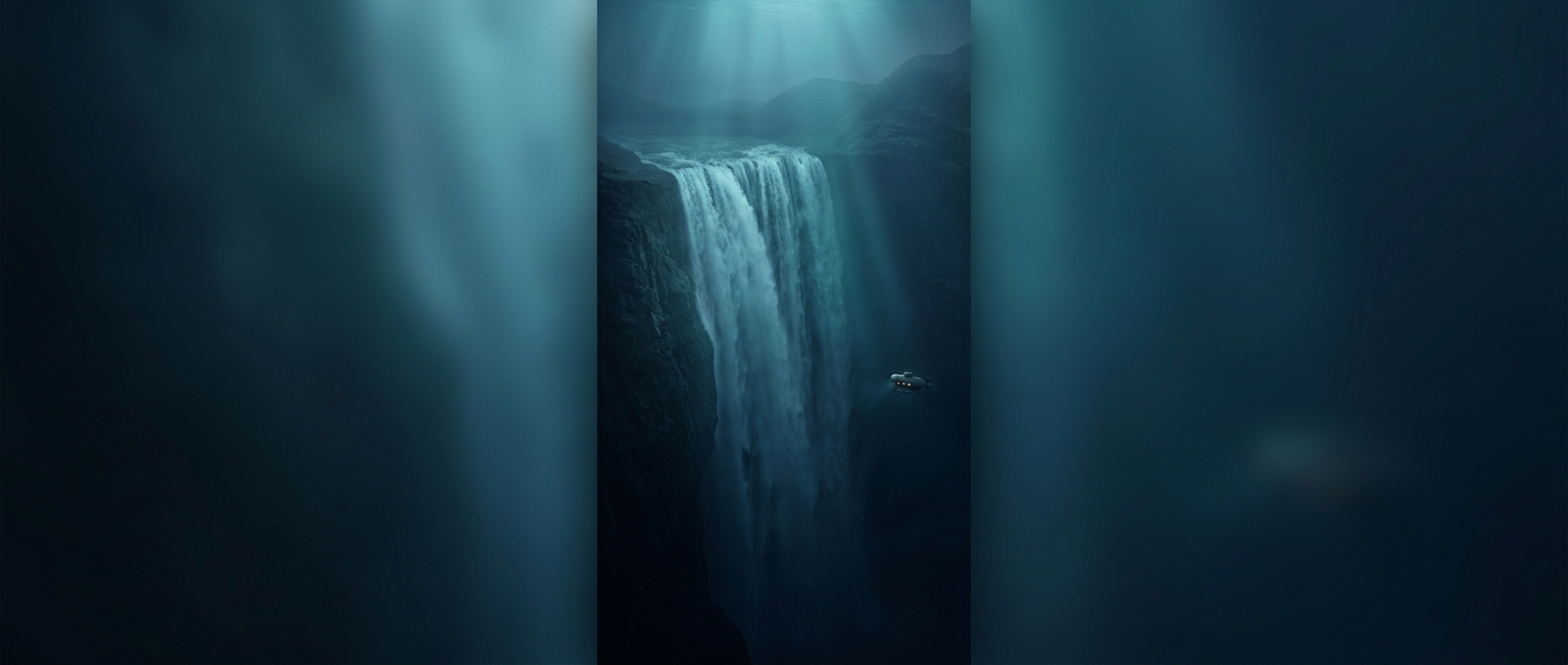
The Denmark Strait lies between Greenland and Iceland, where a shallow underwater ridge separates the Nordic Seas from the deeper North Atlantic. Cold water formed in the north is denser than the warmer water around it. When that heavy water reaches the ridge, it spills over and sinks down the far side into a deep basin.
The seabed turns the flow into a vast underwater cascade. Unlike a waterfall on land, it does not drop through open air: surrounding seawater presses in from every direction, and layers of water with different temperatures and densities guide the descent.
Why the cascade matters
As the cold water descends, it helps carry dense water into the deep North Atlantic. That movement is one part of the ocean’s large-scale circulation, which redistributes heat and water around the globe. The cascade is therefore not just a striking feature of the seabed; it is a route by which water formed in the north joins the deeper ocean.
Its enormous flow is difficult to picture because the surface gives almost no hint of it. Ships can cross the strait above, while far below them, the shape of an underwater ridge sends a hidden river of dense water down into the deep.