A fixed point on a moving surface
The North Pole is a geographic coordinate, not a place anchored to a continent. It marks the northern end of Earth’s axis of rotation, above the Arctic Ocean. Sea ice forms when ocean water freezes, but the resulting sheets remain afloat—and wind and currents can carry them across the water below.
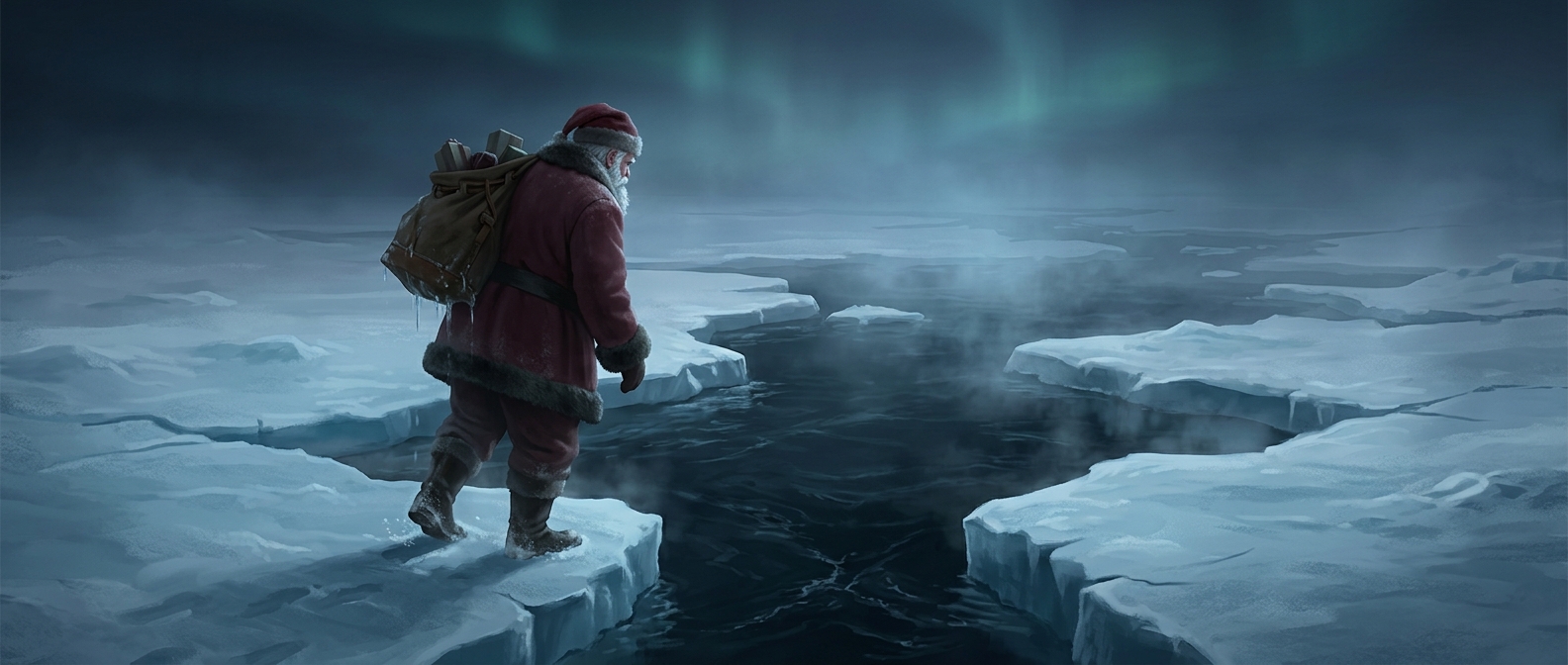
That creates an unusual mismatch: the pole’s location on a map stays fixed, while the ice beneath a visitor’s feet may be drifting. A person or camp can move with the floe without moving away from the geographic North Pole in the same way a ship moves across open water; the ice itself is carrying them.
Why a building cannot simply be planted there
A permanent structure needs stable ground. Arctic sea ice is neither ground nor a single unchanging slab: it shifts, cracks, and changes with the seasons. A foundation attached to one patch of ice would move with it, while fractures or melting could make the site unsafe or unusable. That makes the pole a destination for temporary expeditions, not a conventional settlement.
For travelers, reaching the North Pole therefore means reaching a moving platform over ocean—not stepping onto a permanent marker set in land. Even the surface underfoot is temporary, which is why a visit there depends on the condition and movement of the ice rather than on a road or fixed piece of coastline.