How a hidden framework holds its shape
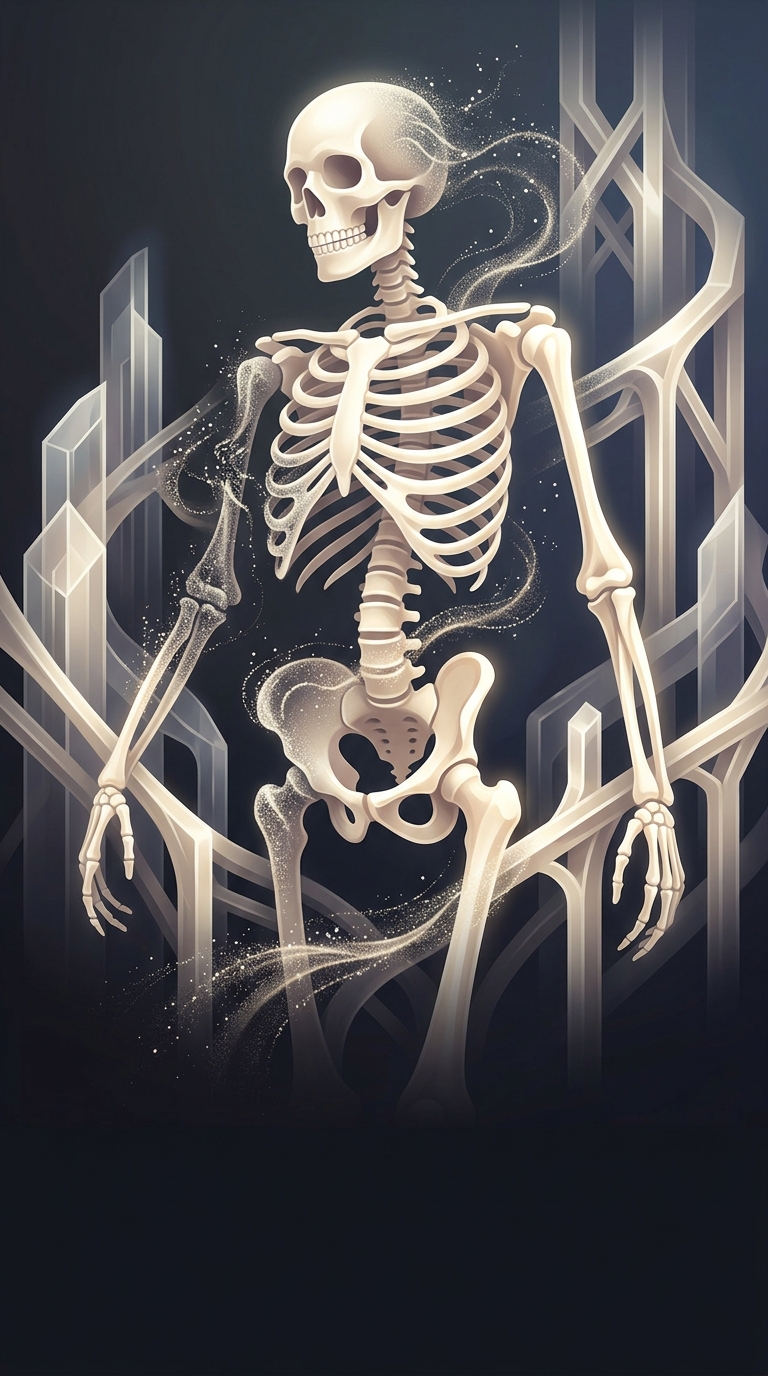
The skeleton works because it is built as a connected structure, not as a stack of isolated bones. At joints, bones meet in ways that allow movement; ligaments help hold those connections together. Muscles attach to bones and pull on them, turning the framework into a system of levers. When a leg muscle contracts, for example, it can move the lower leg around the knee rather than simply tightening in place.
Soft tissue both covers and supports this structure. Skin and fat cushion the body’s outline, while muscles lie around bones and help stabilize joints. Some bones are close enough to the surface to feel through the skin—such as the collarbone or knuckles—while others are protected deeper inside the body.
Bone is living tissue, not inert scaffolding
Bone’s hardness comes from minerals deposited within a flexible framework made largely of collagen, a protein. That combination helps bones resist everyday forces without making them brittle like stone. Calcium is an important part of the mineral, but bone strength also depends on the tissue’s structure and ongoing maintenance.
Throughout life, cells remove small amounts of old bone and build new bone in its place. This renewal helps the skeleton adapt to the loads it experiences and repair ordinary wear. The result is a framework that stays concealed beneath soft tissue but is continually being maintained—and that can change in response to how the body uses it.