Water is part of bone’s working material
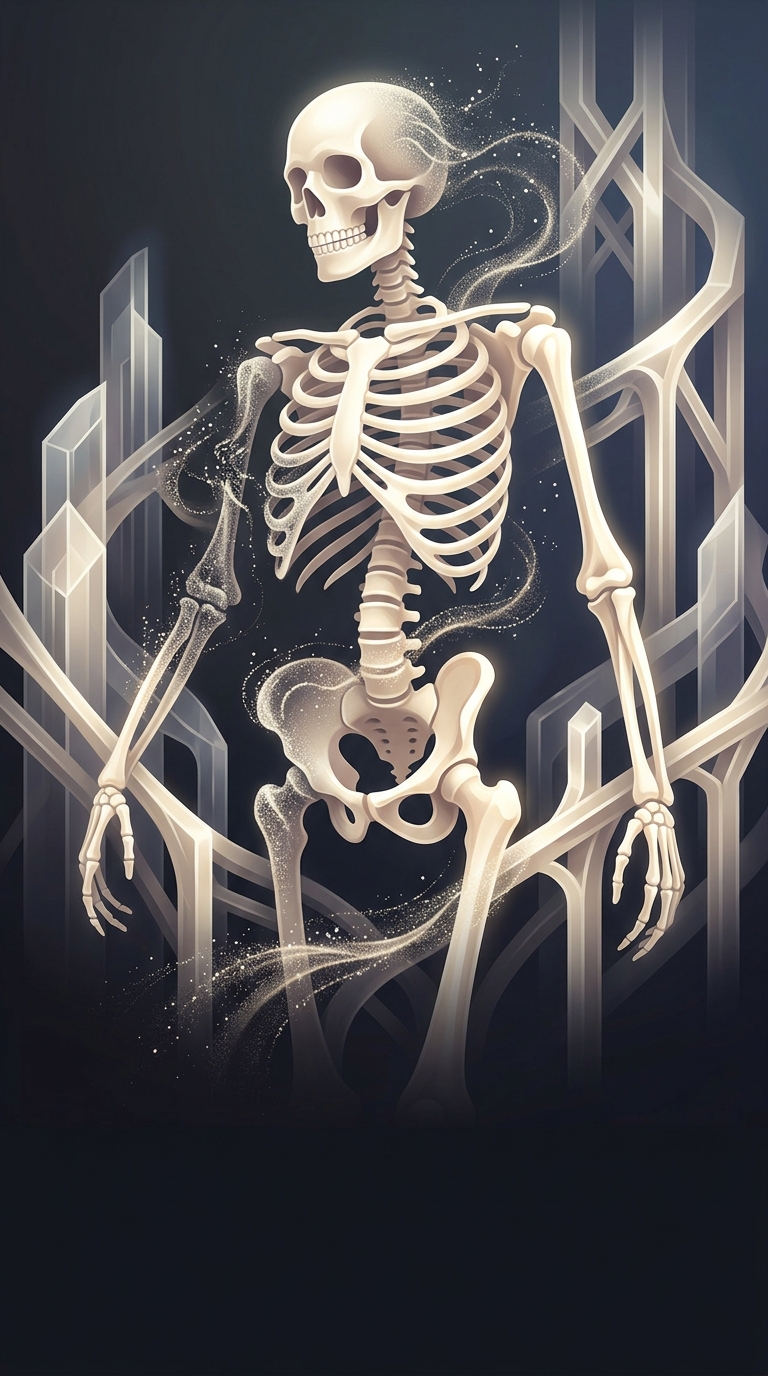
Bone is not a solid block of mineral. Its structure combines collagen—a flexible protein that forms a framework—with hard mineral crystals, mainly calcium phosphate. Water occupies spaces within that framework and around its cells. The exact share varies with the bone and how its mass is measured, but in living bone it can be roughly one-third.
The fluid helps keep tissue alive
Bone cells need oxygen and nutrients, and they must dispose of waste. Blood vessels run through bone, while fluid in its tiny channels helps materials move between those vessels and cells embedded in the hard tissue. This is one reason bone can respond to the body: it is living tissue that continually maintains and remodels itself, not inert scaffolding.
Water also contributes to the way bone handles force. Collagen can bend somewhat, while mineral makes the structure stiff; water within the tissue helps those components work together and affects how bone deforms under load. Bone’s toughness comes from this composite arrangement, rather than from hardness alone.
Hardness hides a porous interior
The mineralized structure can look dry and stone-like from the outside, but its microscopic spaces hold fluid. That interior lets bone combine support with ongoing biological activity—and helps explain why a fracture is not simply a crack in a lifeless material, but damage to tissue the body must repair.