How extra water becomes extra urine
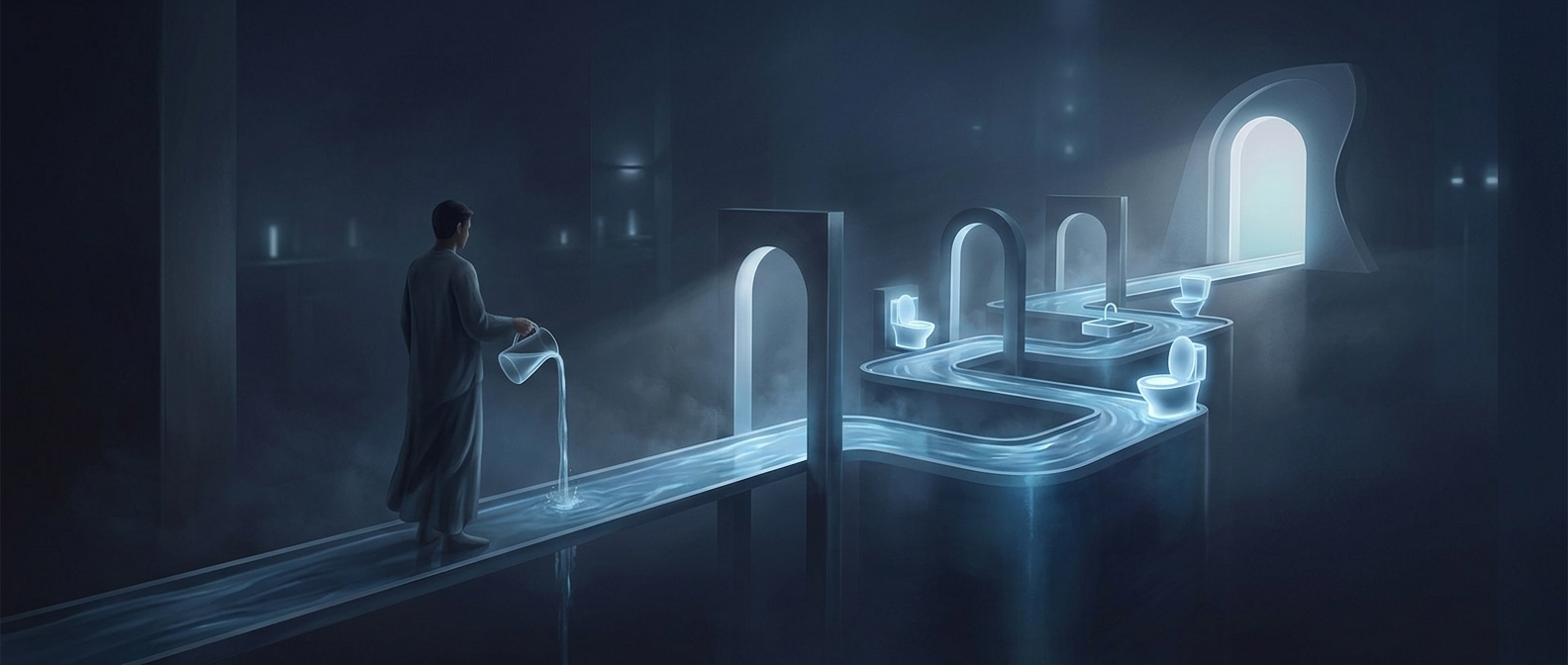
Your kidneys constantly filter your blood, removing waste while returning much of the water and useful substances your body still needs. When you drink more water than your body needs at that moment, the kidneys can send a larger share of it into urine. The urine collects in the bladder, so it fills sooner and you may need to go more often.
Why the timing and number of trips vary
The kidneys adjust water conservation throughout the day. When the body needs to hold on to water, they make less, more concentrated urine; when there is excess water, they make more, dilute urine. The bladder’s capacity and how quickly it fills also affect when the urge to go becomes noticeable.
Not every glass produces an immediate trip. Water takes time to be absorbed and processed, and fluids also come from food and other drinks. Activity, heat, and other everyday conditions can change how much water the body loses and therefore how much it needs to retain.
A guideline, not a quota
“Eight glasses” is a simple rule of thumb, not a universal prescription. People differ in their fluid needs, and the body’s water balance changes with circumstances. Drinking well beyond what you need can mean more urine without providing extra benefit; the practical consequence is often just a bladder that fills sooner.