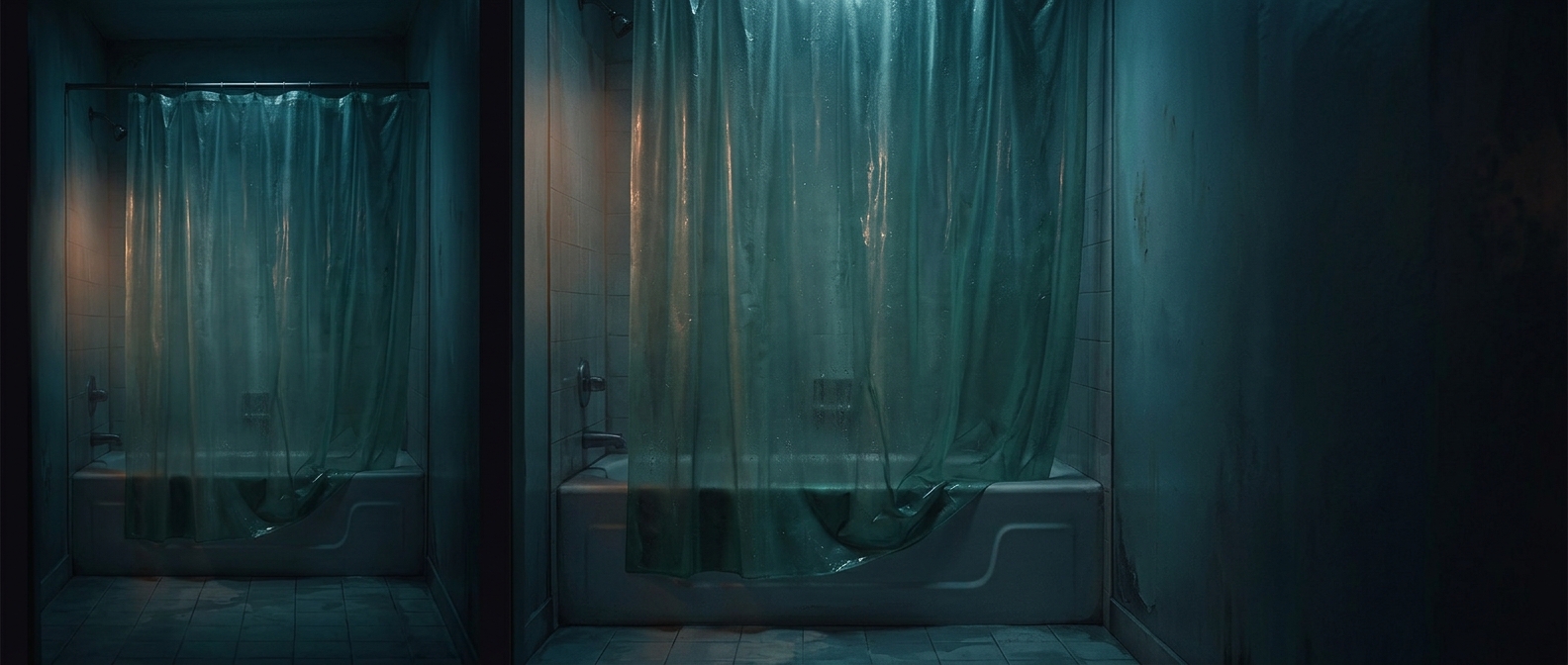
How a shower can draw its curtain inward
A shower does more than wet the curtain: its spray stirs the air. As droplets fall, they drag nearby air along with them, setting up a circulating flow inside the stall. Meanwhile, warm, humid air tends to rise, and cooler room air moves in to replace it. These motions can leave the air pressure just inside the curtain slightly lower than the pressure outside.
A small pressure difference moves a light curtain
Air pushes in every direction, even when you cannot feel it. If the pressure on the bathroom side is a little higher, that air presses the curtain toward the shower. The curtain’s broad, flexible surface makes the movement noticeable: a modest push can make it bow inward and brush against your legs.
The effect depends on the shower and the bathroom. Spray strength, water temperature, room airflow, and the curtain’s weight and position all shape the air currents. The familiar inward tug is not one simple blast of suction; it is the result of moving air and a pressure imbalance around a very light barrier.
That is why the curtain can drift inward even when no one touches it: the shower has set the air in motion, and the curtain is light enough to show where that motion is going.