How Leftover Cloth Became a Shirt Style
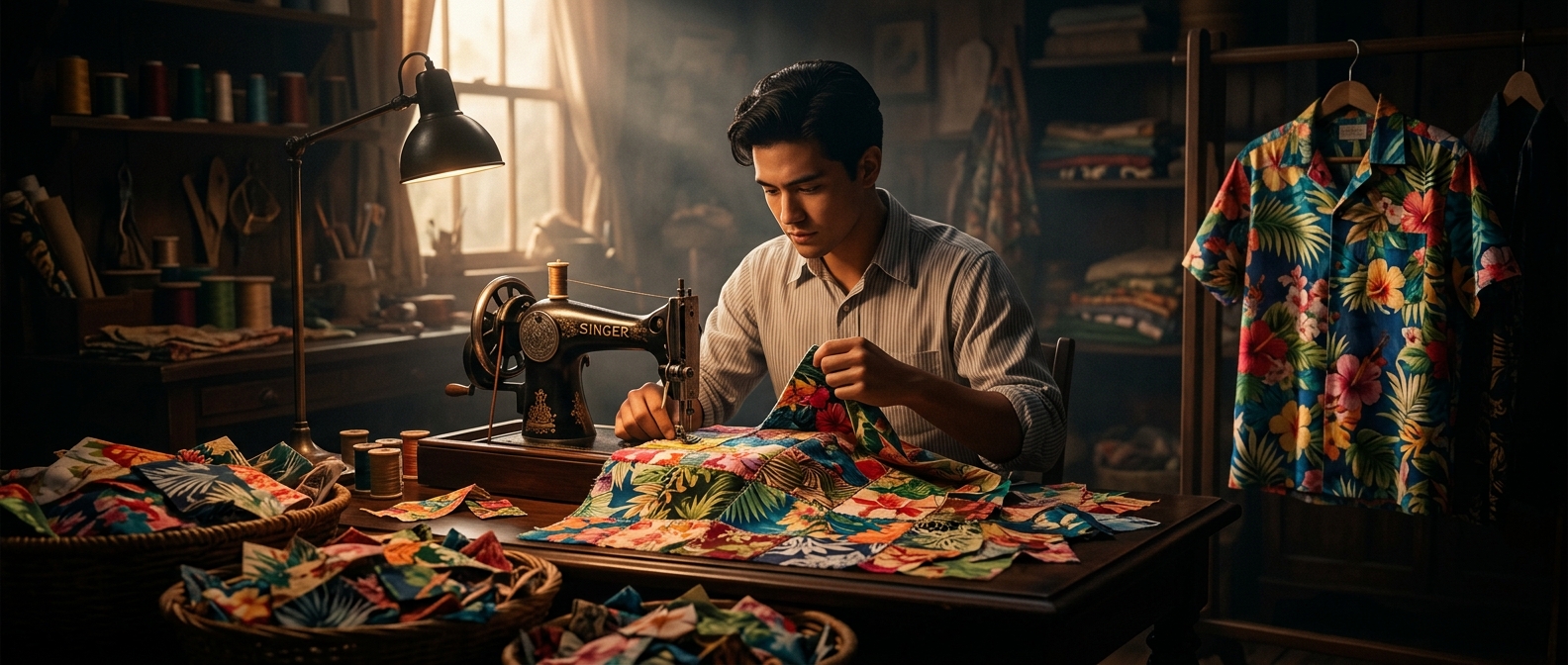
A pile of bright fabric remnants is awkward inventory: too small or mismatched to sell as a single length, but still useful to a tailor. In 1920s Hawaii, tailors could turn those pieces into shirts by cutting and joining them into wearable panels. The practical solution had an unexpected visual payoff: colors and prints that might not have been chosen to match appeared together in one garment.
From Workaround to Signature
The shirts made the constraint visible. Rather than hiding the fabric’s differences, their appeal came from the lively combination—an effect that was hard to reproduce with plain, uniform cloth. What began as a way to use stock that might otherwise sit unsold could therefore become a recognizable look in its own right.
That origin helps explain why the Hawaiian shirt feels so tied to place: its vividness was not merely decoration added to an ordinary shirt. It grew out of a local tailoring solution, where making use of what was on hand helped create the style people came to associate with Hawaii.