A journey was a public occasion
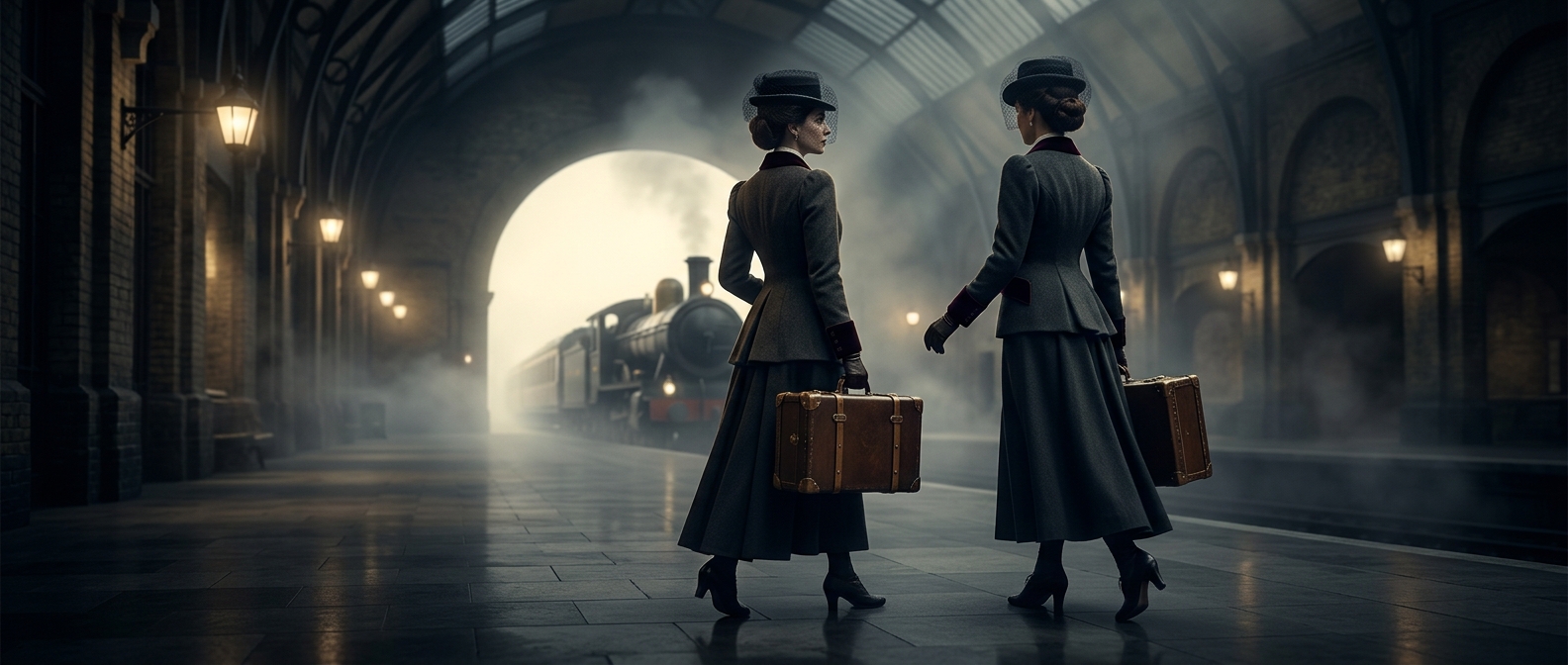
For many travelers, especially those with money and leisure, setting out meant appearing in public for hours or days—not simply getting from one private place to another. A railway station or ship’s deck was a social space where strangers could see and judge you. Dressing carefully signaled respectability and status, much as dressing for a formal visit did.
Travel could also be a special event in itself. A long trip might involve farewells, family visits, or arrival among people the traveler hoped to impress. The outfit helped mark the occasion before the destination was even reached.
Clothes were part of the performance
Formal clothing was built to hold its shape and look polished, not to make sitting, lifting bags, or navigating a crowded platform easy. Stiff collars, layered garments, and structured jackets could make a journey uncomfortable. Travelers might carry other clothes or change after arriving, but the public-facing look still mattered.
That expectation was never universal: people doing necessary work or traveling with limited means could not always dress this way. Still, the ideal of the well-dressed traveler reflected a time when mobility was less routine and travel often carried social meaning.
Comfort became ordinary
As travel became a more familiar part of everyday life, the journey itself became less of a ceremony. Modern air travel still puts people in public, but passengers are more likely to prioritize hours of sitting, temperature changes, and ease of movement over a polished entrance. The shift is visible in airport clothing: what once might have seemed underdressed now often looks like sensible preparation for a long day in transit.