Why Put Software on Film in a Mine?
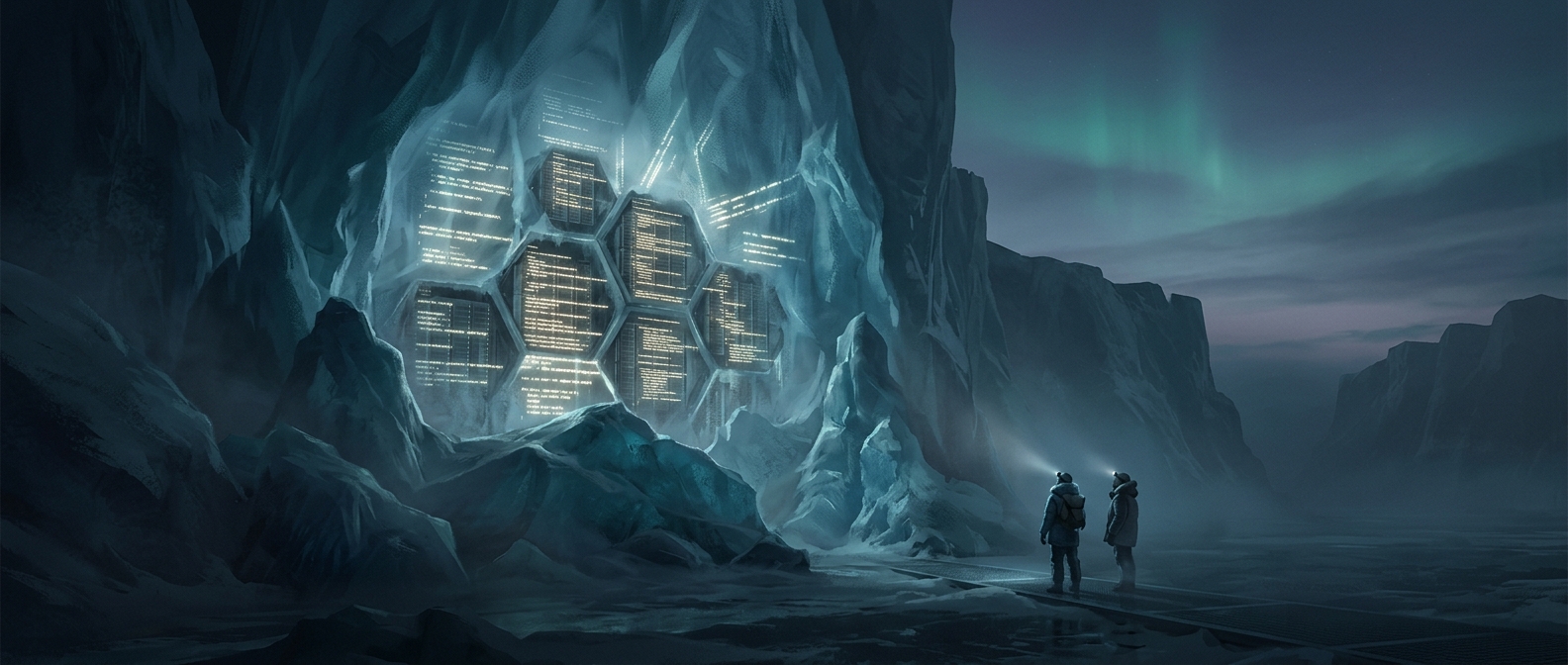
A code archive is only useful if someone can still read it after the computers and networks it was created for have disappeared. That is the problem behind GitHub’s Arctic archive: instead of relying only on hard drives that need compatible electronics and power, it stores open-source code on archival film inside the Arctic World Archive, a former coal mine in Svalbard, Norway.
The code is recorded as tiny visual patterns on film. A future reader would need to retrieve and scan the material, then reconstruct the stored files. The film is a passive medium: unlike a hard drive, it does not need to be kept powered or periodically accessed just to retain data. The mine’s naturally cold, dry conditions add a stable place to store it.
Preserving Code Is Not the Same as Preserving a Working App
A source-code file can outlast the software environment it depends on. A project may require a particular programming language, operating system, library, or server; if those tools vanish, the archived text may be readable while the program is difficult to run. A JavaScript framework that is common today, for example, may be obsolete by the time someone retrieves the archive.
That distinction makes documentation part of preservation. Future readers need clues about how files fit together, what tools they require, and what the code was meant to do. Even with those clues, rebuilding an old application could demand substantial work. The archive preserves a record and a starting point, not a guarantee that every project will launch unchanged.
A Message in More Than One Sense
The mine turns a familiar digital assumption upside down: software does not have to remain online to endure. But the long-term value of the archive will depend on people being able to interpret its stored patterns and understand the technical context around them. The code may survive its original framework; whether anyone can make it useful again will depend on what else survives with it.