How a Mall Crowd Becomes a Moving Traffic System
A crowded walkway has no painted lanes or shared signal, so each person has to infer what everyone else is about to do. Your brain estimates direction and speed from nearby bodies, then adjusts your own path before anyone needs to stop. A shoulder turning, a small change in pace, or a gap opening between shoppers can all signal where movement is possible.
The Passing Lane Is Made of People
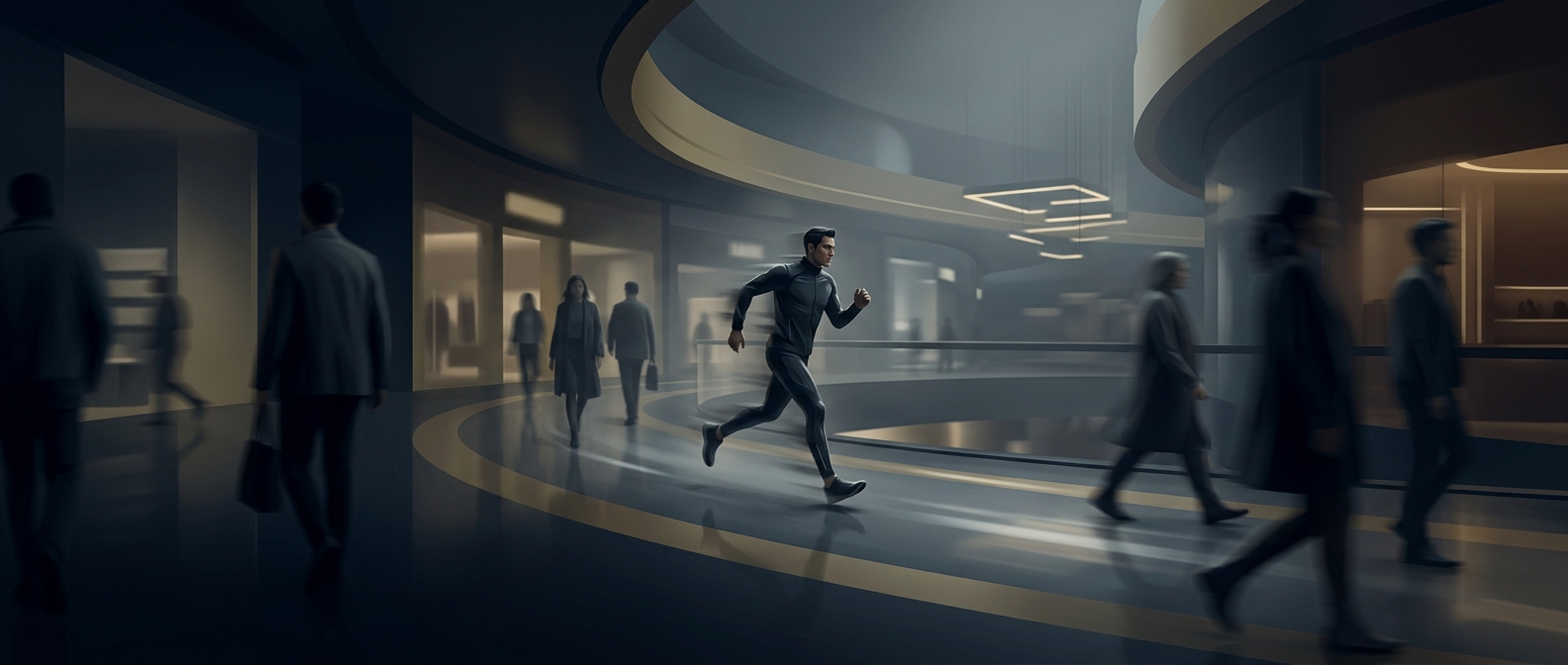
Walking faster than the crowd creates a stream of tiny decisions. To pass, you need enough room not just for your body, but for the other person’s likely next step. If the opening is too narrow or a group is spreading across the walkway, speeding up may not help; slowing down can be the safer way to let the flow rearrange itself.
These adjustments happen continuously and often without conscious planning. One person veers aside, another follows the newly opened path, and a gap can close almost as soon as it appears. That is why weaving through shoppers can feel more tiring than walking the same distance in an open corridor: you are repeatedly updating your route, not simply covering ground.
Why Small Delays Add Up
Unlike cars, pedestrians can change direction quickly, but they also have little protection if two paths intersect. People tend to leave room for one another, and that caution can interrupt the smoothest route. The practical tradeoff is simple: a direct line may be faster only if others make space for it. In a dense crowd, the person who pauses for a moment may keep several people from having to stop.