Why Wikipedia’s article count turns into a mountain of paper
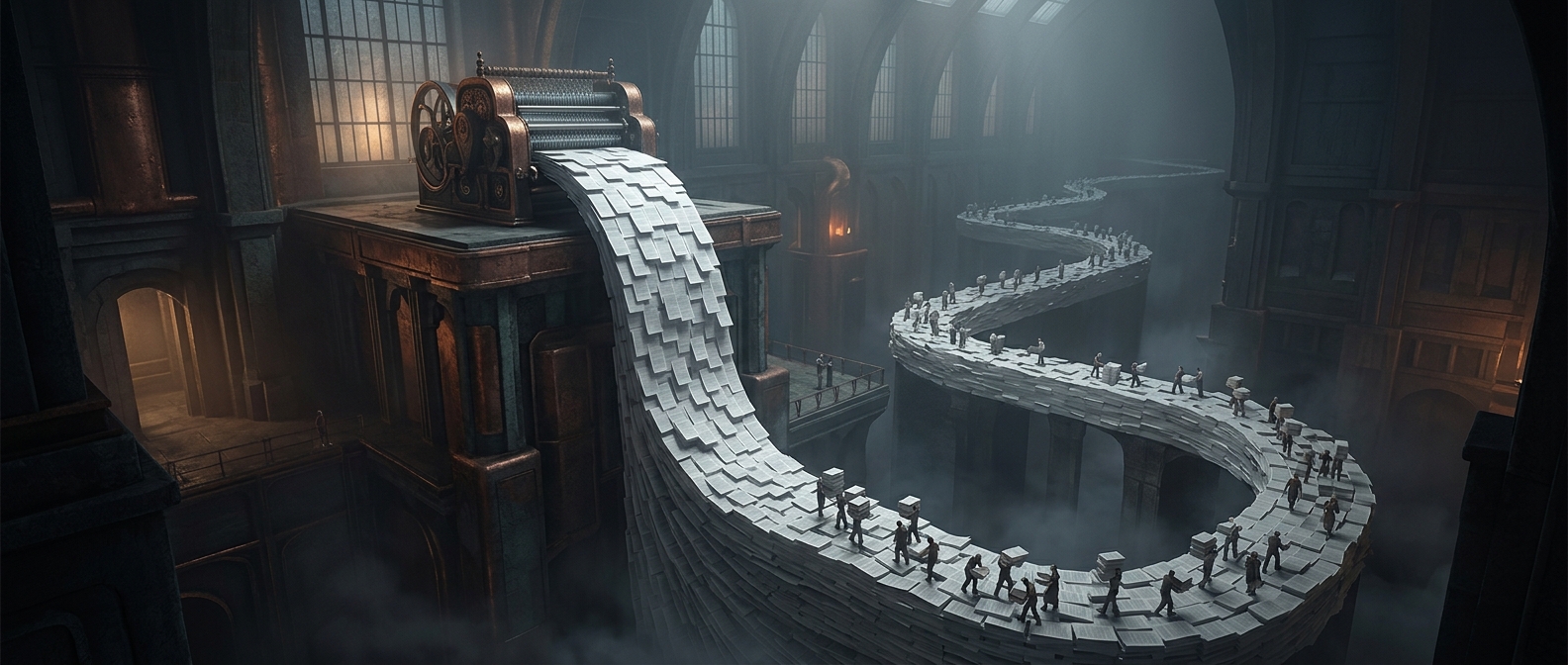
A web page has no fixed page length. On screen, an article can scroll indefinitely; on paper, its words must be divided among sheets with margins, type size, and line spacing. Those choices affect the total, but the underlying challenge is scale: English Wikipedia contains far more text than a typical book, so even ordinary print formatting would spread it across millions of pages.
Printing would freeze a moving target
Wikipedia is edited continually. A printed edition could capture only a particular moment: once the pages were printed, later corrections and new material would not appear in that copy. Keeping a paper version current would mean producing and distributing replacements, rather than making an edit available online.
The web also lets readers move between articles through links. A print edition would have to translate those connections into page references or an index, adding another layer of navigation to an already enormous volume. And the page total would depend on what counted as part of the edition—just article text, or other material as well—and on the layout chosen.
That is why the figure is best understood as a measure of the encyclopedia’s scale, not a fixed print specification. The striking consequence is practical: Wikipedia’s familiar ease of browsing depends on keeping its articles searchable and connected on a screen, instead of trying to bind them into one vast, quickly outdated reference set.