A Game of Aim—and a Very Small Margin for Error
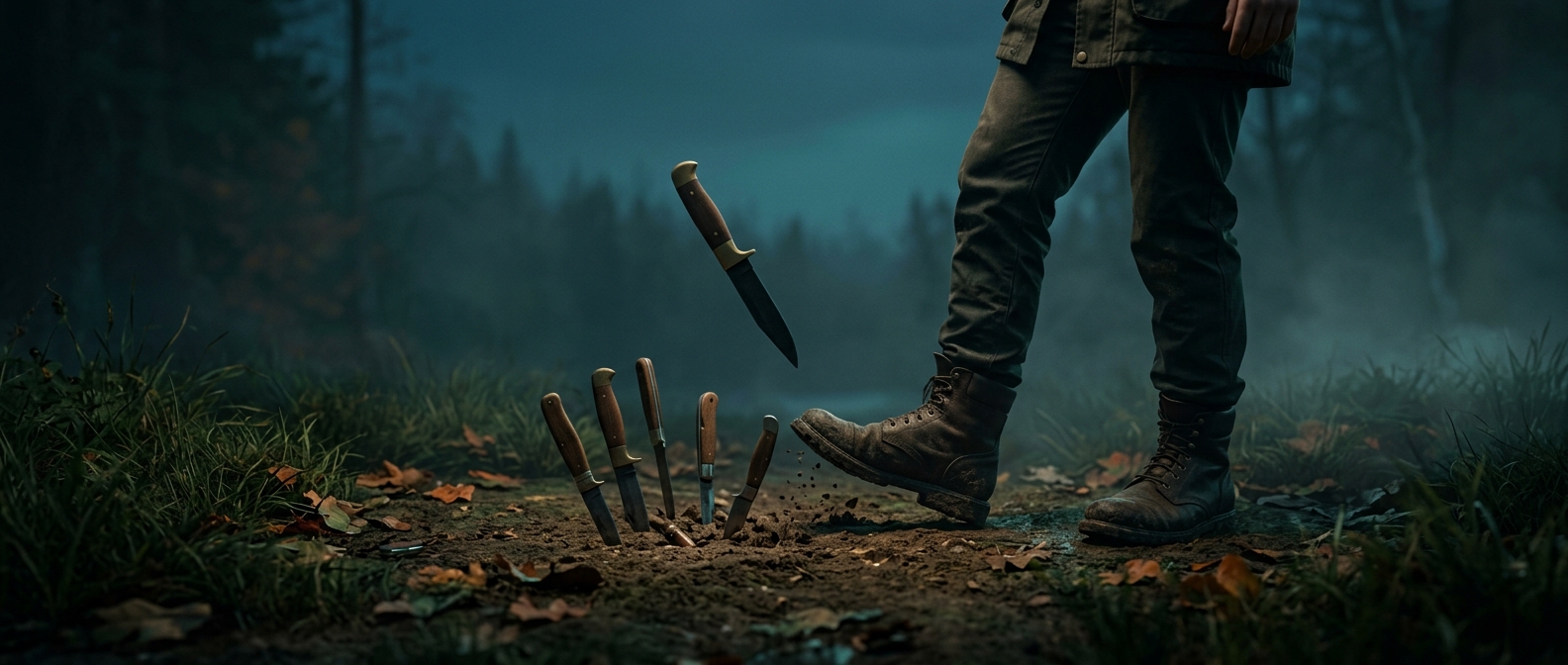
In some children’s games, the object was not a ball or a stone but an open pocketknife. Players tossed it into dirt close to their own feet, turning a test of aim into a test of nerve. The target was forgiving; the distance between a successful throw and a cut shoe was not.
The exact rules could vary, and the basic idea does not require elaborate equipment: a knife, a patch of ground, and players willing to take turns. That simplicity helps explain the game’s appeal. A throw could be judged immediately by where the blade landed, making skill visible to everyone nearby. But because the knife had to strike near the player, a poor throw carried consequences that ordinary playground games did not.
When the Risk Was Part of the Challenge
The danger was built into the activity, not an accidental side effect. An open blade could catch a foot or pass through a shoe, and even a shallow wound could turn play into an injury. A bloodied shoe was a vivid sign of how little separated a daring attempt from a painful one.
The game is a reminder that children’s play has not always been designed around padded surfaces or purpose-made equipment. In this case, the very thing that made a throw feel exciting—bringing a real blade close to the body—also made the cost of a mistake immediate.