A Tutorial Teaches More Than the Buttons
A basic tutorial often introduces the game’s control vocabulary: jump, dodge, interact, or combine actions. Knowing which button to press is only the first step. Players also have to learn when an action works, how much room it needs, and what the game’s visual cues mean.
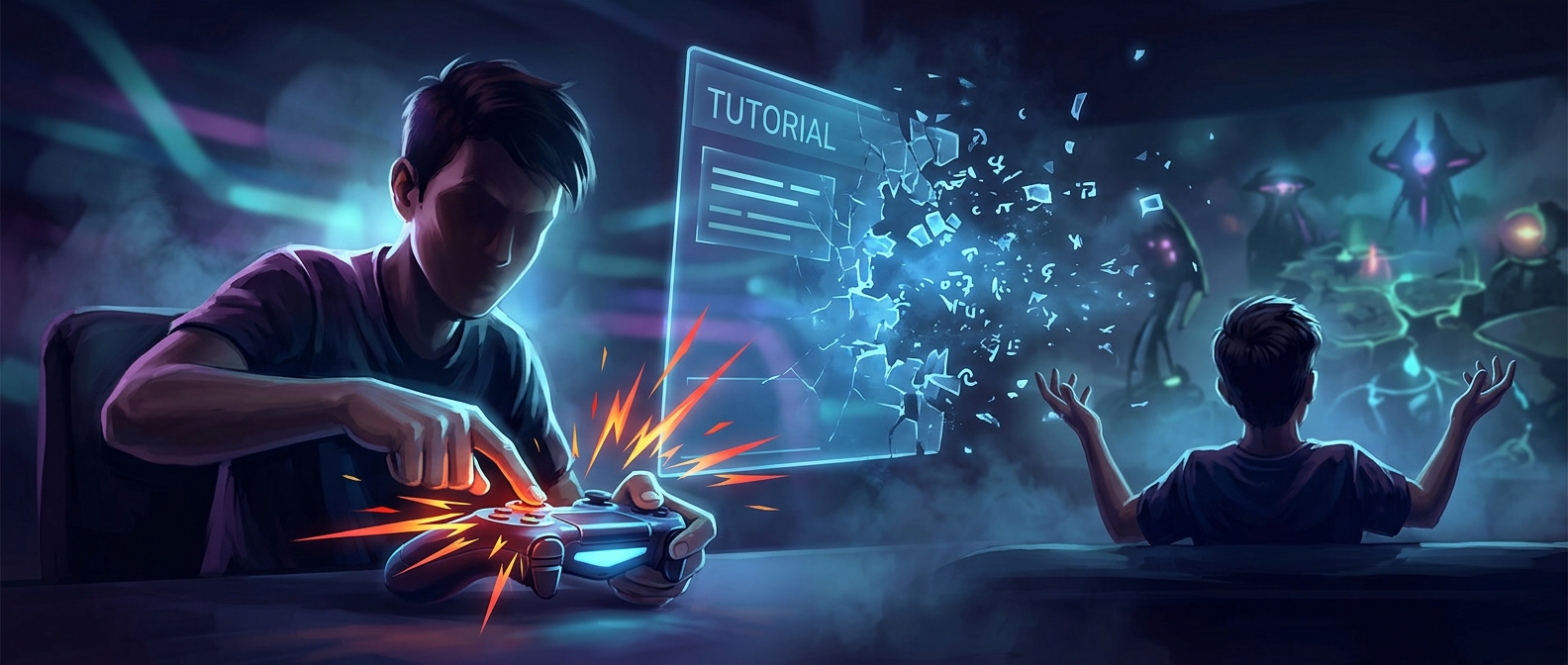
A well-designed lesson turns those rules into a small, low-stakes experiment. It gives the player a chance to try an action, see the result, and connect cause to effect before the same rule matters in a dangerous situation. Skip that practice, and a later obstacle can feel arbitrary—even when it follows a pattern the game has already explained.
Why the Same Mistake Keeps Happening
Suppose a pit requires a jump to begin earlier than a player expects. If they mistime it, fall, and repeat the same approach, they may interpret each failure as poor level design rather than evidence that their timing or understanding is off. The tutorial could have established the relevant rule; without that reference point, the player has fewer clues for diagnosing the failure.
That does not make every repeated fall the player’s fault. A tutorial can be easy to miss, and an obstacle can communicate its demands badly. Games teach through both explicit instructions and the spaces where players use them. When those signals align, a failure can point toward a specific adjustment. When they do not, players have little reason to know what to change.
The useful question after a fall is not just “Why did the game do that?” but “What did I try, and what happened?” A skipped lesson may contain the answer—but the game still has to make that answer usable.