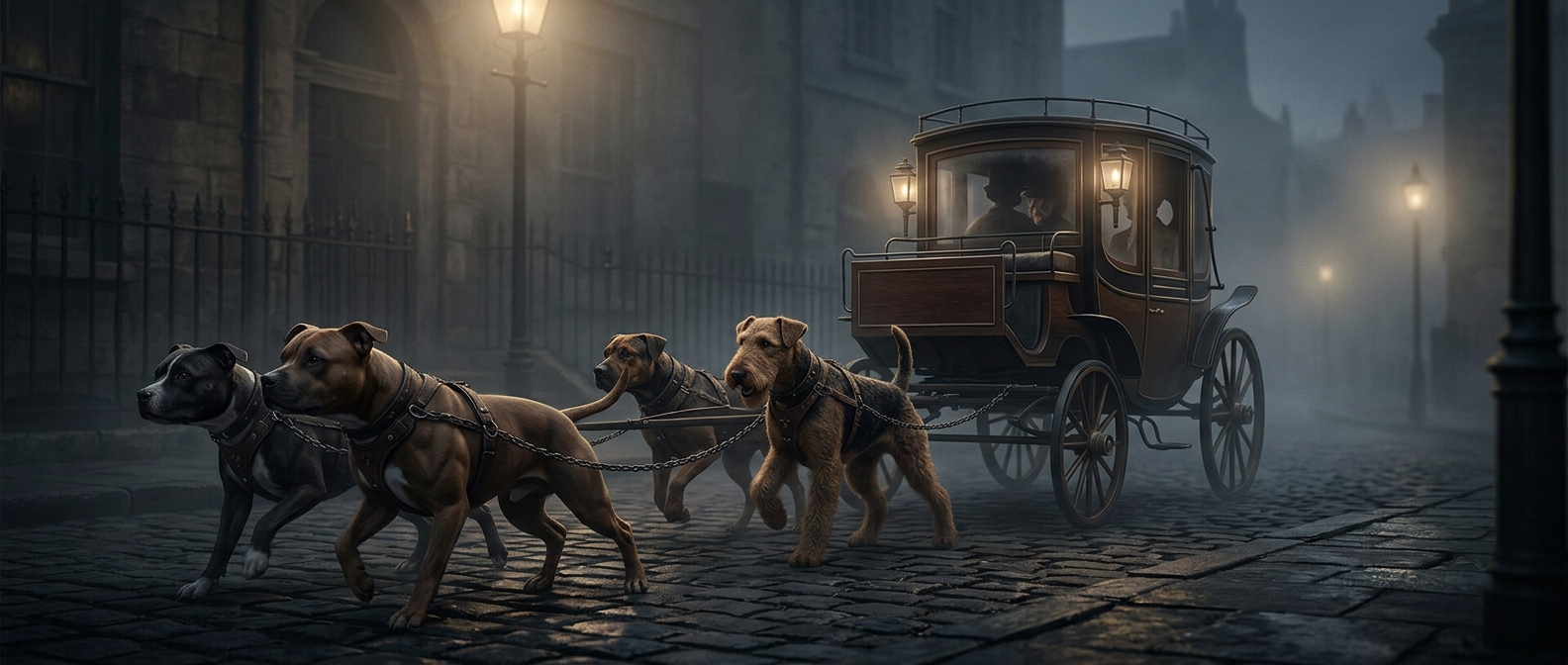
A small dog could move a useful load
A terrier in harness turned its strength into short-range transport. The dog pulled a small wooden cart while a person guided it, much as a person might walk beside a handcart. The wheels carried the load, so the dog did not have to lift it; the harness spread the pulling force across the animal’s body rather than relying on a collar alone.
That made the arrangement suited to modest errands. Groceries could ride in the cart instead of being carried by hand, and a cart built to accommodate a child could serve as a small, slow-moving ride. It was not a substitute for a wagon or a motor vehicle: its usefulness depended on a light load, a manageable route, and a human close by.
The harness mattered as much as the dog
Terriers were compact, active dogs, but pulling a cart still required equipment fitted to the animal and a load it could move comfortably. The cart’s wheels reduced the effort; the harness kept the load from pressing directly on the neck. On uneven ground or in a crowded street, the person accompanying the cart had to control its pace and direction.
The image is a reminder that everyday transport once depended on matching a small vehicle to whatever power was available. In this case, a neighborhood errand—or even a child’s ride—could begin with a dog, a harness, and a wooden cart.