Why roadside signs grew larger
A shop sign was designed for someone already near the storefront: a pedestrian could slow down, look up, and read smaller lettering. A driver had no such pause. At road speed, a sign could enter view and disappear before its words became legible.
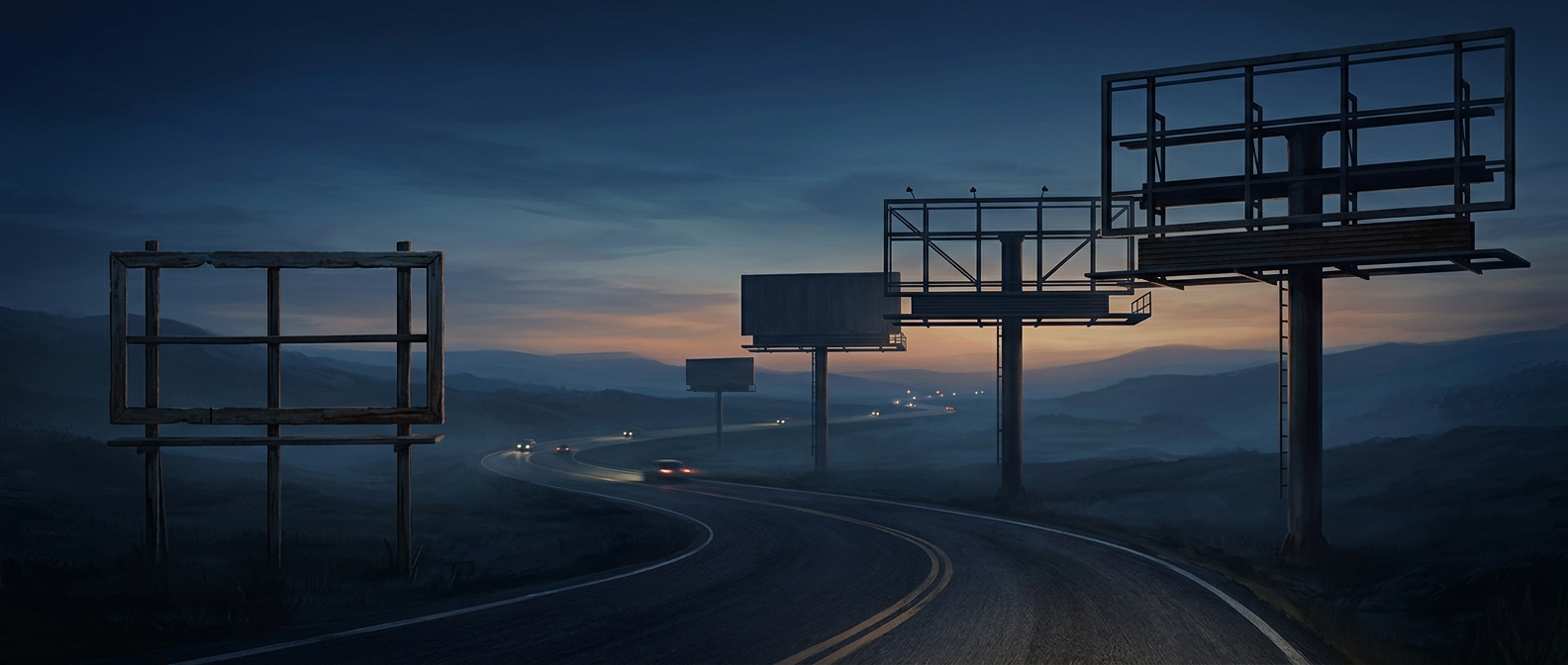
Businesses adapted by moving the message outward, onto large wooden boards positioned where passing motorists could see them. The change was not just about making signs bigger. It made the road itself part of the advertising space, bringing a message to people before they reached a shop or town.
A message built for a passing glance
A roadside board had only a brief chance to catch attention. Its size helped it stand out from the surroundings, while clear, limited text gave a driver a better chance of taking in the message without stopping. In effect, the board worked at a distance: instead of asking customers to approach a sign, it carried the sign into their field of view.
That shift also changed what travelers encountered. A route was no longer marked only by buildings, junctions, and local shop signs; businesses could announce themselves along the way. The practical test for a roadside advertisement became simple: could a driver understand it before the board slipped behind them?