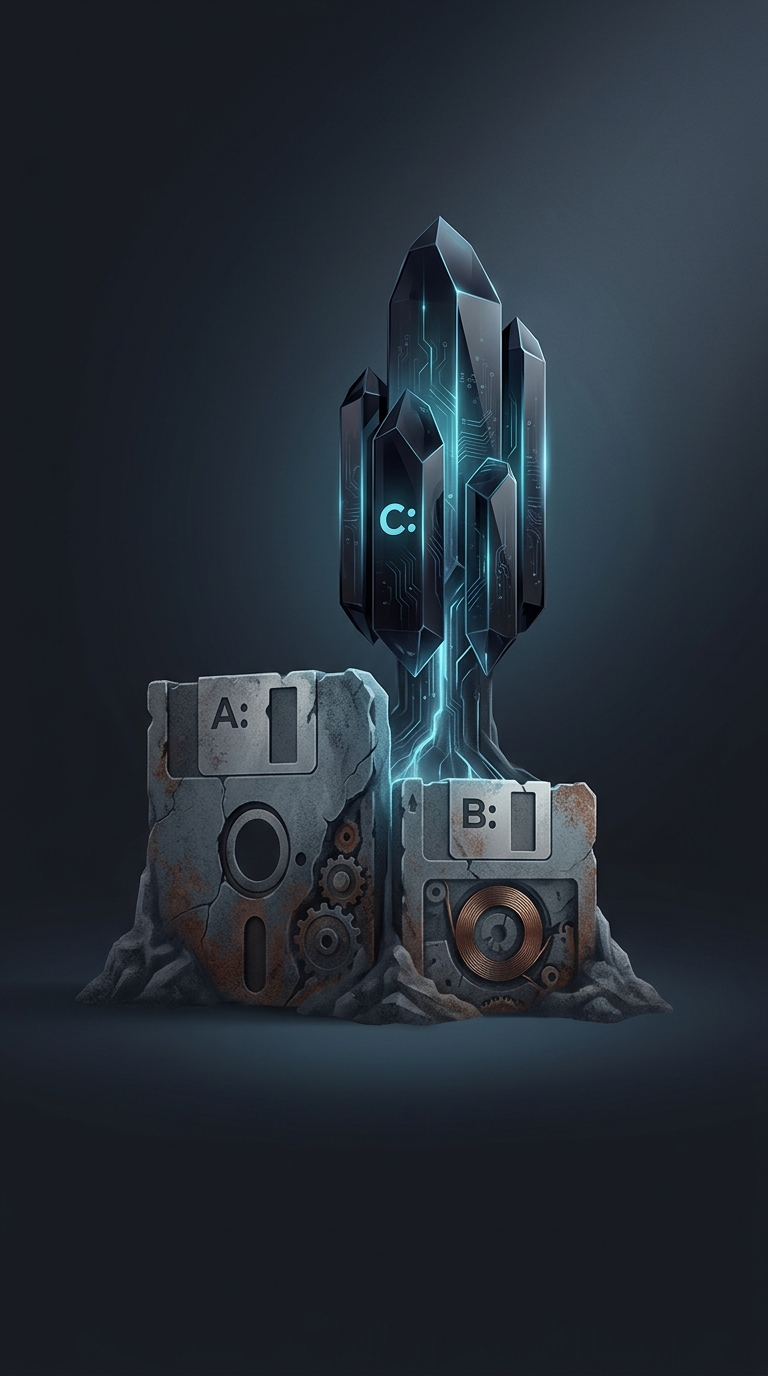
Why Windows Starts Its Drive Names at C
Drive letters are labels, not physical addresses. In early DOS-based personal computers, A: and B: commonly referred to floppy-disk drives, while C: became the usual name for a hard disk. That made sense when a computer might have two floppy drives—or one floppy drive used to load programs and save work—and a hard disk was an additional device.
The letters gave people and software a simple way to specify where files lived. A command or program could refer to `A:` for a diskette or `C:` for the hard disk without needing to describe the device’s hardware connections.
A Naming Habit Became a Compatibility Rule
As computers changed, Windows inherited conventions from the DOS software environment. Programs, setup instructions, and users came to expect the main Windows installation to be on C:. Keeping that arrangement made older software and established workflows more likely to work without changes.
Drive letters also became part of everyday directions: installers might tell users where to find a file, and programs could store paths that began with `C:\`. Changing the default would not be impossible, but it could leave software looking in the wrong place. There was little practical benefit to making that disruption the norm.
The Letters Still Have Flexible Uses
Windows can assign A: or B: to other storage, and not every computer’s Windows installation is on C:. The letters are simply a familiar naming scheme, not evidence that a machine still contains floppy hardware. The old arrangement survives because preserving a predictable path is more useful than renaming it—and because a drive label can outlast the device that first made the label familiar.