A movie built around a product launch
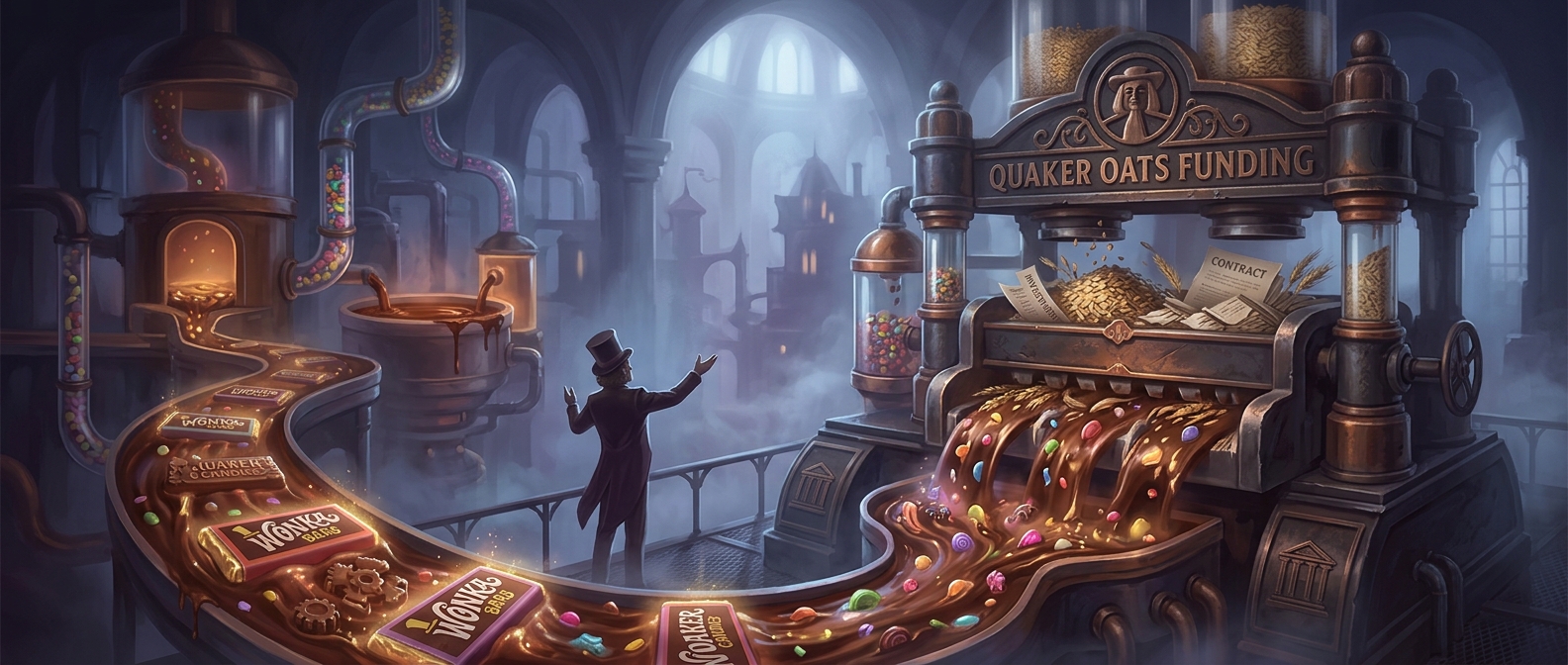
Quaker Oats did more than help pay for Willy Wonka & the Chocolate Factory: the company hoped the film would help sell a new candy bar. That made the project an unusually direct form of cross-promotion—one product, a movie, and a shared name designed to send attention back and forth between them.
The plan also shaped the film’s identity. Its source novel was titled Charlie and the Chocolate Factory, but the movie’s name put Wonka first, matching the name Quaker wanted to use for its bar. The change made the fictional candy-maker—not just Charlie’s adventure—the most visible link between the story and the product.
Why the partnership made sense
A movie could do what a conventional advertisement could not: let audiences spend an entire story inside a fantastical world of sweets. The Wonka Bar could then appear not as an unrelated sponsor’s product, but as something associated with the film’s central character and imagined factory. In return, the product gave the movie a commercial campaign beyond the theater.
That arrangement also created a practical risk. The film could attract attention, but a new candy bar still had to reach stores and persuade people to buy it. A movie’s cultural life and a packaged food’s success do not automatically move together. The two products were connected by branding, but each still had to work on its own.
The result is a rare case in which the marketing plan reached all the way into a film’s title: the name viewers remember was also meant to make a candy bar easier to recognize.