Why “Literary Fiction” Sits on a Different Shelf
A bookstore category is a practical sorting tool, not always a label for a story’s subject or plot. “Mystery” tells shoppers to expect a central puzzle; “fantasy” signals that the story may depend on magic or an invented world. “Literary fiction” is less specific about what happens. It usually points to realistic stories in which character, relationships, language, or questions about life matter more than a genre’s familiar plot machinery.
A Retail Label, Not a Rulebook
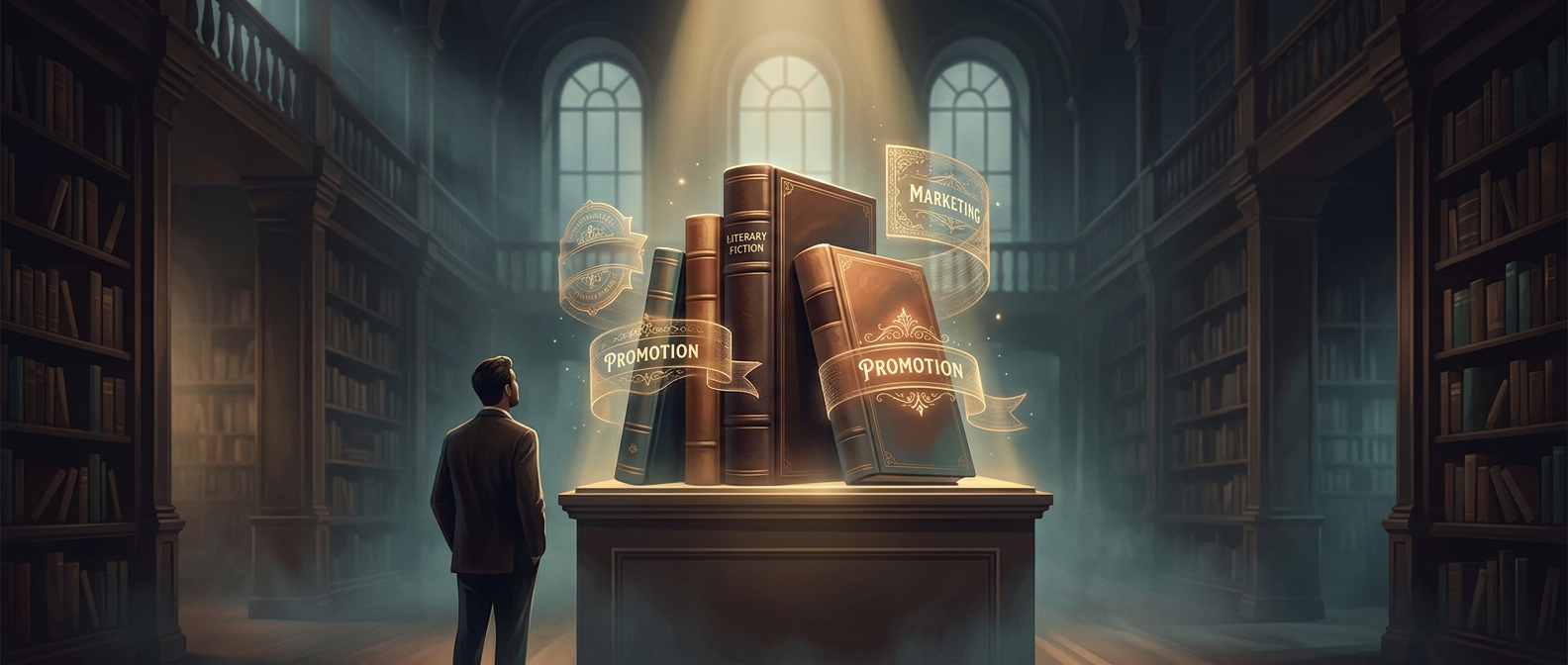
Publishers and booksellers use the term to help readers find books and to distinguish them from fiction marketed through clearer genre conventions. That does not mean literary novels lack suspense, romance, crime, or other recognizable elements. A realistic novel might revolve around a disappearance, for example, yet be shelved as literary fiction if solving the case is not its main promise to the reader.
The category also does not prescribe a single style. One book may be formally experimental; another may tell its story in straightforward prose. The label describes a broad market position, not a checklist every novel must satisfy.
Why the Distinction Matters
Shelf labels shape expectations. Someone reaching for a mystery often wants clues and a resolution; someone choosing literary fiction may be more interested in how events change a character, or in the meaning that accumulates through the writing. Those expectations help stores organize books, but they can blur at the edges: the same novel can be described in more than one way.
So “literary fiction” is best understood as a signpost rather than a sealed genre. It helps locate a kind of reading experience without dictating exactly what the story can contain.