Why Water Can Miss Its Freezing Point
Water does not always turn to ice the moment it reaches 0°C (32°F). That temperature is the usual freezing point, but freezing needs more than cold: water molecules must first gather into a small, orderly patch of ice that can grow. This first patch is called a nucleation site—a starting point for crystal formation.
In ordinary water, dust, rough surfaces, trapped air, or stray ice crystals can provide that foothold. Nearby molecules then line up with the growing crystal and join it. If the water is exceptionally clean and undisturbed, those starting points may be scarce, so the liquid can cool below its freezing point without crystallizing. It is then called supercooled.
Why a Small Disturbance Can Freeze It
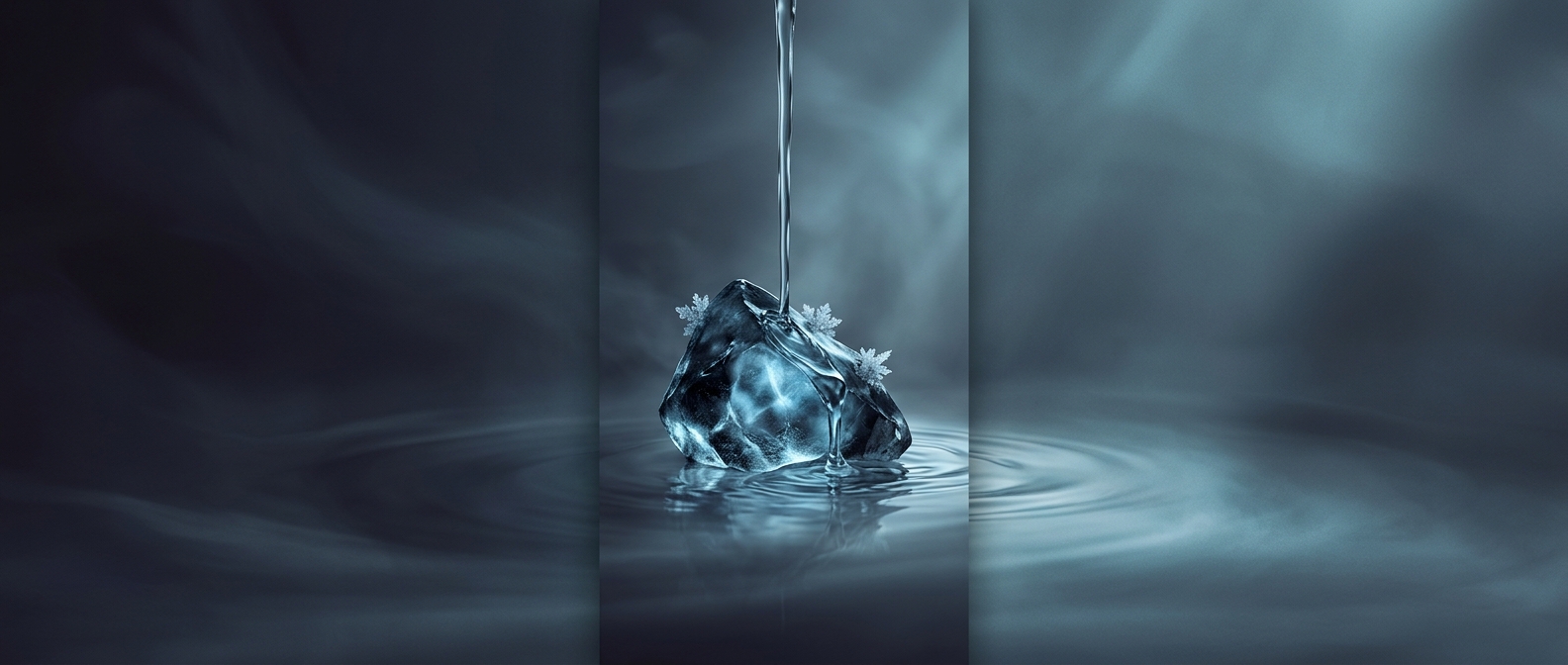
Supercooling is a precarious pause, not a new stable state. The colder the water gets, the greater the tendency for ice to form—but without a nucleus, the first crystal may not appear. A tap on the container, a jolt, or contact with an ice crystal can supply the missing start. Once a crystal forms, it gives more molecules a pattern to follow, and freezing can spread rapidly through the liquid.
The crowd analogy captures the trigger, but the process is molecular: the disturbance does not simply “make” cold water freeze. It helps create the first ordered patch, after which crystal growth can proceed on its own. That is why a still bottle may remain liquid in a freezer and then turn slushy when moved. The same water was already cold enough to freeze; what it lacked was a starting point.