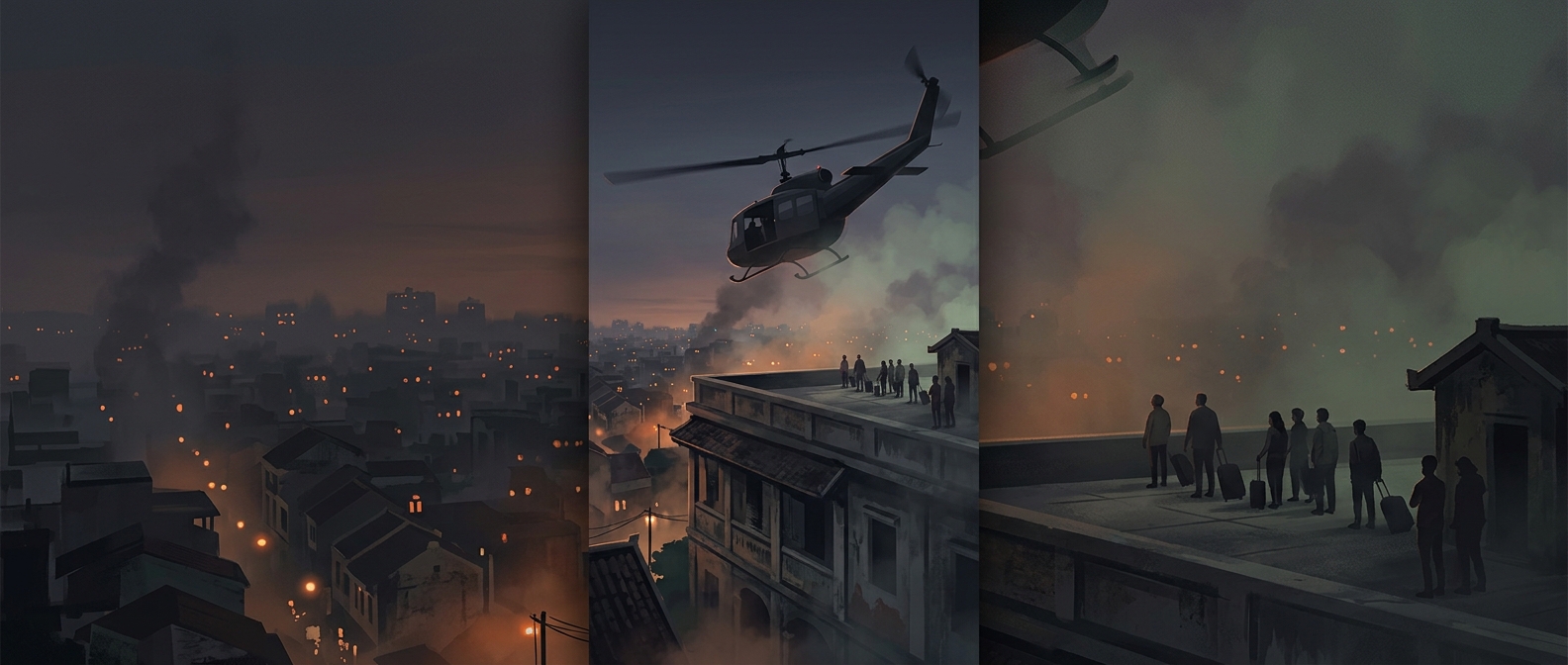
The Rooftop Was an Apartment Building
The famous helicopter photograph from the final days of the Vietnam War is often described as showing an evacuation from the U.S. Embassy. It was taken instead at 22 Gia Long Street, a Saigon apartment building that housed CIA personnel. The embassy was a separate site, so the image records a different part of the city’s evacuation effort—not a scene on embassy grounds.
Why the Mix-Up Stuck
As Saigon fell in April 1975, helicopters carried people out of the city. The photograph’s rooftop pickup became a shorthand image for that desperate departure, and the embassy was the best-known American location associated with it. Over time, the memorable image and the broader story of the embassy evacuation became fused in popular accounts.
But the address matters: the building was part of a wider network of places used during the emergency, not simply another name for the embassy. A familiar photograph can capture a real moment while its location gets blurred by the larger event.
A Street Name Restores the Scene
Calling it the Gia Long Street rooftop puts the image back in its urban setting: an apartment building in central Saigon, repurposed as a place from which people could be flown out. That distinction changes what the photograph shows. It is not an embassy rooftop scene, but evidence of how evacuation reached beyond the official compound as the city’s last hours approached.