Why the serpent forms a circle
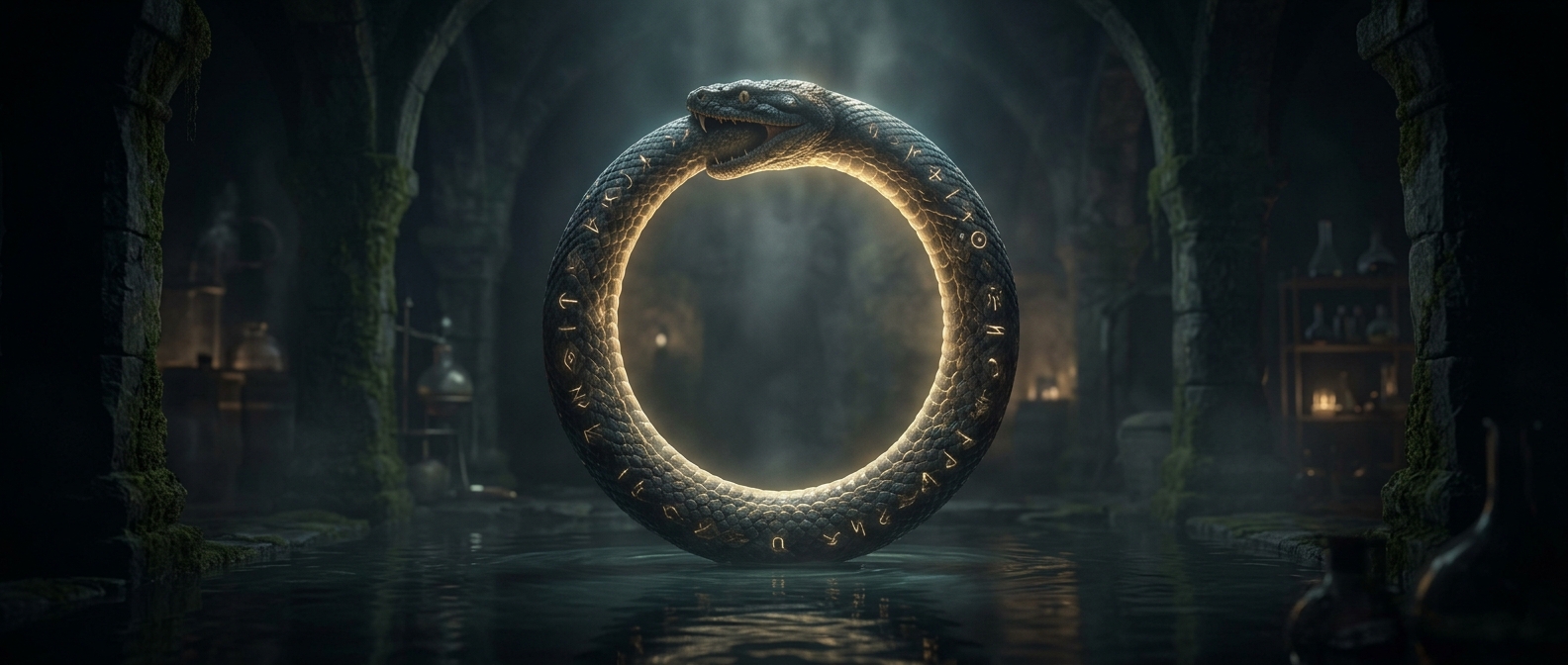
The ouroboros is usually shown with a serpent or dragon biting, swallowing, or holding its own tail. The image turns a creature into a loop: its end meets its beginning, so there is no obvious first moment or final one. That simple visual trick makes the symbol useful for thinking about processes that seem to renew themselves.
The serpent’s act can suggest more than repetition. It takes something into itself, making the cycle look self-contained: what is consumed may also become the material for what comes next. In this reading, creation and destruction are not separate events but linked phases of one process. The circle can also feel unsettling, since a system that sustains itself may be trapped in endless repetition.
A symbol, not a single definition
In mystical and esoteric settings, the ouroboros has been used to express ideas such as renewal, unity, and the continuity of nature. Its meaning depends on the context; it is not a universal code with one fixed interpretation. The same image can emphasize harmony between opposites or the cost of a cycle that never breaks.
That tension is what gives the symbol its staying power. A serpent swallowing its tail can look like a world continually remaking itself—or like a creature consuming the very thing that keeps it going. The circle leaves both possibilities visible at once.