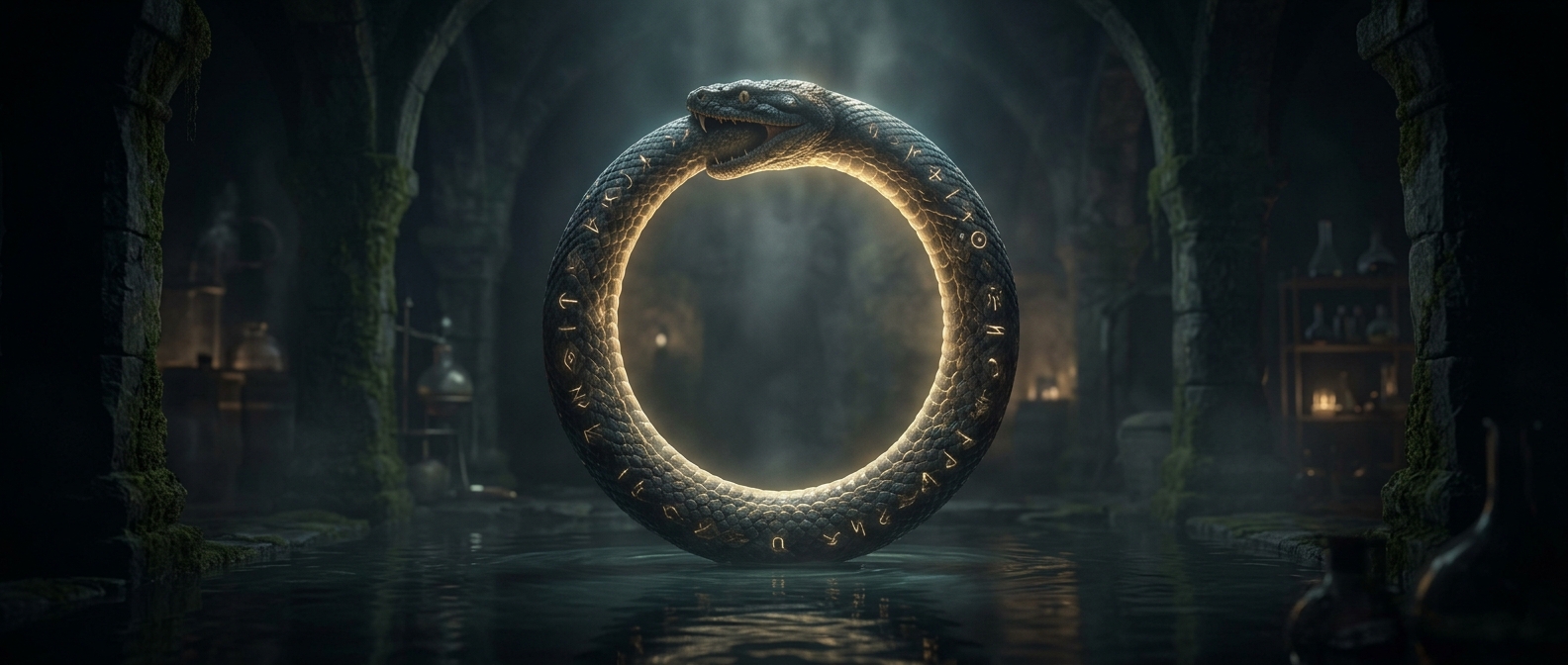
The alchemical search beneath appearances
The “first matter” was an imagined starting point beneath the many forms of the material world: the basic stuff from which different substances were thought to arise. Alchemists hoped that if they could find it, they might understand how matter changed—and perhaps learn to guide those changes.
The idea did not always mean one clearly defined ingredient waiting to be scooped out of an object. It could describe matter in a primordial, undifferentiated state, before it took on the qualities that made it seem like wood, metal, or stone. That made the search both a practical question about substances and a philosophical one about what counted as their common origin.
Why breaking things down was not enough
Alchemy relied on hands-on operations such as heating, dissolving, and separating materials. These could expose real components: burning wood drives off gases and vapors while leaving mineral-rich ash. But the ash is not the wood’s hidden original substance. It is what remains after heat has transformed and removed parts of it.
That distinction explains the difficulty of the quest. An experiment could divide a material into observable products, but those products were still the result of a particular transformation—not proof that the experimenter had reached a universal source shared by all matter. The hoped-for first matter was a theory about what substances had in common, not simply the last residue in a vessel.