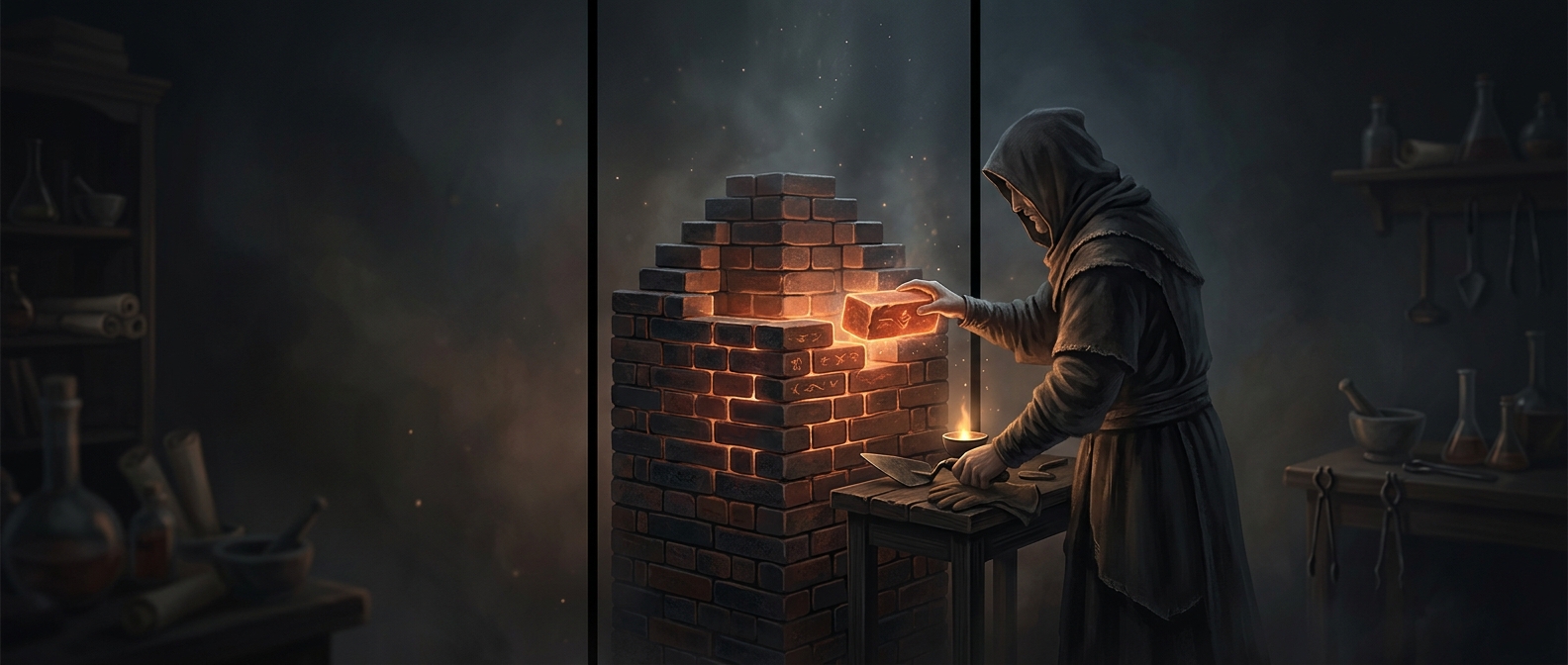
Why Alchemists Wanted a Furnace That Could “Incubate”
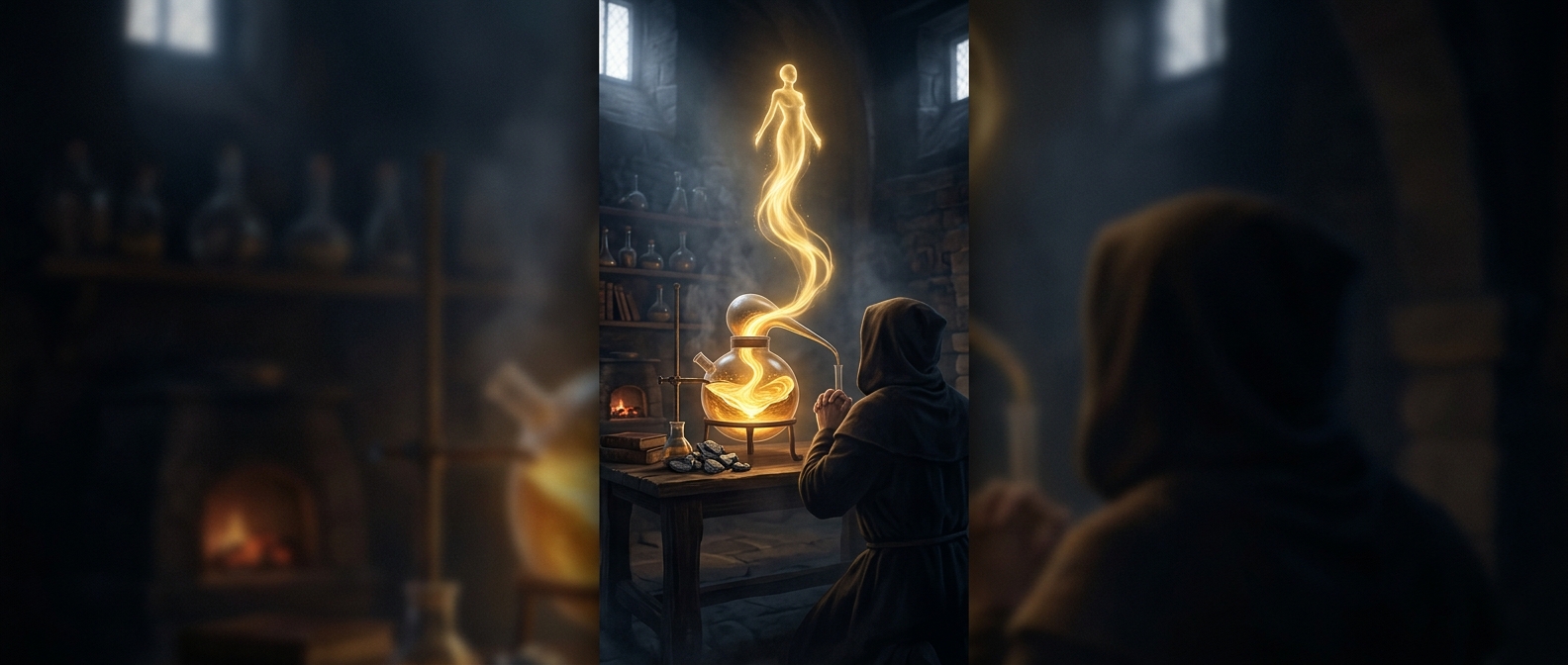
Many alchemical recipes called for materials to be heated gently and steadily for long stretches. The ideal was often compared to the warmth of a living body: enough heat to encourage a slow transformation, but not so much that the contents were scorched or destroyed. This was a practical challenge as much as a metaphor. A fire naturally flares and fades, while a long experiment needed conditions that changed as little as possible.
A purpose-built furnace—often called an athanor—was meant to hold heat and make it easier to sustain. Brick walls absorbed warmth, and the furnace’s fire chamber and air passages shaped how heat reached the vessel above. The goal was not simply to make a hotter fire; it was to keep a controlled, lingering warmth around the material being worked.
Why Brick and Fire Still Made Control Difficult
Brick could buffer temperature swings, but it could not regulate a fire by itself. Fuel burned at different rates, airflow affected combustion, and adding wood or opening a vent could shift the heat. Without reliable temperature gauges, an operator had to judge conditions from experience and adjust the fire repeatedly—often while trying not to interrupt a process that might last for days.
The furnace and its contents also faced different stresses. Uneven heating could make masonry expand at different rates and crack. If a heated vessel was tightly sealed, gases produced inside could build pressure and rupture it. Those failures were not the same as a whole kiln exploding, but they show why sustained high heat and sealed alchemical apparatus could be dangerous.
The central engineering problem was steadiness: a brick tower could store heat, but maintaining the right warmth depended on fire, airflow, materials, and constant attention. The “living body” was an appealing model for slow, even warmth; reproducing it with a furnace was much less forgiving.