A hallway turned repetition into suspense
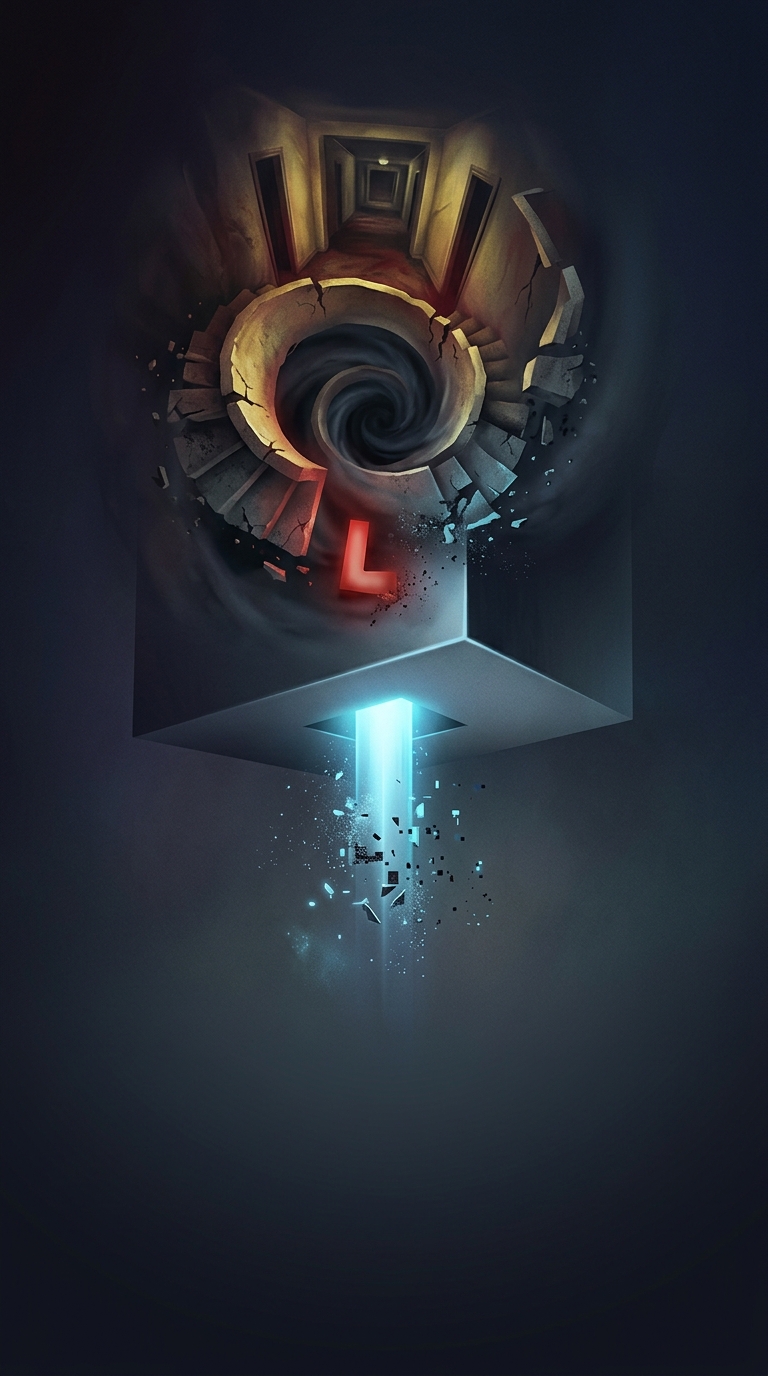
P.T. stood for “playable teaser,” but its small scale was part of the design. The player walked through the same L-shaped hallway again and again, passing a clock, a staircase, and a door. Each completed circuit returned them to familiar space—yet the space was never quite trustworthy. A light might change, a sound might come from behind, or a new detail might appear in the corridor.
That structure made players inspect rather than simply advance. In a conventional horror game, a monster or new location can signal that the story has moved forward. P.T. kept its surroundings nearly fixed, so tiny differences carried unusual weight. The player had to notice them, then work out what action might break the loop. The result was a kind of puzzle built from attention and uncertainty: even an ordinary doorway could become a source of dread.
An experiment that concealed its destination
The anonymous release made that uncertainty extend beyond the game. Players initially encountered P.T. as an unfamiliar horror experience, not as a trailer labeled with the famous series it was promoting. Only after completing it did the teaser reveal its connection to Silent Hills, an upcoming game associated with Hideo Kojima and filmmaker Guillermo del Toro. The reveal recast the repeated hallway as a sample of a larger project, while the playable format let people discover its mood for themselves.
That approach had a practical advantage: one tightly controlled environment could demonstrate atmosphere without showing a broad range of characters or locations. It also gave players a shared mystery to discuss and solve. P.T. became notable not just for frightening moments, but for how its confined design made observation, repetition, and collective speculation part of the experience.
When the teaser outlasted the project
Konami later canceled Silent Hills and removed P.T. from its store. The contrast is striking: the project the demo was meant to introduce did not arrive, but the short, self-contained experience had already made its own mark. Its hallway offered a complete lesson in how little a horror game needs to change a place for players to fear walking through it again.