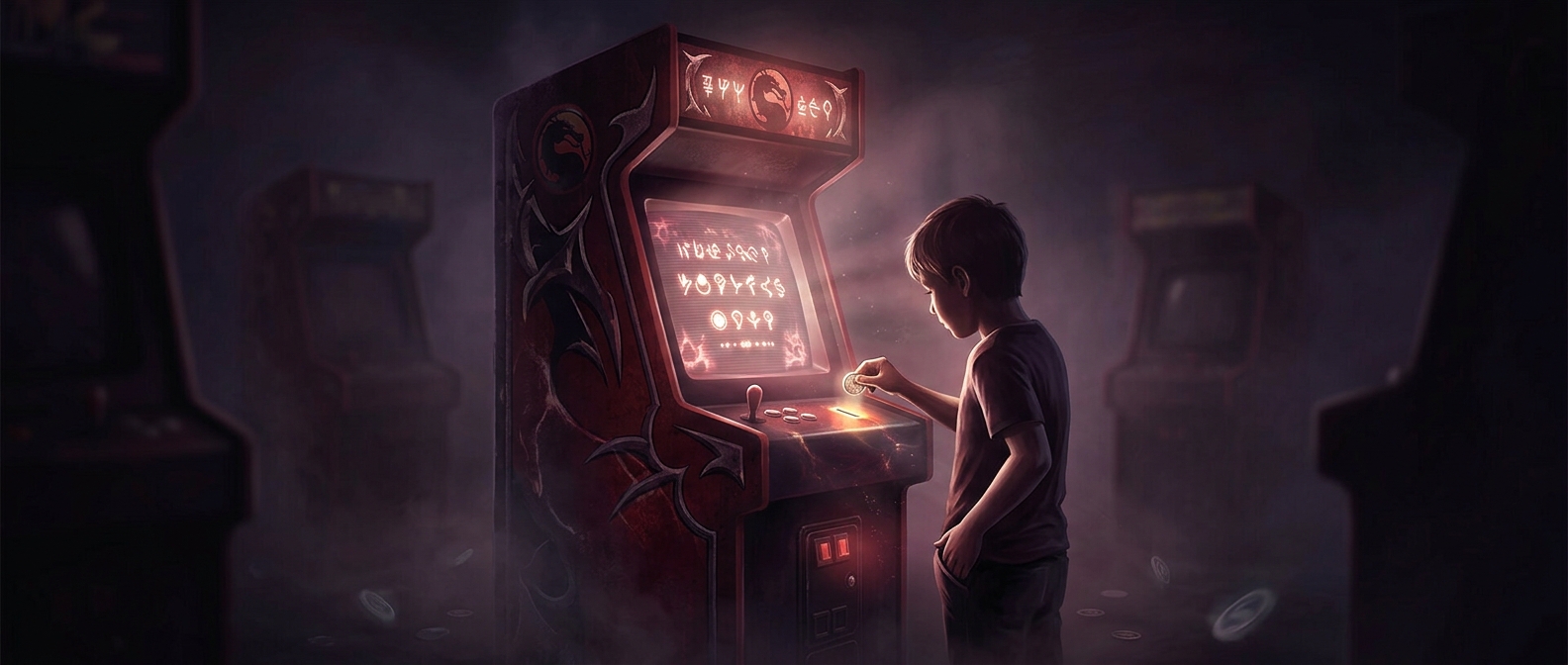
A Rumor Built for the Arcade Floor
When an arcade cabinet was idle, it ran an attract mode: a short display meant to catch passersby and persuade them to play. Mortal Kombat’s cryptic messages made that advertising loop feel like a puzzle. If a screen seemed to hint at a hidden fighter, the natural response was to try combinations of buttons and joystick movements until something happened.
The game did not clearly distinguish a real clue from a player’s guess. A name such as Ermac could sound like evidence of a secret character, even when the promised fighter was not there to unlock. The mystery invited experimentation without giving players a reliable way to tell when they had solved anything.
Why the Search Cost Quarters
At home, a failed attempt might cost a little time. In an arcade, each new match began with another coin. That made every theory a small wager: put in a quarter, test the combination, and see whether the game revealed something. With friends gathered around the cabinet, one person’s guess could quickly become everyone’s next attempt.
The machine’s design amplified the rumor. The cryptic message drew attention; the apparent possibility of a hidden character supplied a goal; and the pay-per-play setup charged for each fresh try. The secret did not need to exist for the search to keep the cabinet busy.
When a Fake Secret Becomes Part of the Game
Ermac’s story has an unusual afterlife: the name that circulated as a supposed secret eventually belonged to an actual playable Mortal Kombat character. That later appearance did not make every earlier button combination work, but it shows how a rumor can outlast its original uncertainty. For players at the arcade, the immediate question was simpler—and more expensive: maybe this quarter would be the one that finally made the hidden fighter appear.