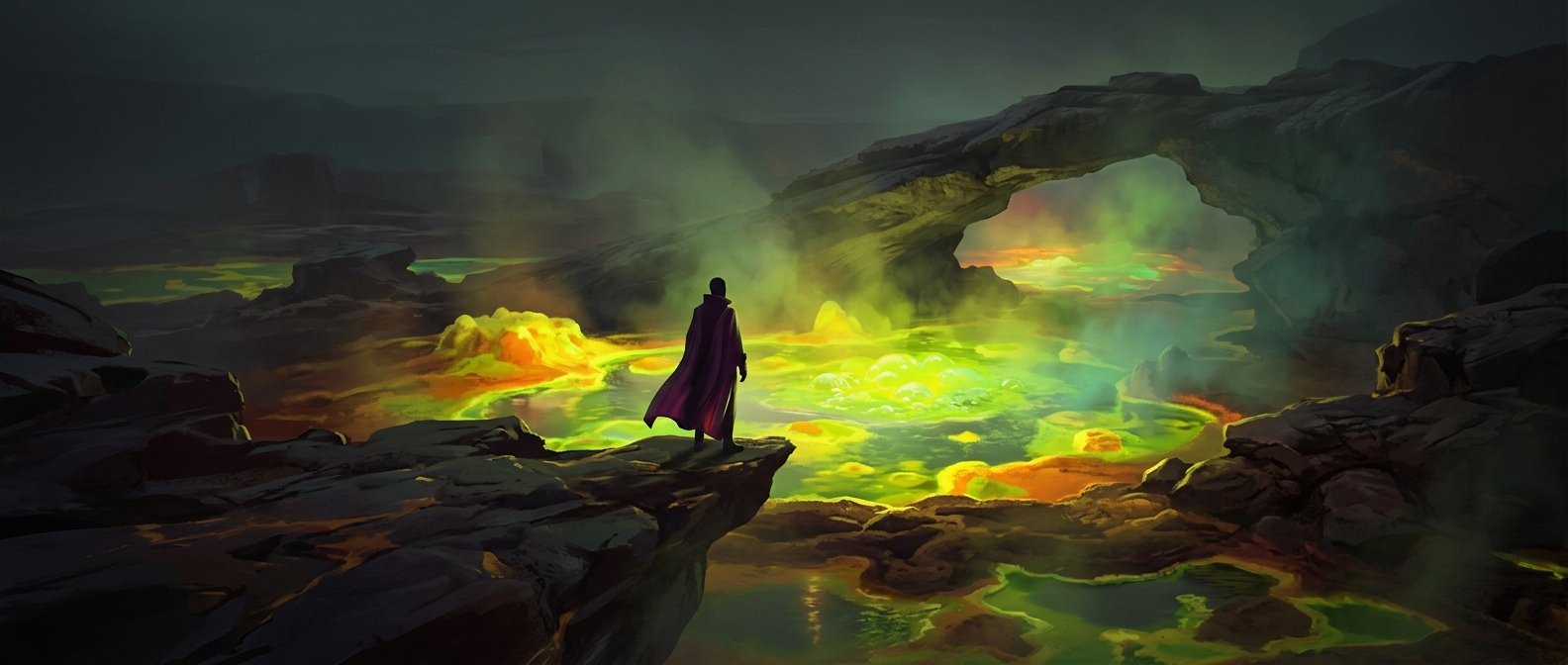
Why Ethiopia’s Danakil Depression looks so strange
The most otherworldly scenes are found in the Danakil Depression, a low-lying region in northeastern Ethiopia. It sits where the African and Arabian tectonic plates are pulling apart. As the crust stretches and thins, volcanic heat and gases can reach the surface, while parts of the depression sink far below sea level.
A landscape built by heat, water, and salt
In places such as Dallol, underground heat warms salty water and drives it back to the surface. The water evaporates in the intense heat, leaving behind mineral deposits that form vivid crusts and pools. Some pools are extremely acidic, and sulfur-rich gases can be hazardous to breathe. The brilliant colors are not signs of a safe place to explore: the same chemistry that makes the ground striking can make it dangerous.
Nearby volcanic features offer another glimpse of the region’s restless geology. In the wider Afar area, volcanic activity and the slow separation of the plates continually reshape the ground. The result is not one uniform wasteland but a patchwork of salt flats, mineral terraces, lava fields, and active volcanic terrain.
The human scale of the landscape
The Danakil is also part of a lived-in region, not merely a remote geological spectacle. Afar communities have long adapted to its heat and aridity, including through salt harvesting on the broad flats. For visitors, that contrast is part of what makes the landscape memorable: a place that appears alien from a distance is also a working environment shaped by local knowledge—and one where heat, unstable ground, and toxic gases demand serious caution.