Why Ain Sefra can get snow
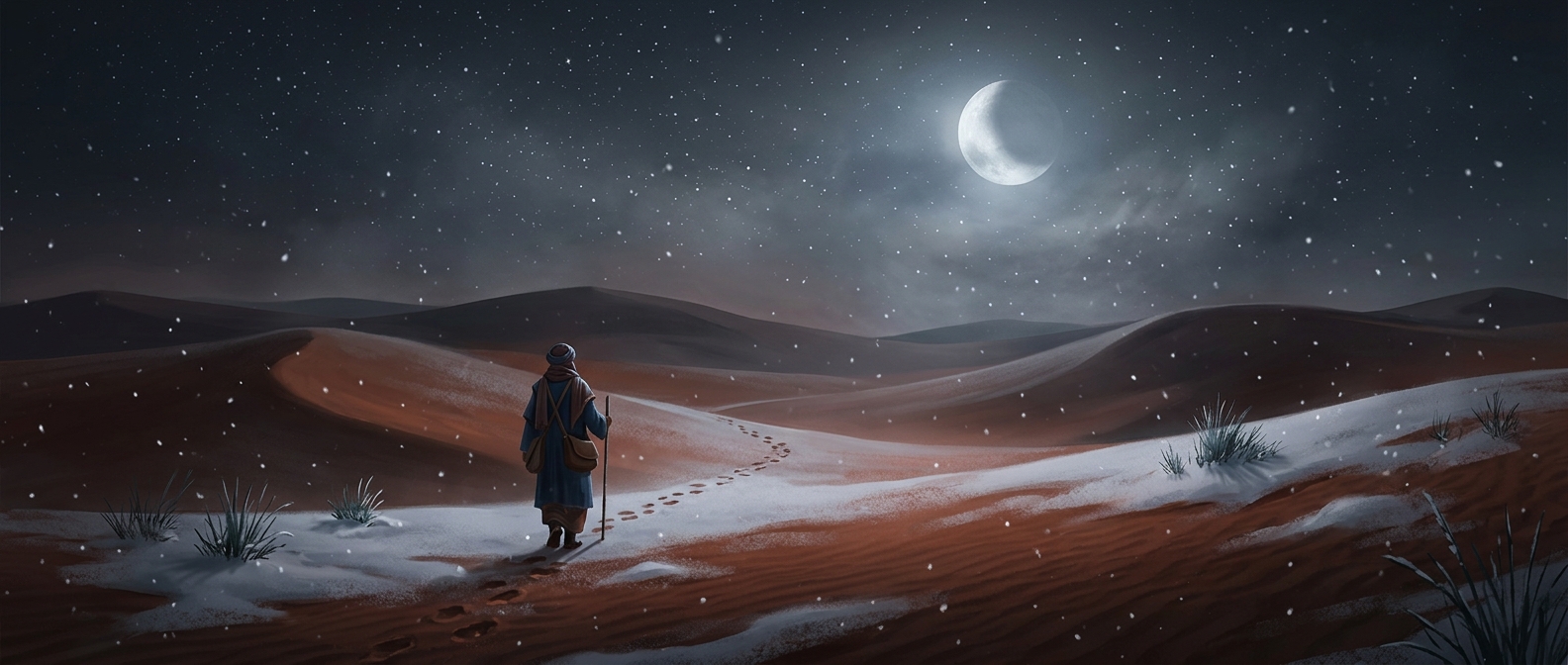
Ain Sefra sits near the Atlas Mountains at the northern edge of the Sahara, where the desert meets higher, cooler terrain. That setting matters: the Sahara is not one vast, uniformly hot landscape. Winter nights and cold-weather systems can bring temperatures low enough for snow, especially at elevation.
Snow still needs more than cold. Moist air must rise and cool until water vapor forms ice crystals. In winter, weather systems moving across North Africa can supply that moisture; if the air near Ain Sefra is cold enough all the way down, the crystals reach the ground as snow rather than melting into rain.
A brief meeting of the right conditions
The rarity comes from the narrow overlap. Cold air alone may leave the desert dry, while a moist storm may arrive with temperatures too mild for snow. Only when both occur together can the town’s foothill setting turn a winter storm into a snowfall.
Even then, a white covering may not last long. Sunlight and warmer ground can melt snow quickly in a desert climate, so a scene that looks transformed in the morning can soon give way to the familiar ocher landscape. The striking contrast is not evidence that the Sahara has become a snowy region; it is a glimpse of how sharply desert weather can change when cold and moisture coincide.