The wells that make a desert route possible
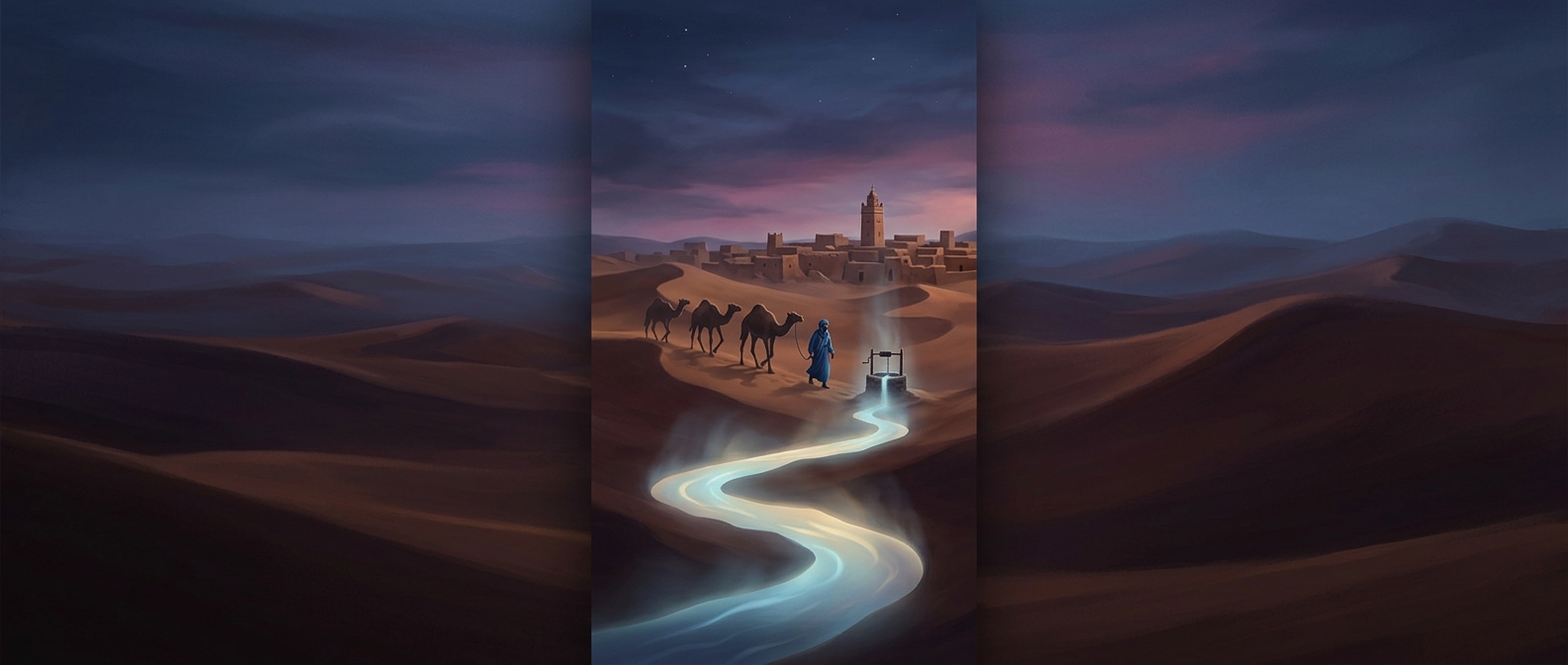
In the Sahara, a well can be easy to miss even when it is essential. Open desert offers few obvious signs of groundwater, and a water source may sit away from the main track or be difficult to recognize without local knowledge. For caravans, knowing where a well was mattered as much as knowing the direction of the next town.
Chinguetti, a historic town in Mauritania, stood within this demanding travel landscape. Caravans moving across the region had to plan journeys around places where people and animals could drink, rather than simply follow the shortest line across the map. A stop at a well shaped the distance a group could safely cover before the next supply of water.
Knowledge was part of the caravan’s equipment
The route depended on information passed from one generation of travelers to the next: where a well lay, how to find it, and whether it was dependable at a particular time. Seasonal conditions could change how useful a water source was, so a remembered location was not automatically a guarantee of water. Experience helped travelers judge which stops to trust and how to pace a journey between them.
That knowledge reduced uncertainty, but it could not remove the danger of a missed or unusable well. A caravan carrying goods also had to account for the needs of its animals, making water planning central to the whole expedition. In the Sahara, a familiar route was not merely a line through the landscape—it was a chain of known chances to drink.