Why Ida Rolf Focused on the Tissue Between Muscles
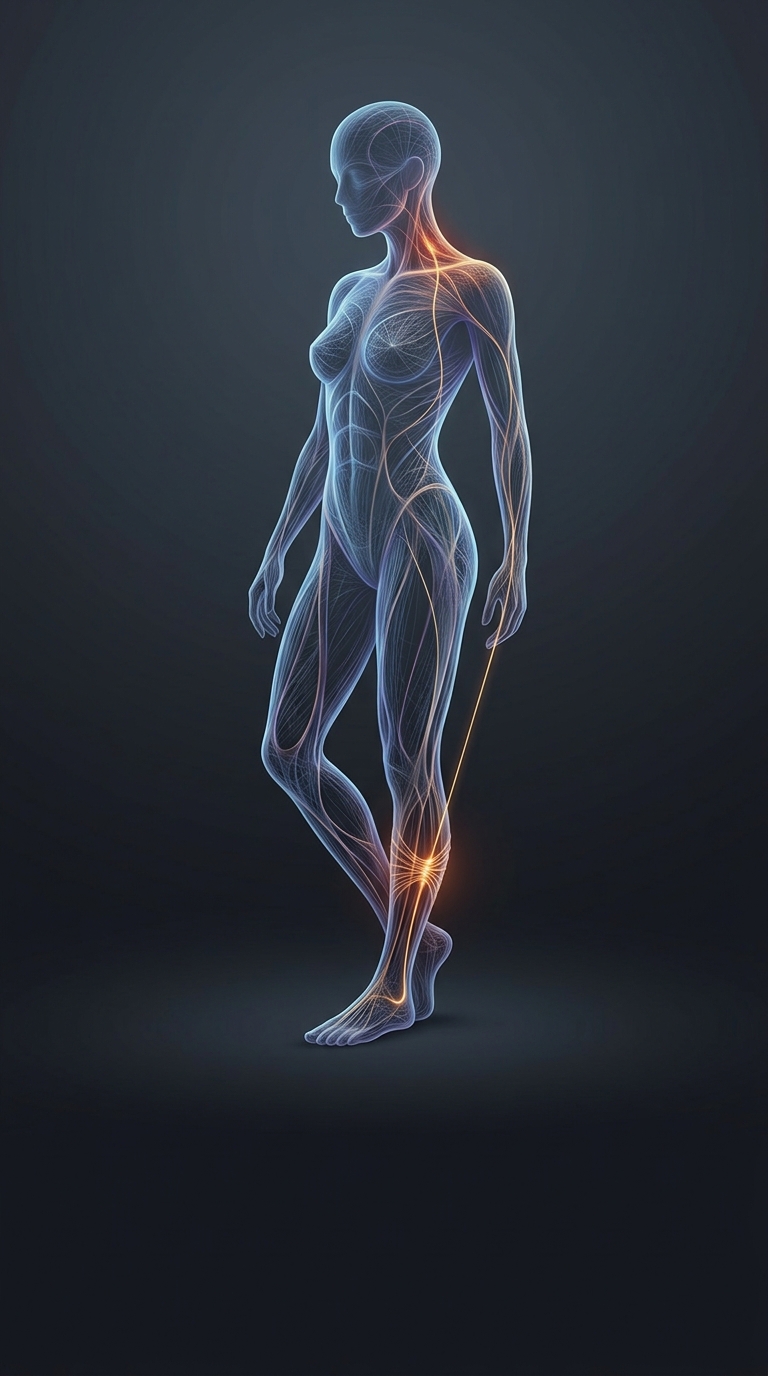
Fascia is a network of connective tissue that surrounds and separates muscles, organs, and other structures. Its layers help tissues move against one another as the body bends, reaches, and walks. Ida Rolf, who developed a form of hands-on bodywork known as structural integration, thought that injury or habitual posture could disrupt this easy movement by making fascia less pliable or causing it to adhere to neighboring tissue.
An adhesion is an area where tissues that should slide past each other are unusually tethered. In Rolf’s model, even a small restriction could affect movement beyond its immediate location: the body might shift its posture to avoid pulling on the stiff area, placing extra strain elsewhere. That reasoning led her to treat the body as an interconnected structure rather than a collection of isolated sore muscles.
The Logic Behind Myofascial Release
Myofascial release uses sustained, hands-on pressure and stretching around areas of restriction. The aim is not simply to squeeze a tight muscle, but to encourage movement between tissue layers. A practitioner might work on one region while watching how the person’s posture or range of motion changes elsewhere.
Rolf’s approach grew from the idea that restoring tissue glide could make movement feel easier and allow the body to organize itself differently. That distinction is what made fascia central to her method: the target was not just a painful spot, but the connective network that helps neighboring structures move together. In practical terms, a shoulder that feels bound up might be treated as part of a broader pattern of restricted movement, not only as a problem in the shoulder muscle itself.