Salt at the Threshold: A Small Guard Against the Night
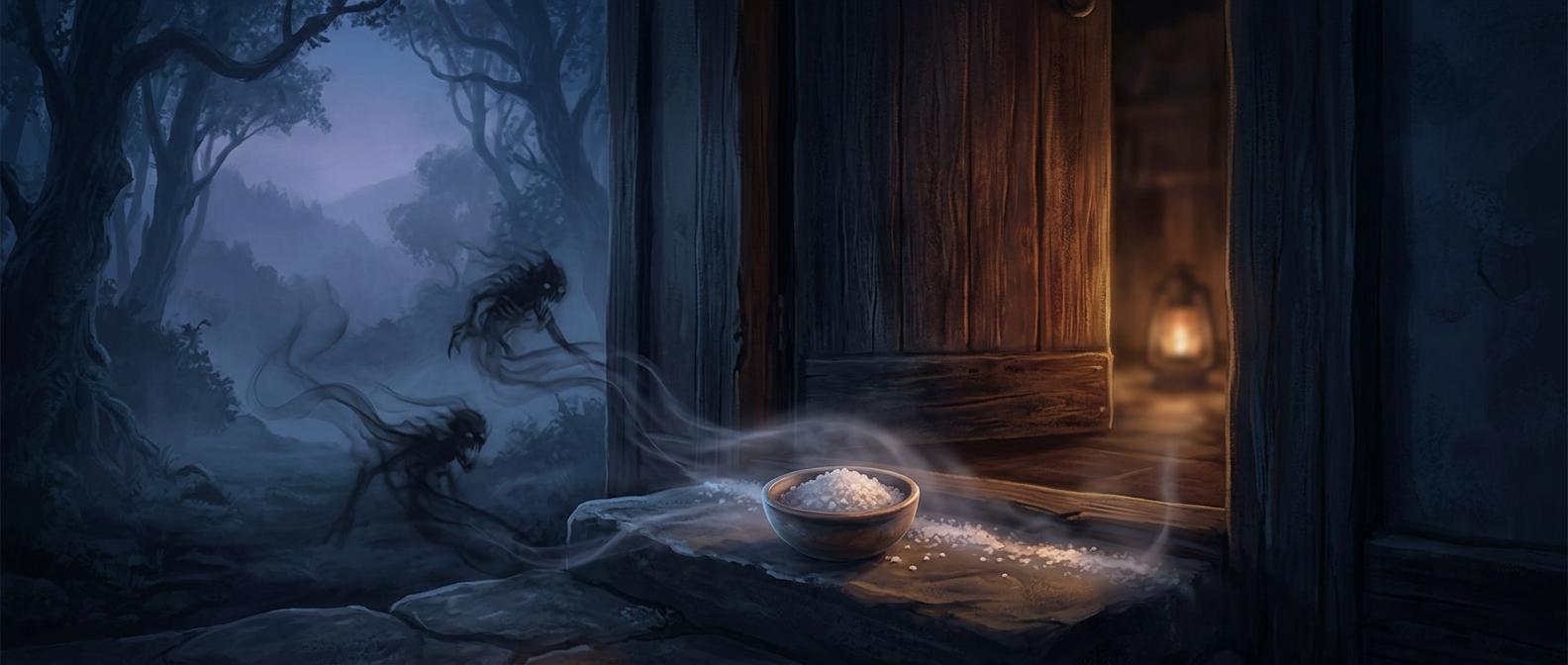
A doorway is more than an entrance in this kind of folklore: it is a boundary between the safety of a household and the dangers imagined outside it. Leaving salt there turns that boundary into a defended line. The ritual makes an ordinary household material stand watch at the point where the unseen threat is supposed to enter.
Purity and the Power of Counting
One explanation rests on salt’s symbolic purity. Because it resists spoilage and has long been used to preserve food, folklore can treat it as a substance that keeps corruption at bay. In that reading, the salt does not physically repel a demon; it represents an order or cleanliness the creature cannot cross.
The other explanation gives the demon a distraction: it must count the grains. The task is deliberately absorbing and effectively endless. If the creature spends the night counting, it cannot reach the household before sunrise. This belongs to a broader kind of folk logic in which a threat can be stalled by giving it a compulsory, repetitive task—not defeated in a fight, but kept occupied.
A Ritual Built for the Doorway
The two explanations offer different protections: salt may repel the danger through its meaning, or delay it through the demon’s supposed behavior. Both make the threshold the crucial place. The ritual’s appeal lies in its modest scale: a pinch of a familiar substance is imagined as enough to hold the night at the door until daylight returns.