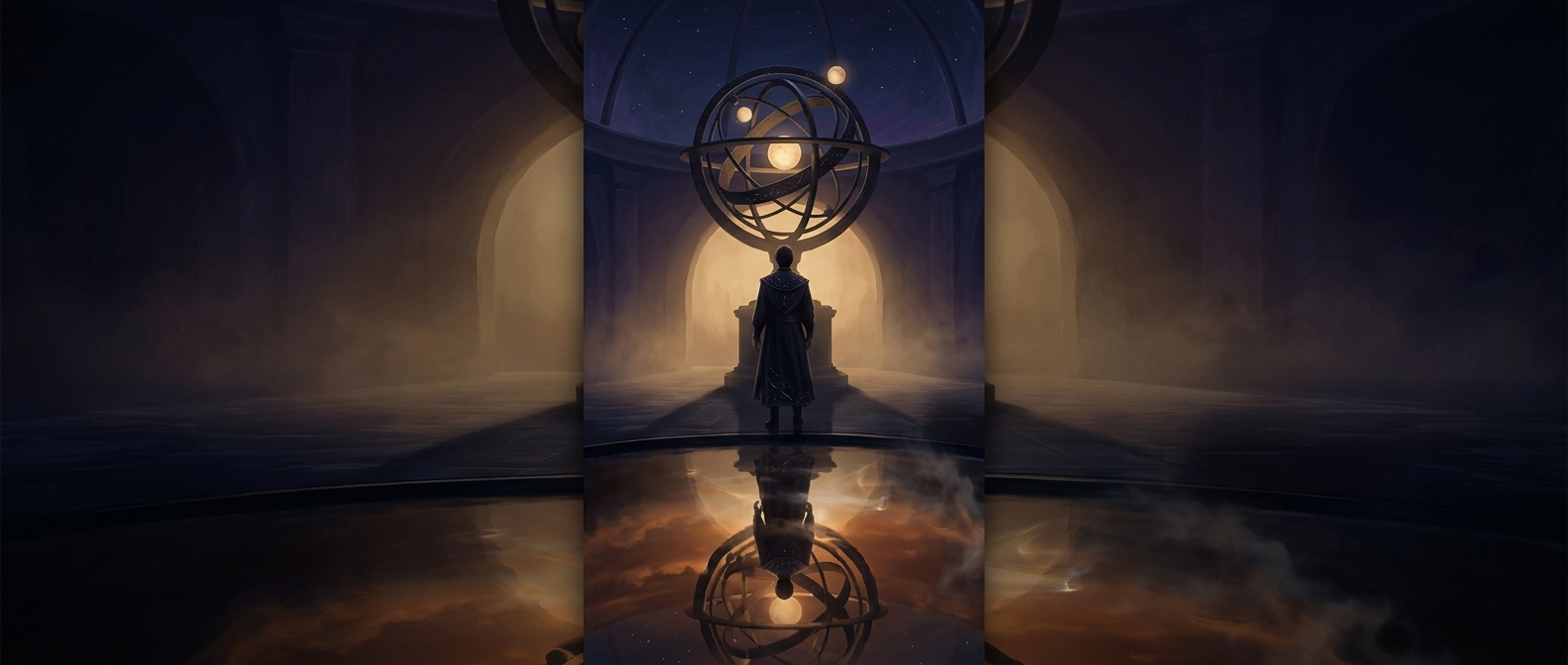
A Well Turned Moonlight Into Something Reachable
The tale’s strange power comes from joining two things that seem opposite: the moon, distant and untouchable, and a well, a familiar opening in the ground. On still water, moonlight appears as a visible path. In folklore, that reflection could be imagined not merely as an image but as something a person might draw up and use.
The well therefore acts as more than scenery. It makes a celestial force seem available to human hands, while its depth gives the act a sense of secrecy and danger.
Why Use It in a Love Charm?
Love is difficult to command: affection can change, and one person’s wishes may conflict with another’s. A charm that “binds” lovers transforms that uncertainty into a magical task. Captured moonlight becomes an ingredient in an attempt to make a relationship endure—or to compel a bond that might not otherwise exist.
That coercive edge matters. These stories do not describe romance only as tender devotion; they also imagine desire as a force people might try to control, with consequences for the person being targeted. The charm’s promise of permanence carries an implied loss of choice.
The Familiar Place Becomes Uncanny
A well belonged to everyday life, but the story recasts it as a point where ordinary rules loosen: reflected light can be collected, and a private wish can be turned into a spell. That contrast helps explain why the image lasts. The supernatural does not arrive in a distant palace; it begins at the water’s surface, where a household’s familiar well seems to hold the moon.