Why a crossroads could break a spirit’s trail
In this folk belief, danger did not necessarily end when a traveler lost the road. A wandering spirit might keep following, using the traveler’s path as a guide. A crossroads offered a way to interrupt that pursuit: several routes met there, so the trail seemed to divide rather than continue in a single line.
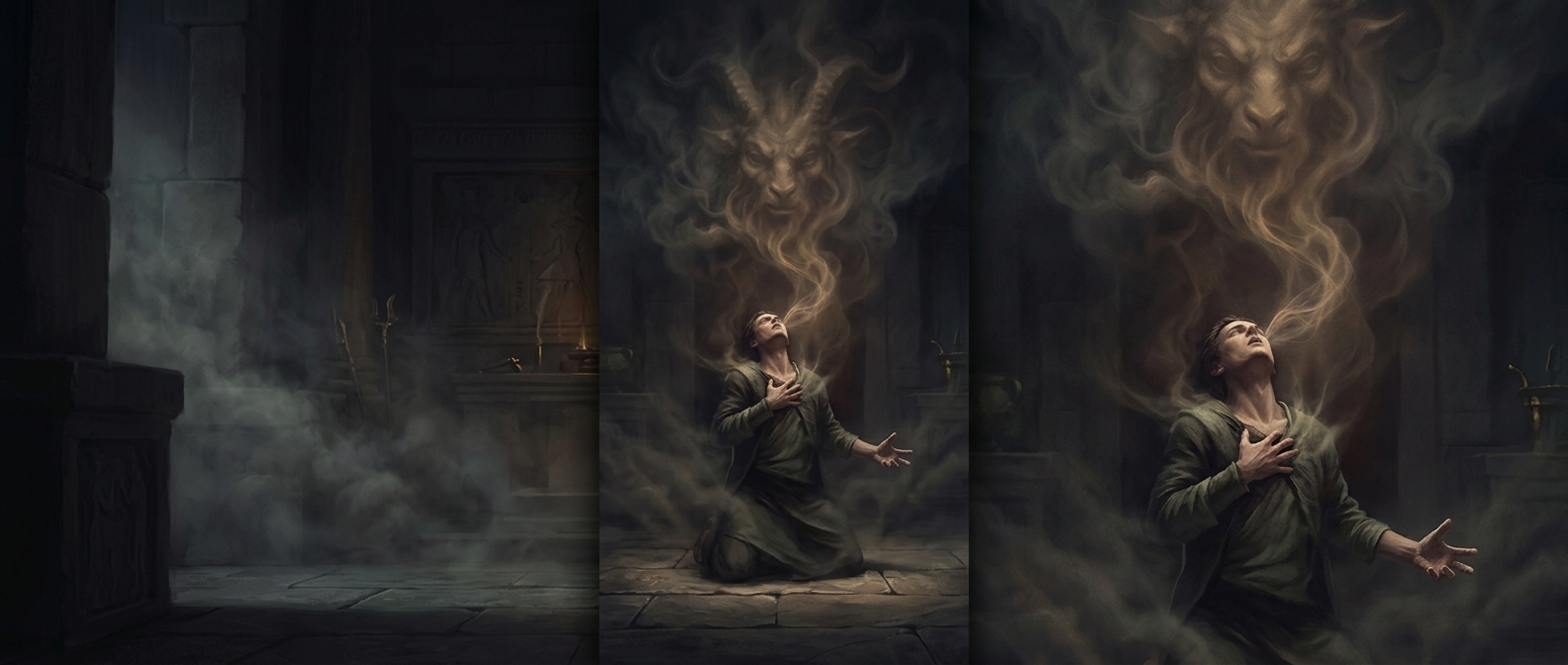
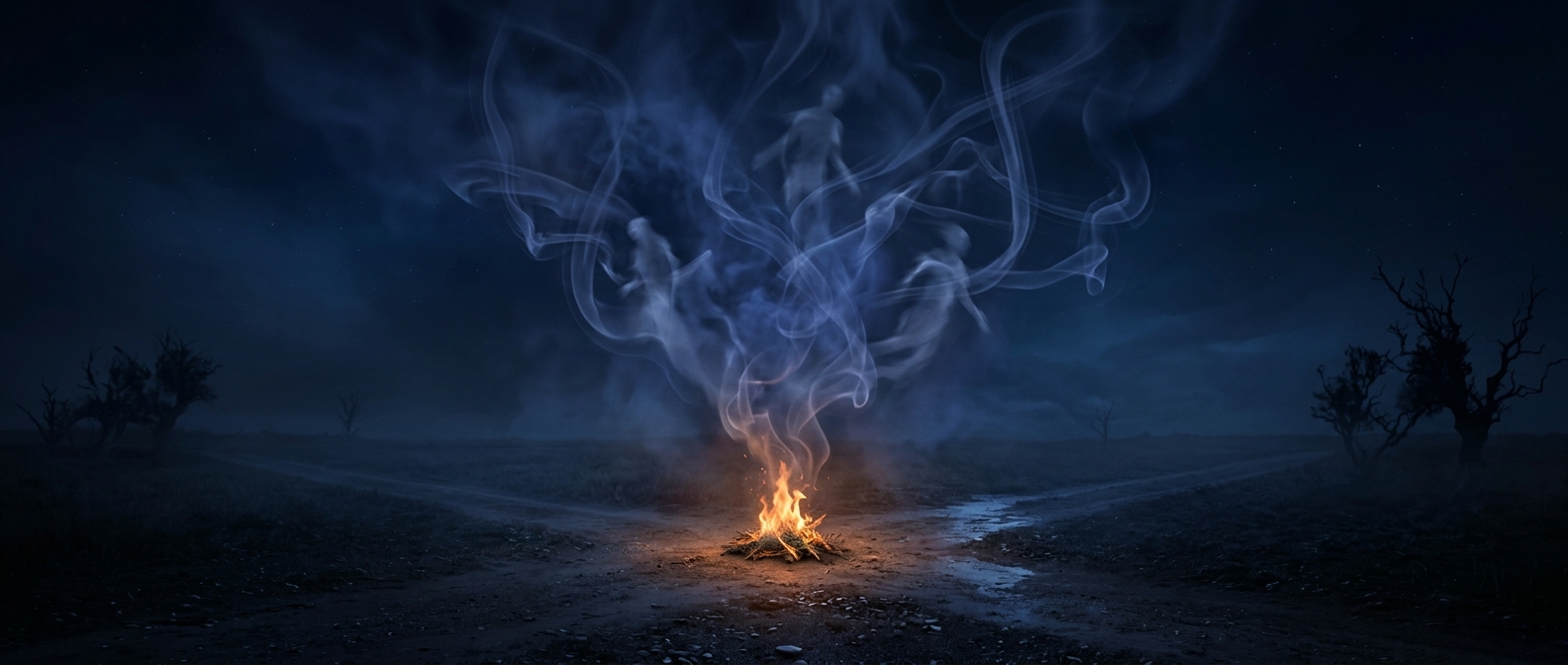
Burning herbs added a second kind of confusion. Smoke blurred what could be seen and carried a strong scent through the air. Within the ritual’s logic, those changes made it harder for a spirit to identify or follow the person it sought. The smoke was not simply a marker of danger; it was imagined as a screen between pursuer and traveler.
A ritual shaped by the night road
The practice joins two familiar features of nighttime travel: uncertainty about direction and fear of being followed. In darkness, a branching path can be difficult to read, while smoke makes an already indistinct landscape less clear. Folklore turned those ordinary effects into a protective strategy against an unseen threat.
Crossroads also mattered because they were places of choice and transition: a traveler had to leave one route and take another. In the story, that change could help sever a spirit’s pursuit. The custom reflects a belief about how protection might work, not evidence that spirits can be confused by smoke. Its memorable image is a traveler slipping into the haze at a junction, where neither the road nor the pursuer’s direction is certain.