Why a Planet Seems to Turn Around
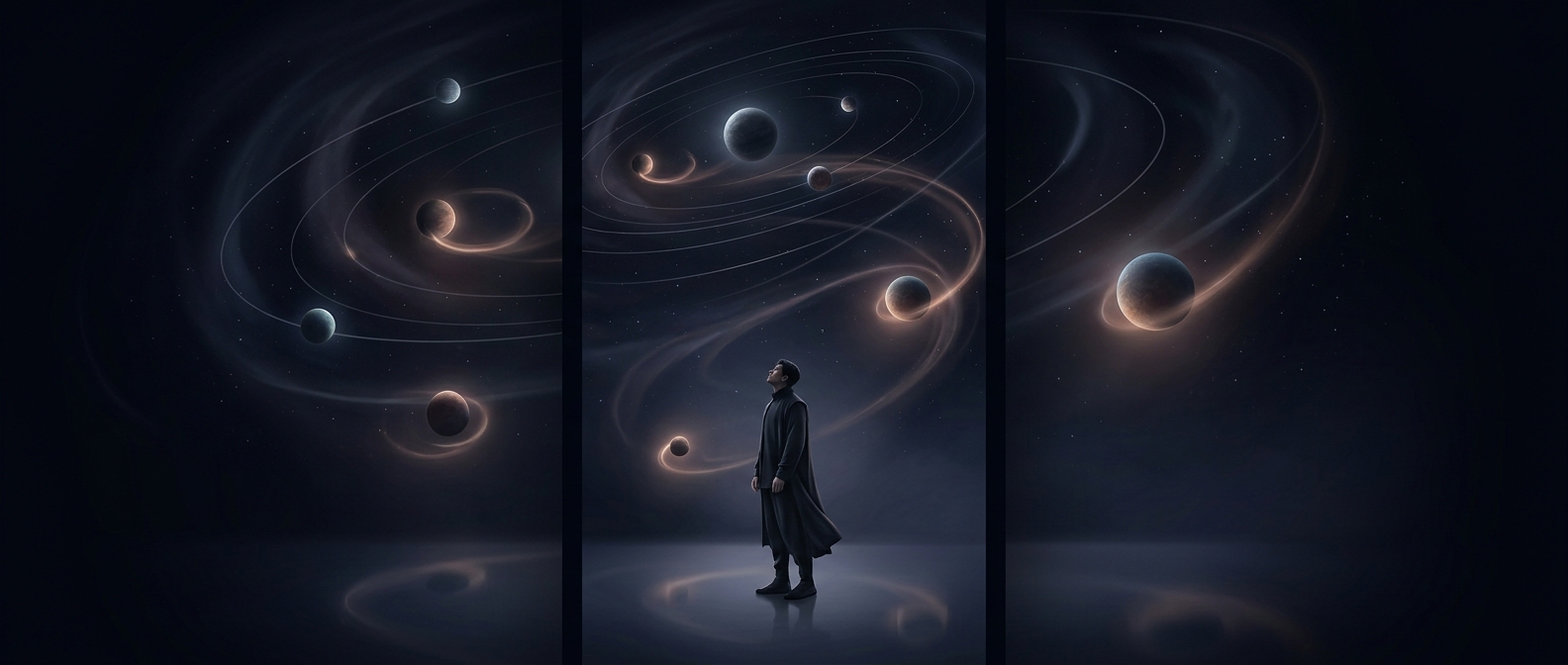
A planet’s apparent backward drift is a change in perspective, not a sudden change in its orbit. Earth and the other planets travel around the Sun at different speeds. When Earth catches up with and passes a more distant planet, that planet can appear, night by night, to slide westward against the much farther-away stars. The shifting angle between Earth, the planet, and the star field creates the illusion of a brief reversal; once Earth has moved past, the planet appears to resume its usual eastward path.
Because the planet remains visible against the same stars, the change can look like a small loop in the sky. The pattern unfolds over weeks or months, depending on the planet, rather than as a sharp turn a viewer could watch in a moment.
What “Retrograde” Means in Astrology
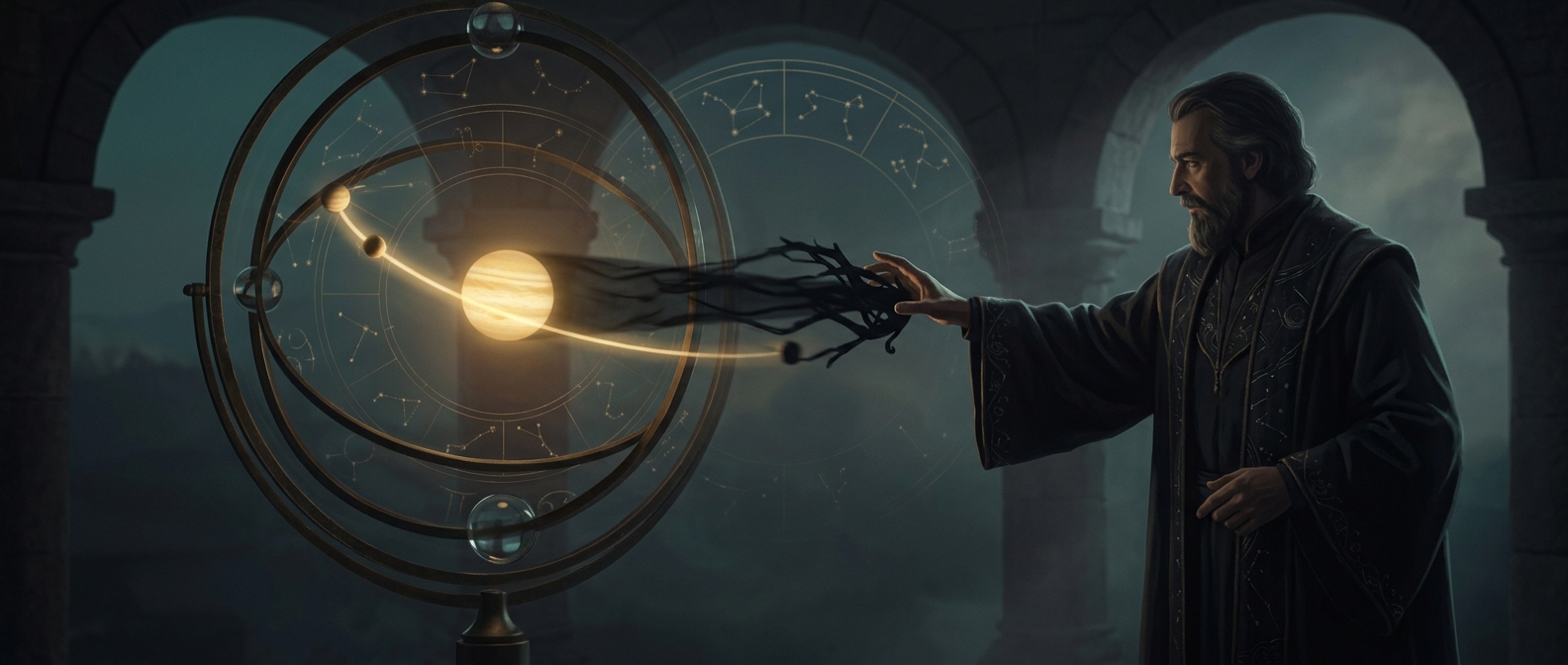
Astrology gives this apparent reversal a symbolic meaning. A planet’s usual themes are treated as turning inward: instead of moving smoothly outward, they may call for reconsideration, review, or patience. The familiar association with delays follows that same logic—plans connected with the planet’s domain are imagined as needing another pass, not necessarily as being permanently blocked.
That interpretation belongs to astrology, not to the orbital mechanics that explain the sky’s appearance. The striking part is that a real, measurable shift in viewpoint became a prompt for reflection: Earth’s passage makes a planet seem to retrace its steps, and the astrological reading turns that visual pause into a metaphor for revisiting one’s own.